Finally the winds of change are blowing across the Indian textile industry… this was very evident at the recently concluded Fibers & Yarns exhibition which saw 60 companies showcase their latest developments. The focus of most companies is on differential products and branding to stand-out in a market where basic yarn is a commodity and there is an overdrive to add capacity. What is also very interesting is the fact that most of the companies are not looking at capacity expansions, but capacity conversion from basic to fancy yarn. Another common thread that runs through most yarn suppliers and producers was the eagerness to work with Bangladesh, as the manufacturers there are not only looking at basic yarns any more, but also differential products too, to support its movement up the value chain… Apparel Online takes a look at the evolving yarn market in India.
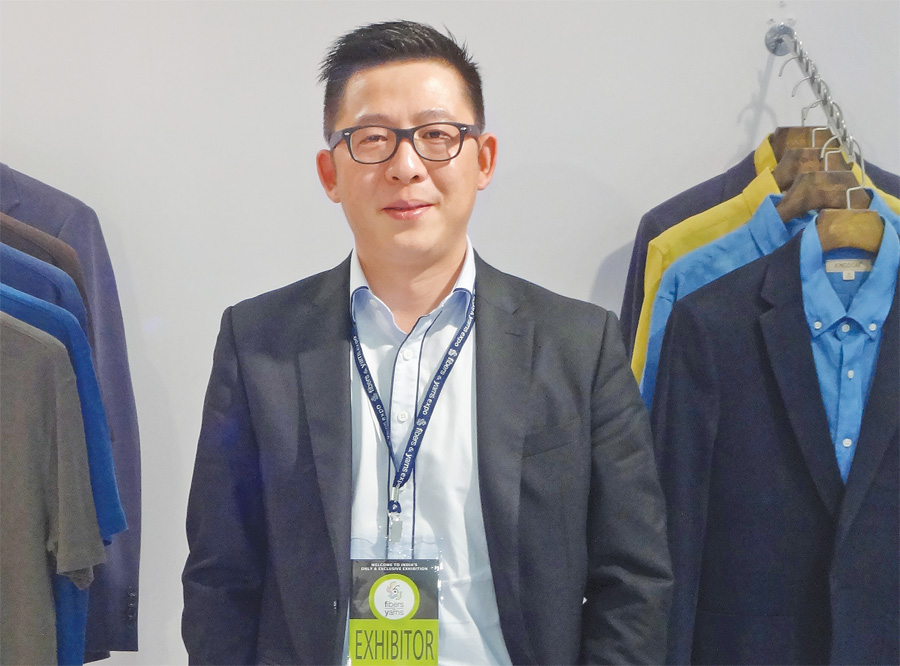
This year the participation of Chinese companies at the Fibers & Yarns event was visibly higher, reflecting the importance of India as a market for such companies. The Chinese companies were displaying Silver yarn; Soyabean, Milk and Bamboo fibres, besides the latest ‘hot’ fibre/yarn linen. In fact, linen was among the most visible products at the event, and leading the displays in the category was Kingdom Holdings, China, which already has a substantial presence in the country through its representative Sundarams Texventures. “The market in India is growing fast, not so much for garments meant for exports, but for domestic consumption. While earlier, the export-based manufacturers were our largest customers but last year 50 per cent of the linen products manufactured was consumed within the country,” informs Eric Sun, International Commercial Director, Kingdom Holdings, which has capacity of 100,000 spindles. Currently, India is the second largest consumer of linen yarn after China. “Within 4-5 years, India will become the biggest consumer, surpassing even China, as the weather conditions in the country favour the ‘cool’ fabric,” predicts Eric. With bleached linen becoming popular, coloured garments in linen yarn have added to the market value of the product.
“The market in India is growing fast, not so much for garments meant for exports, but for domestic consumption.”

Another Chinese company that attracted a lot of attention was Haining Xin Gao Fibres Ltd., a Fortune 500 company for its CM800 bi-conjugate stretch filaments. Represented in India, Bangladesh and Sri Lanka by Stuti Exports, the company claims to give comfort stretch with 100% recovery and not high stretchability, but low recovery as in spandex. CM800 is a new type of yarn made of PTT/PET fibres by conjugating through FDY spinning method. “This filament is similar to T400 of Invista with same quality and we are introducing this for the first time on a public platform in the region though some customers already exist. Finding application in womenswear, suitings, shirtings and knitted products, the speciality is the comfort that the product offers to the final consumer,” informs Gendi Gan, General Manager of the company. Many visitors showed interest in the product and since the product is similarly in quality to that available with a huge brand name like Invista, the price edge that the company offers has been helpful in getting the industry to take note. With 14 production lines, the company has the capacity to manufacture 1,500 tonnes per year of melt and 3,000 tonnes per year of conjugate yarn in a GREEN production facility.
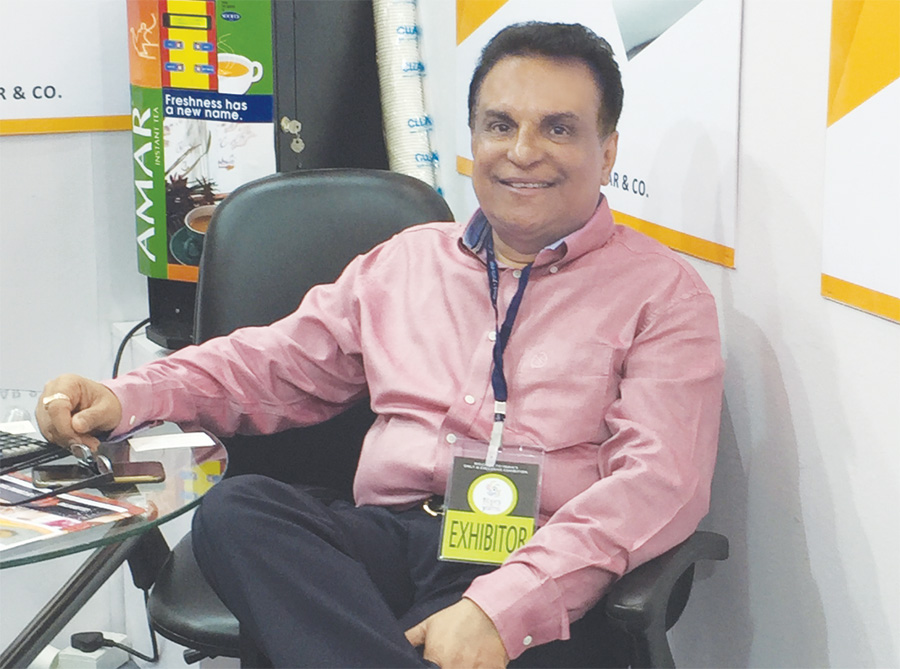
While Chinese companies, known for their wide and differential range of products, showcased their strength, the Indian companies were matching the innovation with many new offerings including nylon micro fibres; modal and tencel fibres; fire retardant viscose; hi-tech polyester fibres and filaments for functional fabrics; pure silk, linen and jute yarns. “A lot of developments are happening in yarn quality, with a lot of value additions which influences customer demand also. In the last 2-3 years, 75 spinning units have come up in Gujarat (India) with latest technology, adding to the quality in a big way,” voices Anil Chopra of Bannuram Anil Kumar & Co. (BRAK), a company that sources yarn and greige fabric from around the country from some of the best yarn manufacturers and suppliers like Winsome Yarns, Kaur Sain Spinners, Centwin, Ahuja Cotspin, Nahar Spinning and Shree Bharani Spinning to name a few, and supplies it as per demand to the textile value chain.
“In the last 2-3 years, 75 spinning units have come up in Gujarat (India) with latest technology, adding to the quality in a big way.”
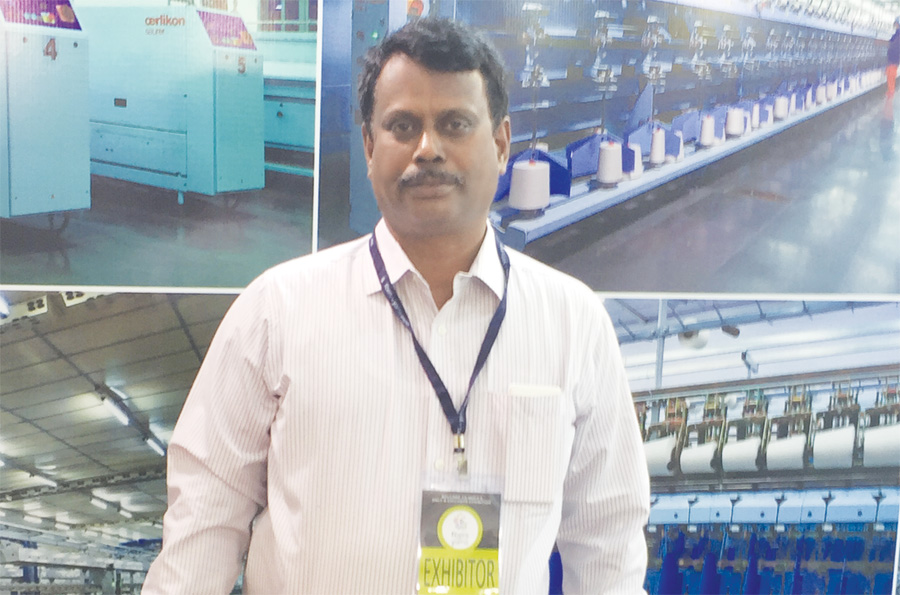
Cotton yarn in various qualities – carded, comb, compact, pima, ginza, suprima, mélange and cotton blends is the monopoly of the country, but in recent times over-capacity has played havoc with this edge, and players in the category have been compelled to cut down prices. “People should realize that India is almost the sole supplier of yarn in the world today, so there is no need for them to undercut and sell. By selling under-priced products, they will not be able to upgrade and modernize to cope up with the upcoming needs,” reasons T Bhaskara Rao, Asst., General Manager – Marketing, GTN Industries Ltd. This Hyderabad company having 1,40,000 spindles is one of the oldest companies in spinning and specializes in 100 per cent cotton yarns. “GTN is one of the pioneers in yarn industry and was the first company to export to Japan and European markets,” reveals a proud Rao. What keeps this company relevant even today is the continuous investment in upgradation and focus on R&D. “We concentrate more on value-add and that is why we’re able to survive. Every year we embark 30-40 per cent investment towards modernization and we were the first to have compact machines to manufacture compact yarns among other machines; so this way we’ve kept pace with the latest developments,” adds Rao.
“People should realize that India is almost the sole supplier of yarn in the world today, so there is no need for them to undercut and sell.”
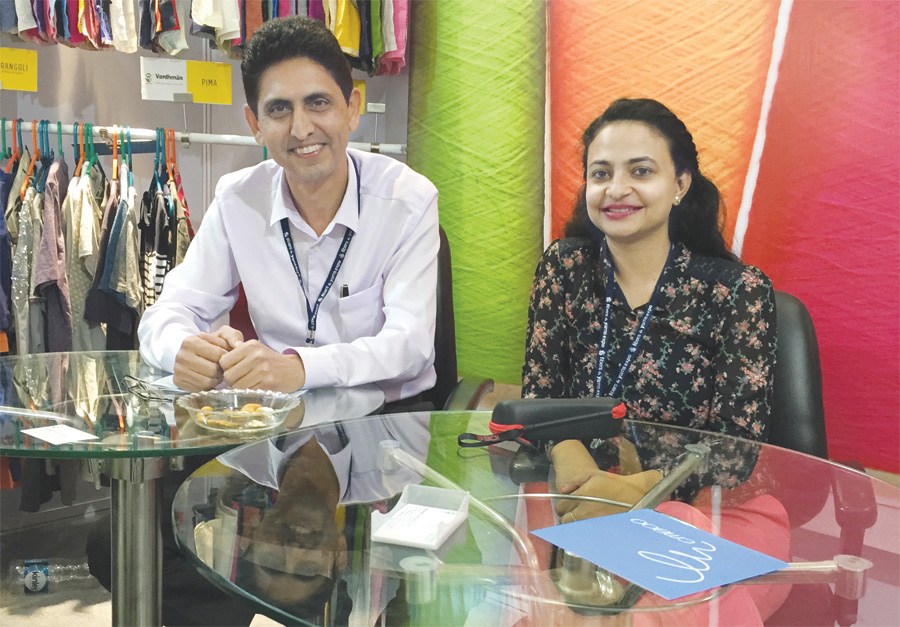
Another company which banks on cotton yarn as its strength is Vardhman Textiles. With a group turnover of around Rs. 7,563 crore (US $ 1500 million) in FY 2014-15, the company has 22 manufacturing facilities around the country and Vardhman Textiles Ltd. is the largest strategic business unit of the Vardhman Group with over 1.1 million spindles and a capacity to manufacture over 580 MT of yarn per day. “We are the largest manufacturers of compact yarns in the country and our biggest strength is the constant innovations that we introduce, the latest being a blend of cotton with wool and linen,” informs Vijay Puniyani, Sr. Vice President, Vardhman Textiles Ltd. The company offers the widest range of specialized greige and dyed yarns in cotton, polyester, acrylic and a variety of blends. They also manufacture value-added products like organic cotton, mélange, core spun yarns, ultra yarns (contamination controlled), gassed mercerized, super fine yarns, slub and cellulose yarns and fancy yarns for hand knitting. “We are one of the largest exporters of cotton yarn to the most quality-conscious markets like the EU, USA, Bangladesh and the Far East,” adds Puniyani.
| Year | Manmade Yarn | |
| Production | Export | |
| 2015-16 | 1166 | 663 |
| 2014-15 | 1248 | 658 |
| Percentage (Increase/Decrease) |
(-) 6.57% | (+) 4.76% |
| Year | 100% Blended Yarn | |
| Production | Export | |
| 2015-16 | 1522 | 226 |
| 2014-15 | 1433 | 237 |
| Percentage (Increase/Decrease) |
(+) 6.21% | (+) 4.64% |
| Year | Cotton Yarn | |
| Production | Export | |
| 2015-16 | 4139 | 1317 |
| 2014-15 | 4055 | 1199 |
| Percentage (Increase/Decrease) |
(+) 2.07% | (+) 9.84% |
Spinning of Filament Yarn on the increase…
Interestingly, though cotton has been India’s strength till now, the number of companies increasing their capacities and capabilities in the filament yarn segment, which includes polyester, viscose, nylon and the like, has been on the increase. This increase is also due to the increasing usage of polyester blended fabric by the clothing industry. Also interesting is the fact that taking cue from international brands like Lycra, most of the companies are now branding their products. The latest to brand a product that has been in the market for a long time is India Rayon. They introduced ‘Raysil’ in the Surat market, which accounts for 60 per cent share of its produce in December 2015. “The idea behind creating the Raysil brand was to increase visibility in the value chain and differentiate from other companies selling similar products,” says Shailendra Pandey, Jt. President (Sales & Marketing), Indian Rayon. Raysil (Viscose Filament Yarn – VFY), Being projected as the the versatile fashion yarn, is available across a wide range from 20 denier to 1200 denier and in Pot Spun Yarn (PSY) as bright, Dull and Dope Dye Yarns, in Continuous Spun Yarn (CSY) in bright and dope dyed and super high glue and Spool Spun Yarn (SSY) that has high tensile strength, uniform elongation, high brightness and whiteness.
“The idea behind creating the Raysil brand was to increase visibility in the value chain and differentiate from other companies selling similar products.”
The company two years ago invested in the unique spool spun yarn technology from ENKA GmbH and Co., Germany, for manufacturing high quality superfine denier Viscose Filament Yarn (VFY), at its unit based in Gujarat, which is most suitable in georgettes, chiffons and crepes. The application areas are in superfine georgettes, crepes and chiffons, fine brasso, shantun, satin, velvet, suit lining, selvedge, ties & knitwear, fine and lustrous embroidery threads, home textiles and med-tech (like crepe bandages). As of now 45 per cent of the 21,000 tonnes of VFY produced per annum by the company, is used for domestic market while 55 per cent is exported to many countries. Interestingly, while VFY accounts for just 4-5 per cent of share in the filament market, the consumption is huge at 55,000 tonnes per annum.
Another huge textile group that has gone in for a major branding exercise is RSWM Ltd. The company which offers yarns in over 70 fibres and in unlimited blend possibilities is one of the largest producers and exporters of polyester viscose blended yarn in the country. It operates almost 3,60,000 spindles and produces 1,41,000 MT of yarn annually. Its speciality lies in new product development and quick delivery systems. The units produce spun and open-end grey yarn out of most fibre types and blend them with synthetic, regenerated cellulosic, natural protein, man-made protein, functional and cotton fibres. “We were not able to communicate our R&D efforts to the people who actually trigger the demand – the end customers – or as they saw the final product, but not the raw material that goes into it, so we have introduced a new concept – RSWM EDGE, which will act as the visibility tool for the company in all its differential and new offerings in the form of a tag carried along the value chain,” says Deepak Bhala, Vice President, Marketing, RSWM Ltd.
Earlier, Indorama branded its India produced spandex ‘Inviya’ which now enjoys a good market share in the branded spandex market. And last year Birla Cellulose, the fibre division of Grasim Industries, introduced LIVA, which is fast becoming a market rage among fashion designers and high-end brands looking at fluid fashion. “We have integrated the complete value chain right to the front end with our brand and our partners are now proudly projecting themselves as partners to LIVA,” says Aseem Doda, Vice-President, Hub Development & Marketing, Grasim Industries. What such branding has done is create awareness along the value chain of the performance quality that a fibre or yarn may have and generate demand from the end consumer, so the focus now is more consumer-oriented than just B2B marketing. “Growth percentage of viscose-based garments in exports was more than 30 per cent in 2015, while for other fibre based garments it was just 3-4 per cent. So obviously viscose products from India is picking up and that is where partnerships along the supply chain will help to give better products and better pricing, taking the ‘only cotton’ tag away from India in international sourcing,” reasons Doda.
“We have integrated the complete value chain right to the front end with our brand and our partners are now proudly projecting themselves as partners to LIVA.”

One of the biggest names in branded fibres Lenzing Fibers was also present at the show meeting its supply partners. The company was promoting Natural Luxury – wherein Tencel, the Lyocell fibre of botanic origin, meets Merino wool in an unusual partnership which opens up new opportunities to both of these partners in the textile world. On one hand, light luxurious fabrics can be created which are exceedingly fine and smooth but still warm. On the other hand, fabrics that are perfect for sportswear applications are also possible as the combination offers the very best in moisture management. “We are already a known name globally, but to keep ahead, innovation is the key. And while India was earlier slow in picking up new concepts, the last few years have seen a huge change in the mindset, which is also an offshoot of the emerging quality conscious retail segment,” says Avinash Mane of Lenzing Fibers, India.

Though branding is being done by the big public limited textile companies as of now, even relatively smaller players in the filament segment are shifting capacities to value-added and fancy yarns with complete clarity on what will keep them alive in the future. The Dodhia Group, Mumbai, specializes in fancy filament yarn for all applications from apparel to carpets. Constantly investing in R&D has made the company a frontrunner in the segment. “With sustained R&D, rigorous quality controls, technological upgradations, and continuous customer communication and feedback, we have been able to keep ahead of our competitors,” believes Ritesh Dodhia, Director Sales of the company. He credits the changing mindset of the end consumer for increased focus on developments. The latest from the company includes indigo space dyed and multi-dyed polyester yarn. “The demand for quality and innovative polyester yarn is increasing and we are trying to make the same available in India,” adds Dodhia.
“With sustained R&D, rigorous quality controls, upgradations and continuous customer communication and feedbacks, we have been able to keep ahead of our competitors.”
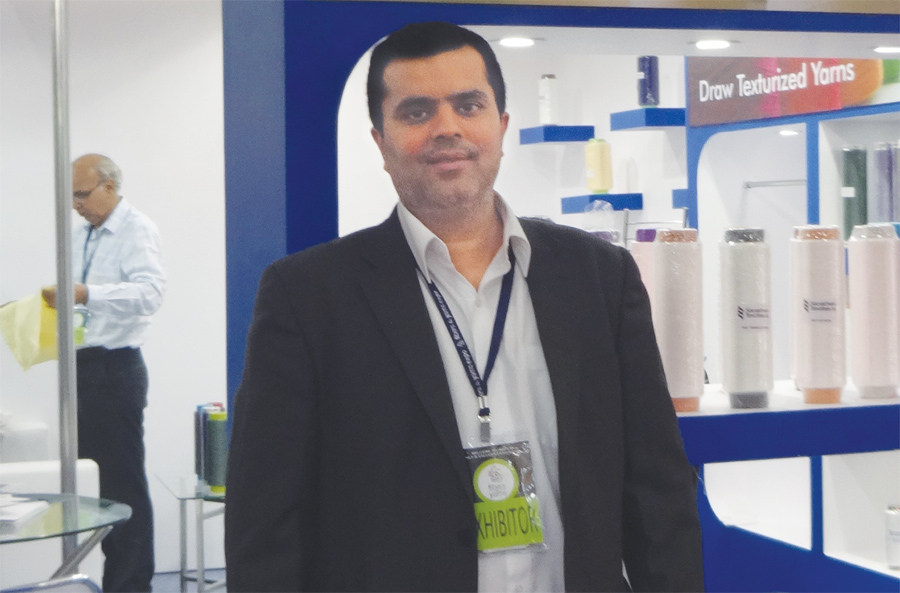
Another Mumbai-based company that is fast converting its capacities from basic polyester to differential filament yarn is Sanathan Textiles. “Companies not working towards differentiation cannot survive for long, as the customers have improved,” says Raj Kapadia of the company. The company has increased its capacity from 500 tonnes to 2,500 tonnes capacity. Investments have been made in the latest spinning and finishing equipment for the segment from around the world for quality in the last few years. “One of the good things that has come from the lean period is that companies have introspected and identified the weak links to be plugged, which mostly means better technology, more R&D and better marketing efforts,” adds Kapadia. Besides polyester the company also runs 60,000 spindles for basic cotton yarn, but of higher and consistent quality.
“During the lean period companies have introspected the weak links to be plugged, which mostly means better technology, more R&D and better marketing efforts.”
With the yarn manufacturers becoming more active in the value chain, the textile industry in the region is bound to take a leap to the benefit of both the domestic and export market.