Fashion retailers have never had access to more data, yet knowing which numbers truly matter is becoming increasingly difficult. A single product can now move through a brand’s own e-commerce site, marketplace, a q-commerce platform, a physical store and even a shoppable social media post, often within the same customer journey. As these channels converge, traditional KPIs such as footfall, channel-wise sales. conversion, sales per square foot and average transaction value no longer tell the full story of how fashion businesses attract customers, convert demand and create value.
The challenge, therefore, is no longer simply tracking performance across channels, but understanding how those channels work together to influence customer acquisition, engagement and conversion.

“A channel-siloed view of KPIs would give us an incomplete, and at times misleading, picture ofwhat’s actually driving the business,” stated Arun AB, VP, Exclusive Brand Outlets, Libas.
He explained, “We currently operate around 250 crore in EBOs across 13 states, and we’re rolling out omnichannel capabilities, real-time inventory visibility and fulfilment between EBOs, dark stores and quick commerce across 30-40% of our store network by the end of this financial year.When a size isn’t available in an outlet, that network lets us fulfil the order from a nearby dark store within 60-120 minutes in our key cities, rather than losing the sale entirely. That kind of flexibility simply didn’t exist in a single-channel model, and it’s changed what ‘performance’ means for us; it’s no longer only what a store sells across its own register, but what it enables across the wider network.”
The fast-fashion brand, which specialises in women’s ethnic, festive and fusion wear, plans to open over 50 new stores in FY27, while q-commerce is expected to grow from 1% to 10% of revenue over the next two years.
The Metrics That Matter

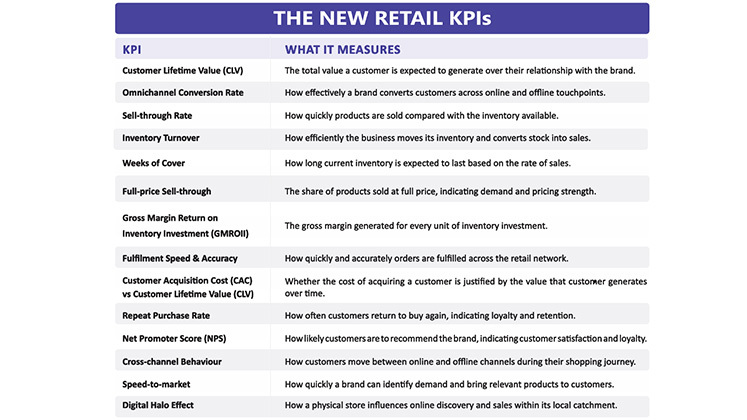
According to Kush Choudhary, EBО Operations Head at Latin Quarters, “Our key omnichannel KPIs include: Customer Lifetime Value (CLV). Omnichannel Conversion Rate, Sell-through %, Inventory Turnover & Weeks of Cover, Full-price sellthrough, Gross Margin Return on Inventory Investment (GMROII). Order Fulfilment Speed, Return Rate, Customer Acquisition Cost (CAC) vs Lifetime Value, Repeat Purchase Rate and Net Promoter Score (NPS), These metrics provide a better understanding ofsustainable growth, customer loyalty, inventory productivity, and profitability rather than simply measuring sales volume.”
Echoing the sentiment, a spokesperson from youth-focused value retailer Yousta said in a statement, “Our focus is increasingly on customer engagement, conversion, repeat purchase, customer lifetime value, cross-channel behaviour. inventory responsiveness and speed-to-market. For Yousta, trend responsiveness is particularly important because Gen Z moves incredibly fast, yesterday’s trend can quickly become yesterday’s news. Our “Thrilling Thursday’ fresh drops are built around this insight, constantly giving customers something new to discover. We don’t just measure what we sold; we also look at how quickly we understood what customers wanted and responded to it.”
Looking ahead, brands are also expected to pay closer attention to a store’s “digital halo effect”, or how a physical outlet drives online discovery and conversion in its catchment.
The Al Advantage
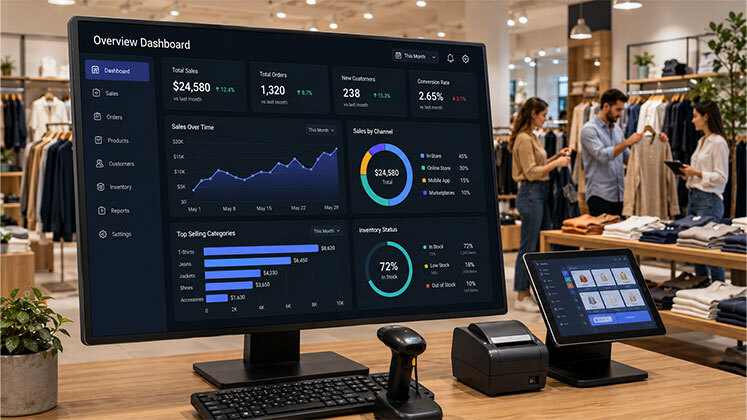
AI has made it possible for brands to map the entire consumer journey. Brands now combine ERP, POS systems, BI dashboards and AIpowered analytics to create a single view of business performance.
This is also driving the rise of SMART (Specific, Measurable, Achievable, Relevant and Time-Bound) KPIs, which use AI to deliver descriptive, predictive and prescriptive insights. Smart descriptive KPIs use quantitative measures to explain past and current performance. Smart predictive KPIs anticipate future outcomes by using historical data and other variables to forecast KPI values, while smart prescriptive KPIs go a step further by recommending corrective actions based on performance against targets.

“Al is becoming an important enabler in helping businesses interpret large volumes of data more efficiently, identify patterns and respond to changing consumer demand with greater agility. At Campus, we see AI as a means to accelerate execution, whether that’s improving demand forecasting, inventory planning or enabling faster business decisions across our omnichannel ecosystem,” highlighted Uplaksh Tewary, COO Campus Activewear, an omnichannel sports and athleisure footwear brand.
Arun from Libas said the brand uses data analytics to forecast demand for the 100-150 new styles it launches each week, helping it make faster and more accurate inventory decisions at a scale that cannot be managed manually. Scaling this to q-commerce remains challenging because ofthe number of dark stores and the range of sizes, an area where the brand is continuing to strengthen its data infrastructure.
As online and offline channels become more closely connected, the ability to deliver a seamless, personalised and consistent customer experience across touchpoints will become increasingly important.