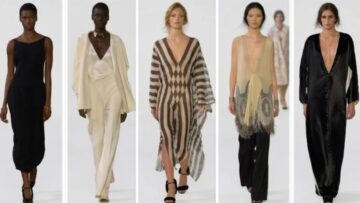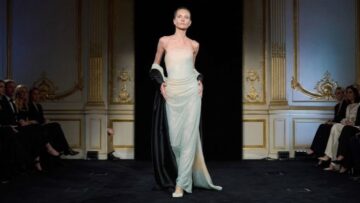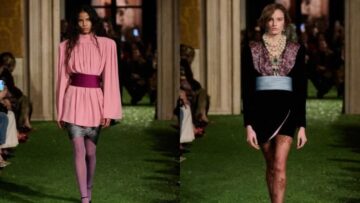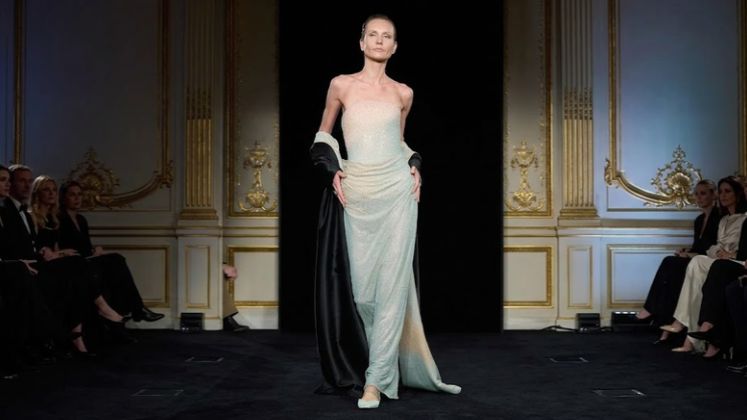
After years of minimalism and understated luxury, fashion’s mood is turning theatrical. Tassel scarves, fur-trimmed coats, chinoiserie motifs and ornate evening silhouettes are now being worn as if the wearer were on the way to the opera, and a trend once confined to black-tie evenings has moved into everyday dressing. The opera dressing is a clear departure from quiet luxury. Ralph Lauren, Celine and Doên have all shown pieces in the vein, and celebrities have been photographed running errands in vintage silk coats and robes. Maison Essentiele founder Olivia Koennecke attributes it to a renewed appetite for romance, glamour, texture and a little theatricality, and advises building an outfit around a single statement piece.
The trend’s appeal lies in its contrast. With black-tie occasions becoming rare, elegance is being sought in everyday settings, so a piano shawl is worn to the shop and a chinoiserie jacket is paired with denim. Subtler entry points include cummerbunds, pendant necklaces and statement silver cuffs. Vintage and archival pieces are central to the movement, and designers and dealers describe a slow awakening to how extraordinary these garments are.
For Indian fashion, this is less an import than a language the industry already speaks. Velvet, brocade, heavy embroidery and dramatic drape are the staples of the country’s festive and wedding calendar. Whether any label markets itself under the “opera dressing” banner is a separate question, but the craft base and silhouettes exist, and the winter-wedding season is the obvious moment for it.
At the couture end, the houses best placed to take the trend on are those already known for scale and spectacle. Sabyasachi is the benchmark for dense embroidery, heritage Bengal textiles and a maximalist sensibility, so a velvet coat or an embroidered jacket over a plain base is a natural fit. Manish Malhotra, known for heavy embellishment and cinematic glamour, became the fourth Indian designer to join the official Paris couture calendar, after Rahul Mishra, Gaurav Gupta and Vaishali S. Tarun Tahiliani, known for fusing Indian weaving traditions with Western tailoring, could lend structure to opera-style capes and evening coats. Rahul Mishra, the first Indian designer invited to Paris Haute Couture Week, in 2020, and Gaurav Gupta, who works with traditional embroidery techniques such as zardozi, nakshi and dabka, bring the sculptural volume and artisanal finish the trend rewards. Anamika Khanna’s layered, richly worked pieces suit the one-statement-piece approach, while Abu Jani Sandeep Khosla’s chikankari could feed lace and tonal embroidery, and Amit Aggarwal’s experimental construction points to a more modern reading of the theme.
It is in the semi-formal tier that the trend will have to prove itself commercially, because it asks for a jacket, duster or shawl that works over everyday tailoring. Ritu Kumar, who has worked with Indian textiles since the 1960s and is known for heritage block printing at accessible pret pricing, is well placed to offer brocade and printed overlayers. Anita Dongre is among the few Indian designers who serve multiple budgets, which matters for a trend that must travel beyond the wedding circuit. Raw Mango’s Sanjay Garg has combined imported merino wool with silk in Chanderi weaves for winter wear, a ready-made base for a handloom opera coat, and Gaurang Shah’s handloom revivalism could be recut into kimono-style dusters and long jackets. Chamee & Palak, known for clean lines, muted palettes and restrained embroidery, offers the quieter, more wearable reading, as does Anavila, a handloom specialist for festive and everyday luxury.
At the casual end, opera dressing becomes a matter of borrowing one element and styling it down, such as a fringed shawl over jeans or a jacquard layer over a plain tee. Péro, whose name means “to wear” in Marwari, is known for handcrafted, layered pieces, so embroidered shawls and robes would sit naturally in its range.
Fabindia, with its mass reach in Indian textiles and craft, could introduce quilted, block-printed or brocade overlayers at scale, while Nicobar’s relaxed, lifestyle-led design suits robe coats and printed evening layers. Suta’s handloom drape and fringed edges map easily onto the trend’s textural details, and Doodlage’s upcycled approach echoes the vintage and repurposed pieces driving the Western movement. AND, a mainstream high-street label, could translate faux-fur trims and velvet jackets into accessible price points.
The trend’s pull in the West rests on a reaction against quiet luxury and the fading of black-tie occasions. India faces the opposite situation, with a calendar full of celebrations, so the opportunity lies in crossover. A piece worn to a sangeet can be restyled for dinner, and the labels most likely to win will be those that offer a hero piece and make it easy to wear on its own.