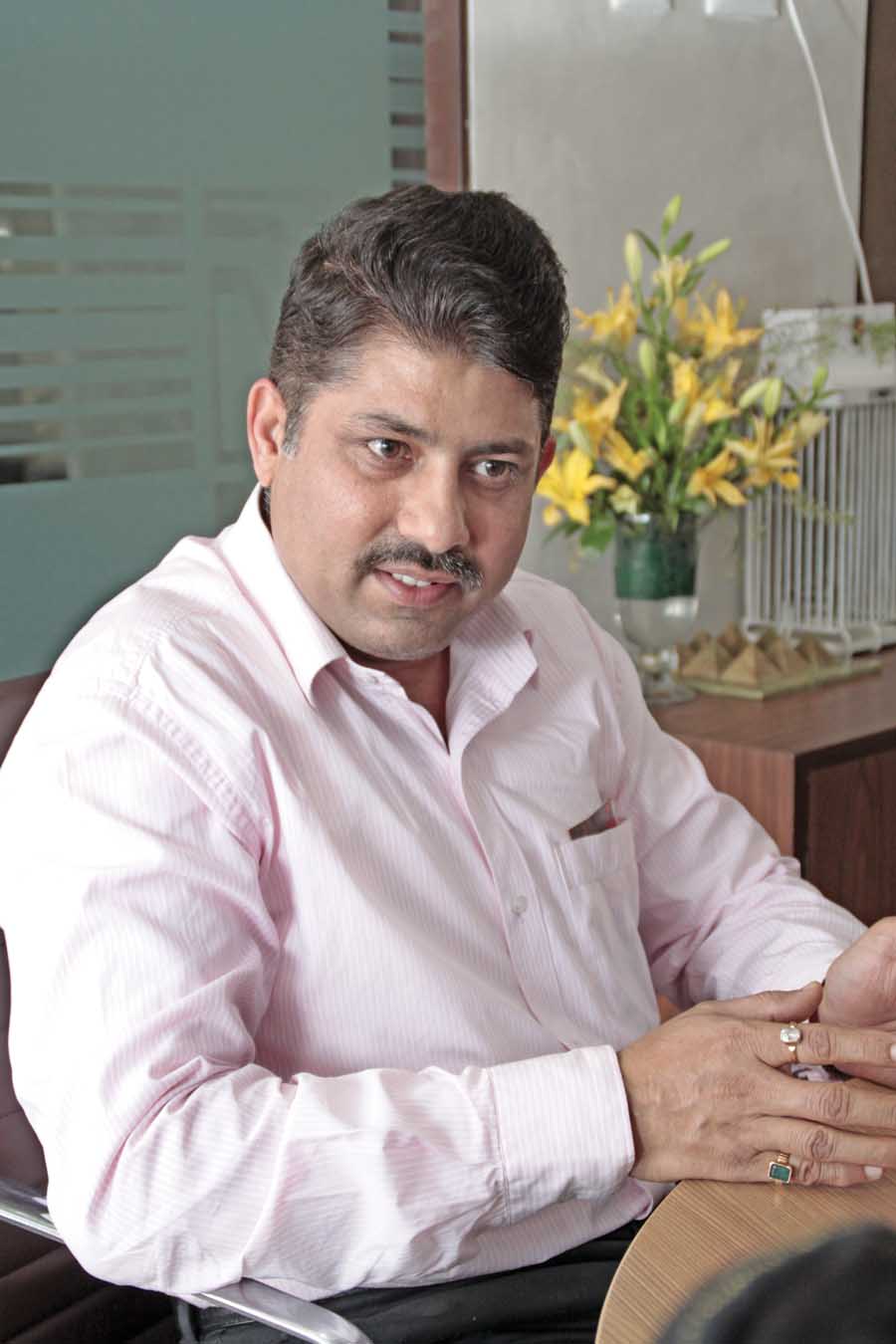
Sara Textiles, the textile manufacturing and trading arm of the Sara Group having an annual turnover of Rs. 3000 crore ventured into terry towel manufacturing in 2006 with a state-of-the-art composite unit in Nalagarh, Himachal Pradesh, and since then has been steadily adding loom capacities. Today, the company has 64 looms with a production capacity of 400 metric tonnes/annum, standing at a turnover of Rs. 150 crore/annum. The company is also involved in the export of cotton yarn with warehouses in Europe, including Belgrade to service small weaving companies in the region, which have yarn demand less than a container. S.M. Dwivedi, CEO, Sara Textiles Ltd. in a one o’ one interaction with Team AO shares the company’s growth strategy involving capacity expansion, automation and energy saving initiatives to compete in an extremely competitive arena…
The terry towel business of Sara has till now been focused primarily to the European Union with clients such as Redcats, Group Casino, Santens, Deskams and Galleries Laffite to mention a few. The company is now trying to enter the US, Japanese and Latin American markets. “We have added a few new markets to our basket like Philippines, Mongolia and Bulgaria, but the US and Japan is now our major target. While the US generates volume business, Japan is a very promising market with the highest per capita towel consumption in the world. An added advantage is that Japan is the only country which has zero duty for the Indian towel,” shares Dwivedi. Latin American markets like Panama, Brazil, Chile and Peru, besides Australia and New Zealand are also being explored.
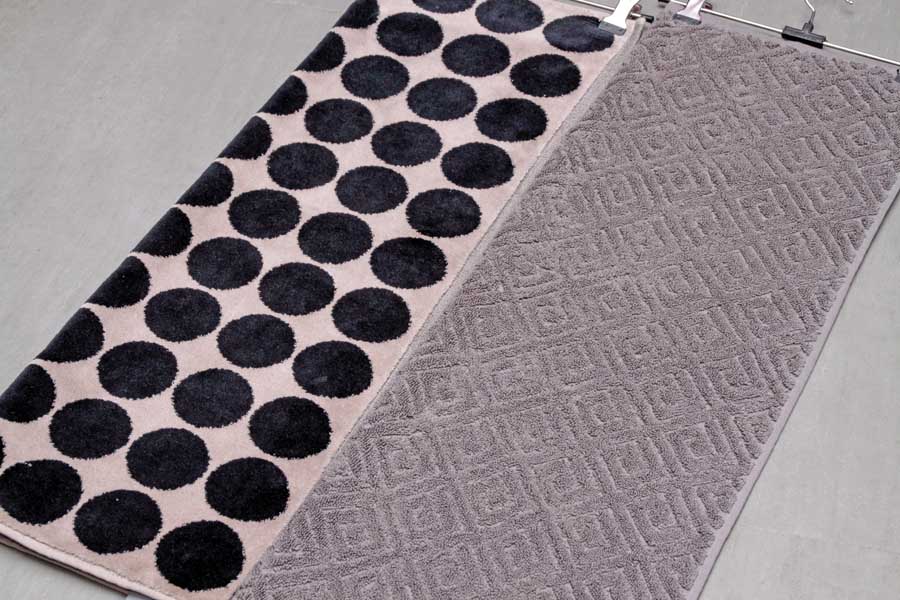
 Producing towels in 100% cotton, polyester blends, zero twist, jacquards, cotton bamboo, which is its specialty (since Sara started with these towels only), the product range includes beach towels, bath robes, terry mats, etc. The company is very confident of its quality, which it claims is at par with what Turkey, the leader in terry towels, is offering. “Fastest moving category for us is plain solid dyed towels with value additions like polyester inserts or variopic (high and low piles where you have differential pile heights – It’s same solid towels but it adds on to the piles) or adding some embroideries to it,” says Dwivedi. The company has huge capacities in jacquards too with 24 jacquard machines, out of which six are jumbos. Sara also offers yarn dyes which is basically for the beach towels and are a seasonal product for different markets.
 In 2011, the company also started catering to the domestic market, supplying to well known retail chains like Big Bazaar, Bombay Dyeing, Westside, to mention a few. Elaborating on the domestic business, Dwivedi says, “We are the only company which can offer excise free products in the domestic market as we have a plant in Himachal Pradesh where there is a 10% excise rebate on branded products; this helps us to give very competitive price to our domestic clients.” The company is also now looking at institutional selling and has started pitching for business with leading five star hotels in India. “Very shortly we’ll start supplying them with bathrobes and subsequently towels,” he adds.
Talking about Sara’s edge vis-à-vis other terry towel manufacturers, Dwivedi stresses that Sara produces towels which are value for money. According to him, the organized terry towel sector in India presently has the capacity to produce 15,000 tonnes/month, which is a huge capacity; thanks to companies like Welspun, Trident, Sharda and SEL who have contributed substantially in this big volume. “We want to be different and not impacted by the competition,” states Dwivedi. He adds, “When we develop a new towel, we wash it, use it in-house, figure out its limitations, do the required modifications and then produce for commercial use. The focus is to produce basic fashion and utility towels. For this we do a lot of R&D to achieve enhanced functional properties in our terry towels,” he adds. One of the developments that is very popular, are the towels that have border/hem with zero shrinkage and quick dry effect due to pile construction. Even with 100 washes these towels do not lose their properties.
 With fierce competition, slicing down margins, growing interest rates on loans and labour shortage due to NAREGA, Sara is aggressively adopting measures to cut down its cost of production by controlling wastages while keeping a dedicated eye on environmental issues. “We could be the most energy saving company amongst all the terry towel manufacturers in India,” says Dwivedi. The company has invested substantially to reduce wastage of every resource. “We have adopted measures to save water and steam energy in our unit, and are trying to achieve zero wastage of water by controlling even a drop of leakage. At every stage we reuse our water; even at the canteen, the water used for hand washing is stored and then used for watering the garden. The water which comes from the dye house, is treated and used for gardening, bathrooms etc.,” avers Dwivedi.
To overcome labour shortage, the company has decided to go in for a 100% automated plant. Processes like warping, sizing, spinning and the dyeing are already completely automated. The only area left is the stitching, which was not fully automated. “We do automatic cutting and length ending but stitching so far has been done manually. Now we are going in for fully automated stitching and by May this year, we’ll be fully automated. With this automation, I expect labour reduction by at least 150 hands,” claims Dwivedi who feels that to minimize human intervention one has to make huge investments, which does not translate into a company saving on cost of production. “There is no economy that is replacing the hands with automated machines for this kind of operation what we are looking for, it is more about reducing labour dependency,” he adds.
 In the past one year, Sara Textiles has invested around Rs. 25 crore for additional looms, wastage reductions and automation. Now the company is looking at a new project for manufacturing bed linen and table linen in Madhya Pradesh. “This new plant will be fully automated and would manufacture basic but high-end bed linen especially for the five and four star hotel industry globally. The sheets would be predominantly white and the coloured ones would be having 90 resistant levels to laundering and chlorine,” shares Dwivedi. Currently, the company is also producing mats in Panipat and has a small manufacturing unit in Ahmedabad where it produces terry fitted seats with elastic and bed sheets.