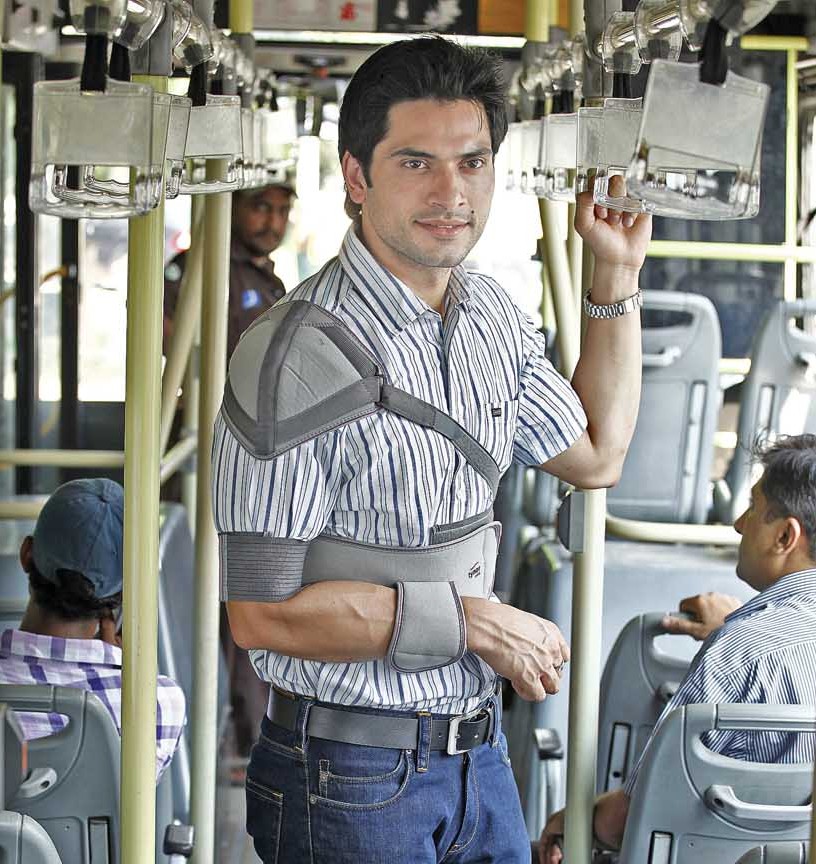
Growing at an astounding rate of 45% annually over the last few years, Mohali based Tynor Orthotics is producing a total of 2,50,000 units of orthopaedic aids per month with 132 sewing machines spread out over three manufacturing facilities. Supplying to both the domestic and export market, the company within 15 years of its inception went in for Lean implementation, at all levels, from the shop floor to marketing and then to strategy building to address the needs of the company’s growth plans… A J Singh, Executive Director and P J Singh, Managing Director, in an exclusive interview with Team StitchWorld share how its Lean processes prepared them for any eventuality.
Started as the entrepreneurial initiative of P J Singh, an M. Pharm, with just 5 employees, Tynor Orthotics is today a best in class orthopaedic aid manufacturer with presence in both the domestic and export market. Recalling how they decided to manufacture orthopaedic aids, A J Singh says they always wanted to work towards providing high quality health care to masses at an affordable price. A survey of the Indian market conducted by them in 80’s demonstrated that the orthopaedic aids available in the country were either of a very low quality and low priced if produced in India, or of a good quality but very high priced and not affordable, if imported. It gave statistical creditability to the project.
The real turning point for Tynor Orthotics came in the year 2000 when it restructured its entire business operations, to become an organized manufacturer of orthopaedic aids. Tynor established a process-based production facility with automated sewing machines from brands like Highlead, Kansai and Pfaff, thus moving out of the cottage industry to an industrial house. While A J Singh started handling operations, production, technology development, process development, quality systems and purchase, P J Singh was delegated to handle strategic growth, finance, HR, trainings, product development and marketing.
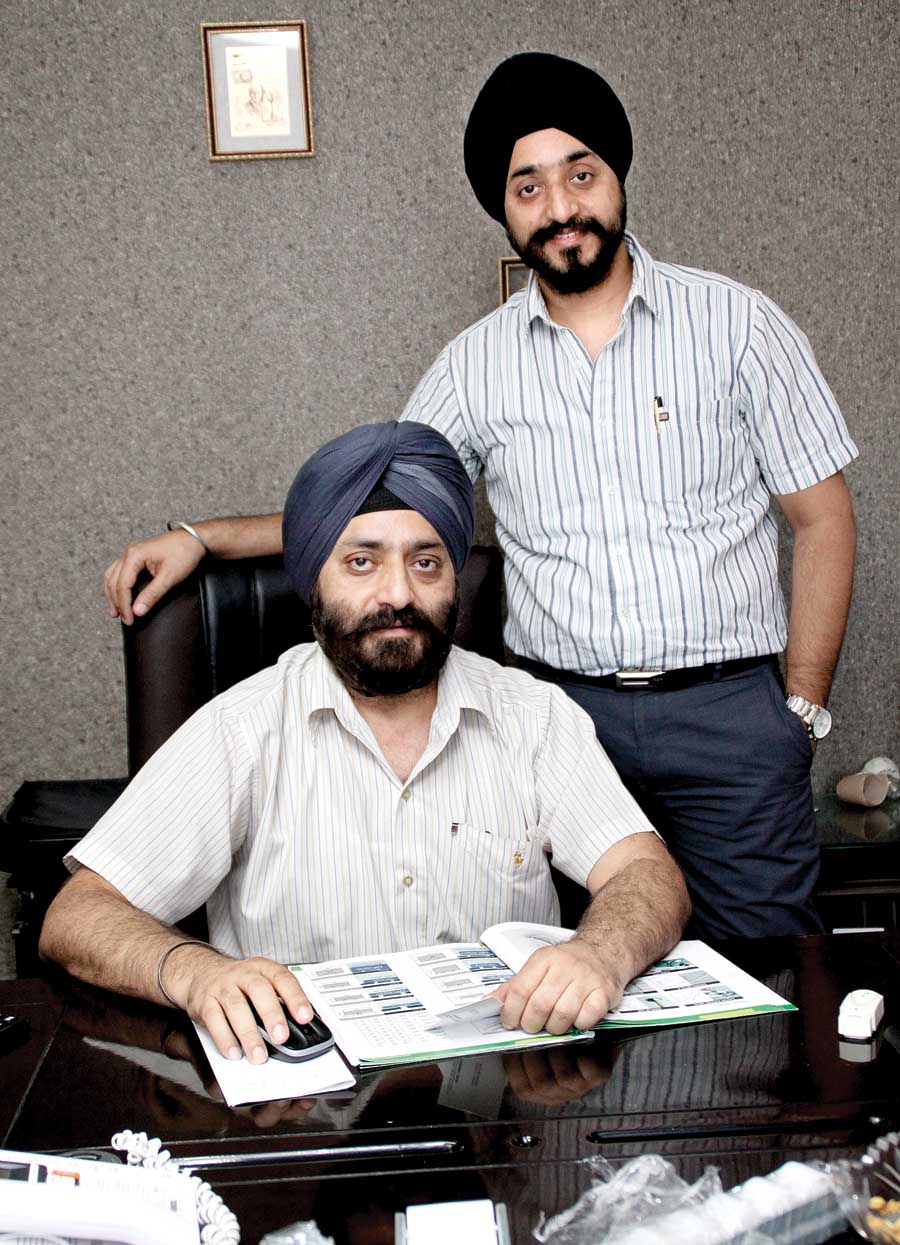
The second major breakthrough came in 2004, when Tynor started its Lean journey, as part of a Confederation of Indian Industry (CII) cluster on Lean Management. The cluster project was not trade specific and Tynor was one of the 20 companies chosen from Chandigarh and Mohali region for the project. “The teaching methodology of the CII initiative was ‘learning by implementing’, which worked well for us. Because of our commitment to make Lean a success in our company, we emerged as the most obedient implementer in the CII cluster. As a result, we were able to produce a high quality product with no rejections at much lesser cost, while all along improving the worker morale. Our facility started looking very well managed, clean and beautiful. Today we can boast that our quality is at least 25% superior and cost of manufacturing at least 15% lower compared to any other brand in India because of our Lean initiatives,” avers P J Singh.
The most daunting task in the Lean journey was process and product standardization in the company, as none existed then. It is a very methodical and a painstaking process, but it was handled with great zeal and lots of patience at Tynor. Moving on to higher goals, Tynor was the first company in India to go for ISO 13485:2003 certification, which is an international standard for the medical industry. They have also been awarded an ISO 9001 certification and ‘WHO’ Good Manufacturing Practices (GMP) certification meant specifically for the pharmaceutical industry. “For attaining the certification and deriving the intended benefit, the basic principles of each certificate needs to be clearly understood by all levels from the top management to the middle management and then also the workers. These principles should then be imbibed into the manufacturing process very religiously, but at the same time taking care not to follow them blindly but intelligently,” reasons P J Singh. Later the company also gained CE and US FDA certifications.
[bleft]Tynor with a turnover of Rs. 50 crores, aims to achieve a turnover of Rs. 200 crores in the next 5 years, 25% of which should come from exports. It considers itself to be the 2nd largest orthopaedic equipment manufacturer in India, with 3 units around Chandigarh, and are planning another unit to go into production in the next 2 years. [/bleft]
Manufacturing Operations
A walk across the company’s manufacturing facilities was something of a disclosure of Lean manufacturing concepts. In each department Standard Operating Procedures (SOPs) have been predefined and is clearly displayed for the employees. Since the order quantities are small and in several styles, so complete automation in the sewing operations has not been possible. “We use only those technologies which give us a return in a maximum of two-and-a-half years, it is our policy when going for any sort of automation or acquiring advanced technology,” shares A J Singh.
Tynor’s vast manufacturing setup also has a mechanical press shop, dyeing unit, circular knitting facility, anodising plant and silicon rubber moulding unit. The company also has plans to manufacture elastic and non-elastic tapes, a major component in orthotic products. A J Singh believes the patented process of thermoforming and their ability to handle silicone and gel-based products gives their manufacturing operations a definite edge.
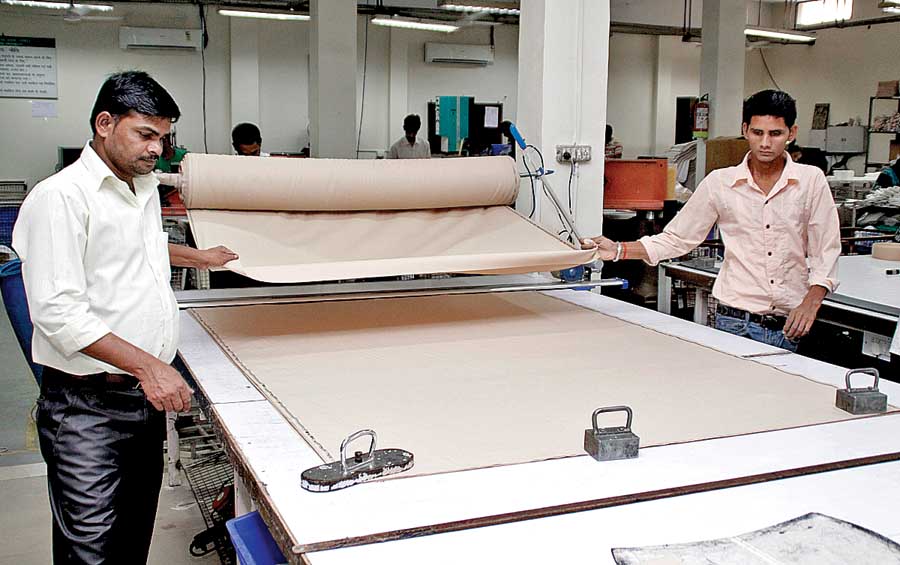
A very big challenge is to manage multiple styles, but in very small numbers, at times the company has to manufacture up to 100 diverse SKUs per day, which is a daunting task for anybody, as there are great chances of things getting mixed up at the operations level. “For pre-cutting and moulding, a ticket is pasted on the fabric with all the information required for all the processes,” explains A J Singh.
The company uses ‘Solid Works’ software for product simulation, product design and development. Although the software solution is more precise for engineering based applications, but Tynor uses it for designing, prototyping, fitting and even for gradation. AutoCAD is also being used by the company for pattern and marker making.
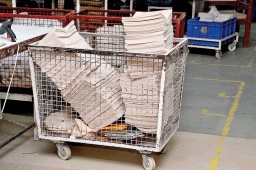
Unlike an apparel manufacturing facility, where separate departments exist for cutting, sewing, packaging and finishing, in Tynor, all the aspects, except cutting, are seamlessly present on the sewing floor. In the cutting department instead of automatic cutters, Atom Clicking machines for dye cutting are used by the company due to the nature of input materials, order quantities and style variations. After cutting and moulding, the panels or parts are sent to the sewing lines. Tynor has a total of 21 modular sewing lines or manufacturing cells making 21 different product ranges. The input for a sewing line for the day is placed in Kanban trolleys and forwarded to its sewing line. The most striking feature is the absence of any sort of in-line or end-line quality inspectors. At the end of the sewing line, the final checking and thread trimming is done along with the packaging, and the product is ready for shipment. Tynor works for quality assurance at the design stage and at the systems level, in other words more of Poka-Yoke, but less of checking.

Inventory management is done by refilling the stocks to a predefined stock level, for each product and size. These stock levels are updated on quarterly basis. Of the total merchandise manufactured by Tynor, the made-to-order goods are 20%, whereas made-to-stock goods are almost 80%. The lead time to supply to the customer varies for the two systems. For lead time for orders supplied from “made-to-stock” system varies between 2 to 4 days, while for the orders supplied from “made-to-order” system varies between 10 to 15 days.
Lean Manufacturing
The concepts of Lean manufacturing and Toyota Production System have been imbibed very deeply by Tynor in their manufacturing operations. A separate Process Development Department is responsible for each and every process documentation, stabilization, implementation, optimization and then improvement. “This department comprises of experts from this field, they also use a lot of students from the nearby institutes and universities to do the time and motion studies. They use tools like Poka-Yoke and Kaizen for process improvement and process optimization,” explains A J Singh. Tynor registers 5-6 Kaizens per month per department, apart from the improvement concepts developed by the Process Development Department.
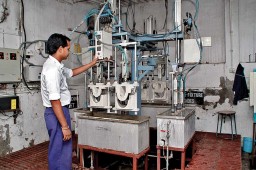
The manufacturing process has shown a remarkable improvement since the implementation of the Lean project, the rejection rate which was around 13.5% way back in 2003, is currently at 0.4%.The next goal is to achieve the rejection rate of 0.04%. “Before the implementation of Lean management our average production cycle was 12-14 days, today the same has been reduced to 1 to 3 days. The immediate plan is to install a conveyor-based system for transporting the finished goods from the sewing floor to the trucks for loading to further automate the process, this will help us reduce the production cycle time to just 7 hours,” adds A J Singh. Tynor is currently exporting to about 25 countries with an On-Time Delivery record of 83%.
The company owes the process time reduction to the concept of Value Stream Mapping, a Lean manufacturing technique, wherein the operations are documented and video-graphed for identification and removal of all the non-value added activities. “Videographing of all the process has also enabled us to improve upon the personnel movement, their body stress and thus we have been able to check the three big M’s – Muda – the waste , Muri – the stress and Mura – the variation, as a result we have very good operation ergonomics as well,” explains A J Singh.

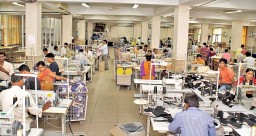
The highlight of the company’s Lean journey is also keeping an eye on financial ratios and linking the manufacturing operations to its finance and revenue. At the beginning of every financial year, Tynor prepares a business plan, under which the growth in the top lines and controlling the bottom lines is defined, and how factors like operator’s efficiency, rejection rate, inventory turnover ratio, cost per unit, pieces produced per operator etc. should grow in order to achieve the same. This entire analysis is monitored on a quarterly basis, and compared against the benchmarks set in the business plan. “It is the responsibility of the head of department to achieve these pre-defined targeted ratios and percentages, obviously we are there to help, but it is their job to achieve the targets,” avers A J Singh.
Every Operator is a Quality Inspector
Quality in a product requires a positive quality, attuned mindset of each and every worker and it is of no surprise that there is only one person in Tynor’s quality department who is responsible for the final checking of each shipment. This has been possible since the last sewing operator in the line is the quality head for the line, and he works under the set guidelines to decide the quality of a product. “We train the operator to stop the line if there are any quality issues. If the input material itself is of poor quality, the operator can reject the lot and prepare for the next job card. Then the quality department, and the product development department, would see what the problem is, and how it has happened, and solve it then and there,” explains A J Singh. Every operator is trained to check whether the operation done prior to him/her is of the right quality, only then is he/she supposed to perform his/her operation.
[bleft]“We take good care of our employees; the entire factory is air-conditioned, and the salaries are good, much better than the surrounding industries. One canteen serves the same food to all the senior managers, directors and the workers at a much subsidized rate; the focus is also on employee development, and employees are regularly trained and their skills, knowledge and attitudes are improved and evaluated on a regular basis.” – A J Singh[/bleft]
Market, Growth and Future Strategy
Orthopaedic appliance and fracture aid market in India is estimated to be worth about Rs. 400 crores, out of which about 60% is coming from organized sectors, of this Tynor has successfully acquired 20% share. “We expect our share to grow higher to about 35% in the near future, as our company is growing at an average of 45%. We have slowly acquired the share of both the organized and unorganized sector at the same time,” avers P J Singh. The company admits that to continue growing at the same rate is quite a daunting task, as they have to add a manufacturing facility every year to support the same. “We already have 3 units around Chandigarh. Last year we added one unit, and we are planning another unit to go into production in the next 2 years. Our production will then increase by 300%. This increased capacity will only be sufficient for next 4 years. Then maybe we would have to establish another facility,” muses A J Singh.
Currently, Tynor has a turnover of Rs. 50 crores, but the target is to achieve a turnover of Rs. 200 crores in the next 5 years, 25% of which should come from exports. “Countries like Germany, France, Taiwan and China are among the global orthopaedic aid manufacturing hubs. We definitely expect India to reach a substantial ranking as an orthopaedic aid manufacturer in the next few years,” predicts A J Singh.
Tynor considers itself to be the 2nd largest orthopaedic aid manufacturer in India, and hopes to be No. 1 very soon. When asked to pick from the domestic and export market, A J Singh made it very clear that 80% of their revenue is still being generated from the domestic segment and they feel that the company first has to be strong on the home turf so as to grow stably in the export market.
Another milestone in Tynor’s journey occurred when they went in for a joint venture with the French orthopaedic giant Thuasne in December 2010. Tynor is manufacturing products for them, and promoting their products in India under a premium brand, through Tynor’s vast dealer network. Thuasne will promote Tynor brand in the countries where they are strong. “Thuasne is present in about 30 countries around the world, with 9 manufacturing bases in different countries like Romania, France and USA.Thuasne is a 170-year-old world leader in speciality fabric manufacturing which forward integrated into manufacturing orthopaedic aids and other similar products which use these speciality fabrics. They have huge facilities for such fabric manufacturing in France. “We started manufacturing for them on a small scale, because as of now we do not have enough spare capacity. That is why we are setting up a new unit as we don’t want to reduce our supply to the domestic market due to the increasing demand,” adds A J Singh. The company believes that they are still in the process of going Lean since it is a journey and not a destination. It is this journey only which will ensure the fulfilment of their long cherished dream of becoming a significant player in the world orthopaedic appliance manufacturing arena.
Human Resource Management
Shortage of labour is a national phenomenon but Tynor has framed a system to make it immune to such problems. “We are among the most preferred employers in this region for the facilities we provide to the workers and incentives given to them,” avers A J Singh. The employee turnover in Tynor is less than 1%, pretty good compared to industry standards.
On completion of the 3 months training program, they are given the least critical products to start with. “The real challenge comes while placing the new operator on to the production line, which is when they use the concept of takt time. When balancing a line there is always an operation which is well below 20-25% of the takt time standard, hence the new person is given that operation, so that in case if he/she is taking 25% more than the allotted time, the line would still remain balanced,” explains A J Singh,“Tynor is in the process of creating a product-based skill matrix, which would divide products based on the criticality factor – Highest Critical, Medium Critical, Lowest Critical, Most Time Consuming and Least Time Consuming, and the operators would be graded according to the products, not on their individual skills. “So we would not only be having clarity of the skill sets, but also the product specific skill sets would be available when required,” explains AJ Singh.
Another major emphasis of the company’s human resource management system is on the Performance Measurement System (PMS) for both the executive and worker level employees. The system implemented only last year rates the employees accurately based on their KRAs (Key Result Areas) which is perceived to be non-effective in a Small-Medium Enterprise. “This is because every individual doesn’t have a single defined function; there is a lot of multi-tasking in any SME including Tynor. So we moulded the concepts of KRA by defining the optimum number of process or tasks handled by an individual,” reasons A J Singh.
For the executive class, all the tasks or jobs undertaken by an individual are collated and aligned with his/her department’s goals. The impact of the tasks undertaken by an employee on their department’s goal is clearly defined, and the employee’s performance is evaluated as per the same. Based on this they are given individual targets for the coming quarter and these targets are also linked to their incentives.
Tynor has also identified the maximum and minimum targets for each operation, and the targets are revised on quarterly basis, based on the aspects of process change and skill improvement. “The target accounts for only 60% of the total score of PMS, rest are based on the quality being delivered, behaviour in the organization, and lastly how trainable the person actually is. They have to score a certain set of marks to stay in their present skill category and if they fail to do so they are demoted to a lower category, 3% is deducted from their basic pay,” adds A J Singh.






 Bharat Tex Special Report 2026