Just as technology is touching every stratum of development to make a simple effort a major success, Automation and Industry 4.0 are the buzzwords driving the apparel industry today. It’s all about simplifying processes, optimising raw materials and processes and bringing in higher transparency with improved timelines.
Supply chain can benefit from reduced lead times, reduced inventory levels leading to reduced operational costs and decreased product obsolescence at retail level. To develop such smart supply chains which are fully automated and interconnected, significant amount of efforts and long-term investments are required, along with the comprehension of the latest tools, but the payoffs can be significant. Sourcing teams of brands and retailers not only need to understand these latest trends but also adopt them with their partners.
The advent of technology and the openness of industry stakeholders to imbibe the same in the smallest of operations has led to the achievement of strategic goals with optimised cost and time. Sukumaran, Managing Director, Star Sri Lanka, talks about the changing sourcing trends and the effect of technology on the same, “From manufacturer focus and customer demand for ethical sourcing and manufacturing to international geopolitics and trade negotiations, micro and macroeconomic factors play a critical part in influencing sourcing trends.”
On the other hand, Wicrant Gambhir, Head of Sourcing, Jockey India, discusses the trends that are prevailing and are bound to dictate the market for sourcing, “The trends that are directing the processes of sourcing are speed to market, capacity underwriting with the vendors, captive manufacturing units, having vertical vendors in the fold and an agile manufacturing setup suited for short runs/staggered deliveries.”
The world has moved beyond looking at IT as an independent function within an organisation. Information technology is now embedded at the core of every single functional area within any organisation. As Sukumaran avers, “From 3D sample design to automated planning to the use of AI to stay ahead in the game, it is important that the organisations explore the limitless possibilities of technology to make its processes more efficient across the board.”
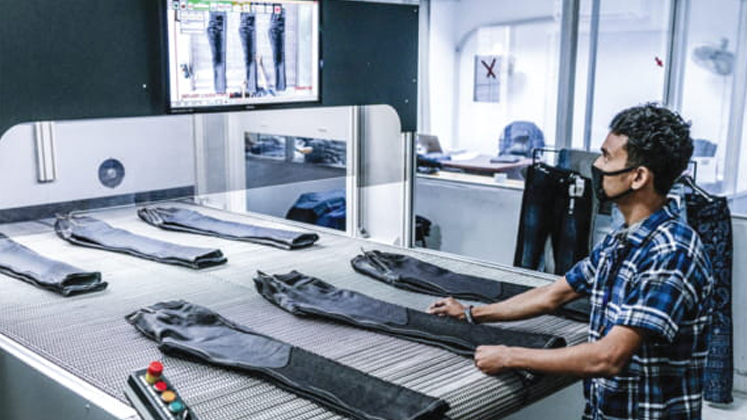
Wicrant renders Industry 4.0 as a revolution in the industry, which is bringing in a tectonic shift in the world of business, enumerating digitisation, digitalisation, artificial intelligence, cognitive computing, internet of things and other innovations as the key parts of Industry 4.0. Talking about the need of software that will enable better sourcing practices by managing the product lifecycle, he says, “The ideal software should be able to create a product mix from the market demand and further create a buying plan from the mix, simplifying manufacturing allocation or vendor costing keeping multiple variables in focus; have smooth interface between the sourcing and vendor teams, and manage TnA and the performance of manufacturers on real time basis while enhancing warehouse management.”
A pioneer in the industry for providing IT solutions is Blue Kaktus, and Gunish Jain, CEO, sheds light upon the effectiveness of their technological innovations: “Our unique tools enable brands and garment manufacturers to peak the market and react quickly to changing fashion trends. Through our AI and machine learning-based technology, we enable industries to become nimble and agile, thereby helping them to reduce their inventory by 25-30 per cent as well as reduce cost by 7-10 per cent.
Sukumaran concludes by emphasising on the significance of technology, calling organisations that leverage the opportunities presented through technological innovation and transform them to create value-added services, “As the ones that will survive and grow.” While Wicrant chimes in, “The brand owners, retailers need to be customer-centric, the manufacturers need to be a lot more efficient and flexible, the entire apparel value chain needs to be agile in today’s world.”






 Bharat Tex Special Report 2026