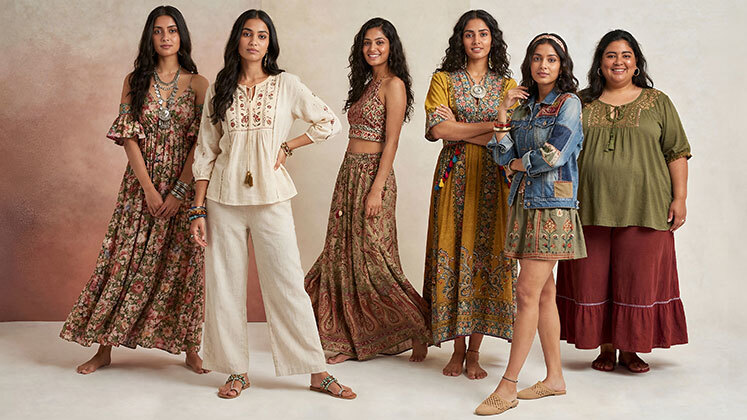
Size planning is moving from a distribution exercise to a demand intelligence problem.
The starting point may still be a midsize-heavy mix based on historical averages, but the real value now lies in how that mix is continuously refined as real demand signals emerge. Increasingly, brands are treating each size as its own micro-market, with distinct behaviour across products, stores, and customer segments.
This shift is changing how decisions are made. Instead of asking “what is the right overall ratio?”, brands are asking “how does this product behave by size, by store, by customer type?” A fitted silhouette, a youth-led style, or a regional skew can all distort the curve in different ways. Applying a single ratio across these variables is no longer efficient.
At the same time, brands are addressing a long-standing blind spot: the gap between sales and actual demand. When a size goes out of stock, its demand is effectively lost in traditional models. Today, more brands are treating stock-outs as valuable data, helping them reconstruct true demand and improve future planning.
Speed is now a critical enabler. The ability to track early sell-through, reallocate inventory, and adjust size depth within the same season is becoming a competitive advantage. In high-volume categories, sizes are increasingly managed almost like separate SKUs, each with its own demand pattern.
Apparel Resources spoke with leading retailers, who emphasised that size is no longer a one-time decision, but a continuous loop of signal, correction, and refinement.

“At Styox Fashion, we generally follow a balanced size ratio of 1-2-2- 2-1 (XS–S–M–L–XL) across most of the apparel categories. The highest allocation goes to medium and large sizes because these sizes constitute the majority of customer demand. The ratio functions as an unchanging standard. The actual distribution will change according to different product categories and design elements and fit specifications and seasonal demand patterns,” said Ritika Mehra, CoFounder, Stylox Fashion, a denim and casual wear brand with 59 stores across Tier 1 and Tier 2 cities such as Gurugram, Delhi, Noida, Ghaziabad, Modinagar, Lakhimpur, Gorakhpur, Kichha, and Sangli.
At the same time, flexibility is increasingly being built into both assortment planning and product design to respond faster to demand shifts.

“Our assortment is primarily centred on sizes M, L, XL and XXL. The size mix may vary depending on the silhouette and fit of the garment. At a production level, we typically follow a balanced ratio, while also designing outfits with approximately six inches of alteration margin. This allows us to maintain flexibility and respond quickly to customer requirements across stores,” mentioned Bhavay Pruthi, Senior VP, Product Management & Ecommerce, Libas, an ethnic fast-fashion brand with close to 50 stores and an annual revenue of around ₹750–800 crore (US $78.90 million – US $84.15 million).
Size strategies are also being finetuned at a category level, particularly where fit preferences vary.

For example, Ajay Ajmera, Founder and CEO, Ajmera Fashion Limited, pointed out, “A typical distribution we use is close to 1–2–3–2–1 across sizes S, M, L, XL and XXL, with M and L forming the bulk of the stock as these tend to move the fastest in most markets. However, this ratio is
not fixed for every product category. For example, in certain categories like festive kurtas or occasion wear, we slightly increase the share of L and XL as customers often prefer a slightly relaxed fit.”
| What happens when brands have no past data to guide them? In such cases, brands typically start by building an initial size mix using benchmarks from similar products, category-level trends, and past performance of related styles. |
The Surat-based ethnic fashion brand operates nearly 220 franchise stores and recorded a revenue of approximately ₹147 crore (US $15.46 million) in FY 2024–2025.
Data and analytics are also playing a central role in refining size decisions at a granular level.

“We have an in-house tool to ascertain size ratios for products at a subcategory/brick level. It takes into account past sales trends – opportunity loss, and suggests a ratio that works specifically for that product,” stressed Soumya Kant, Co-Founder & Chief Growth Officer, Clovia, a lingerie brand with presence in 85+ EBOs and 2000+ large-format stores.
Similarly, Stylox relies on FYND Commerce to keep track of stock, manage store inventory, and monitor real-time sales. “In addition, Microsoft Excel is used for detailed sales analysis, trend tracking, and internal reporting by the merchandising team. For accounting and financial integration, we use Tally ERP, which supports inventory reconciliation and financial
management,” stated Ritika. But what happens when brands have no past data to guide them?
In such cases, brands typically start by building an initial size mix using benchmarks from similar products, category-level trends, and past performance of related styles. They also factor in design details like fit, silhouette, and target customer profile to estimate which sizes are likely to move faster. As a result, the starting allocation usually leans towards the most commonly demanded sizes, especially medium and large.
Once the product is in the market, the process becomes more dynamic. Brands closely monitor early sellthrough to see actual size demand in real time. If certain sizes move faster than expected, they quickly adjust through replenishment or shifting stock across stores. These early insights are then used to refine future size planning and improve accuracy for upcoming collections.
The Role of Demographics
In a market as diverse as India, customer demographics are emerging as a key driver of store-level size strategies.

“While we operate with a standard base ratio, we actively fine-tune size distribution based on regional demand patterns and store-level performance. For instance, stores in metropolitan cities or youth-driven markets may reflect different size curves compared to those in smaller towns. By leveraging store-specific data and demographic insights, we align inventory more closely with local demand,” said Akhil Jain, CEO, Madame, a women western wear brand with 124 stores across India.

Echoing the similar sentiments, Pooja Merani, COO, Wacoal India, which has 18 EBOs and a presence in 45 large-format stores across cities, emphasised, “Demand patterns can sometimes vary slightly between store locations within the same city. We therefore look at store-level sales data and make adjustments to the size mix so that inventory is better aligned with local demand.”
Retailers mentioned that demand variation is also shaped by retail format, with malls and high streets catering to different customer profiles.
Cracking the Code of the Perfect Fit
Most brands begin with established industry measurements but quickly adapt them based on their own customer base. Design and product teams conduct regular fit trials, analyse customer feedback, and study return patterns to identify gaps and improve accuracy.
“Libas follow its own size specifications and fit standards, which have been developed over time based on customer feedback, product testing, and our understanding of the brand’s core consumer,” said Bhavay Pruthi.
Similarly, Wacoal and Ajmera Fashion Limited follow their own fit standards. Clovia, meanwhile, takes a more tech-led approach with its Curve Fit Test, a patent-pending algorithm that helps users find the right fit based on body type. The brand noted that customers using this tool show significantly higher repeat purchase rates.
When certain sizes sell out faster than others during the season, brands are forced to act quickly to avoid lost sales and frustrated customers. The response typically combines smart replenishment with agile inventory movement across locations.
| Retailers mentioned that demand variation is also shaped by retail format, with malls and high streets catering to different customer profiles. |
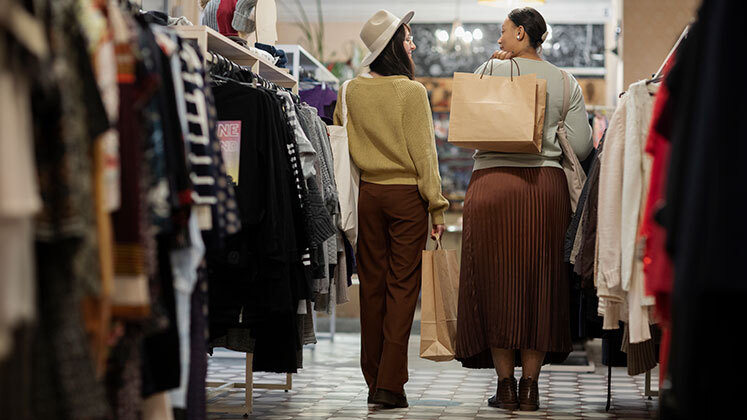
For instance, Stylox adopts a dual strategy of replenishment and redistribution. The brand restocks fast-moving sizes through timely replenishment while also balancing inventory across locations through inter-store transfers, ensuring demand is met efficiently. It also leverages an online inventory pooling system, allowing customers to access stock across its retail network rather than being limited to a single store.
Similarly, Bhavay Pruthi of Libas noted, “Faster-moving sizes are replenished based on store-level demand, and where required, inventory is also rebalanced across stores.”
Building on this, Soumya Kant of Clovia highlighted, “In case stock imbalances occur, our in-house tool suggests size ratios at the time a new PO is raised. It factors in sales velocity for each size and opportunity loss, if any. Our mind-to-market is less than 15 days, so any lost sales are replenished very quickly.”





 Bharat Tex Special Report 2026