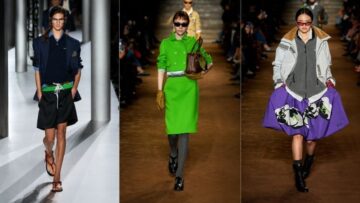
The babydoll dress has seen its highest demand in the last decade. Driven by cultural visibility and runway revivals, the mini dresses spiked 260% in consumer searches as seen from 2024-2025 and are defining the commercial apparel landscape, thus indicating much more than a seasonal spike.
Its commercial strength is in its floaty proportions and empire cut, thus flattering tall and petite frames alike. Unlike body-conscious styles that dominated previous seasons, it offers movement and ease while maintaining a polished appearance. Also, the design flexibility of combining softness with structure, is what has kept it in rotation across multiple aesthetic codes, from grunge to coquette to contemporary luxury.

In S/S 2026 alone, brands like Miu Miu and Ann Demeulemeester debuted renditions on their Spring 2026 runways. While Miu Miu, Stella McCartney and Chloé leaned into sugary, thigh-skimming lengths paired with ditzy floral prints, ruffles, and delicate embellishments, others particularly Ann Demeulemeester Chopova Lowena gave the traditionally sweet shape a rebellious, alt-girl edge by introducing shredded hems, dark overlays, and distressed details.
Many contemporary brands, including Dôen and Faithfull have made babydoll dresses a signature part of their brand identities. Even Ganni and J.Crew have hopped on the bandwagon with their Broderie Anglaise Babydoll Mini Dress and Cotton Voile Babydoll Dress respectively. Similarly, fast fashion brands like Marks&Spencer also have adopted the silhouette in products like Printed Orange Pure Cotton Baby Doll Dress. In luxury wear, Danish womenswear designer Cecilie Bahnsen has built her entire design language around the silhouette’s potential, with products like Britney Dress and Tilde Puff-Sleeved Dress.
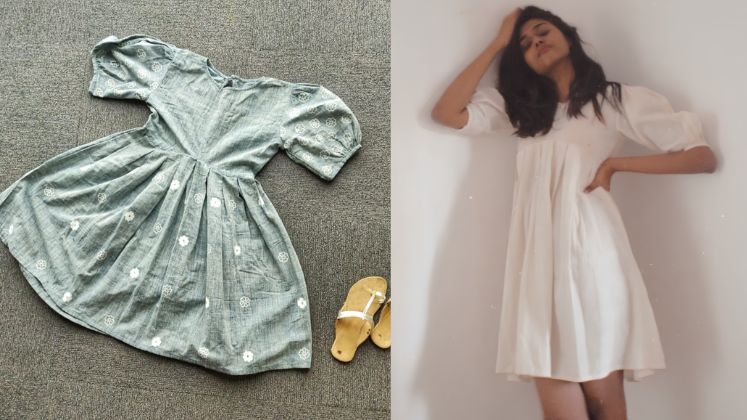
For retailers, this amalgamation of style and occasion utility is what distinguishes a trend silhouette from a durable category.
The babydoll silhouette may have originated in the West, but it is steadily finding its place in the Indian fashion market. It has found natural ground in Indian contemporary and occasionwear, with brands translating it through traditional textiles, hand embroidery, and surface ornamentation, thus elevating the form without losing its essence.
For instance, Papa Don’t Preach by Shubhika features embellished short dresses that deploy fabrics from matka silk and raw silk to tulle and organza, mapping the babydoll’s volume and festive energy onto India’s ethnic couture adjacency. Their archive includes the Lilac Embroidered Baby Doll Dress, Ivory and Pink Embellished Baby Doll Dress with Shrug and Nebula Nightfall Baby Doll Dress which are a fully localised interpretation that is different from the main reference.

On the other hand, this silhouette is largely adopted by the Indian casual wear market as well. Hyderabad-based Label Gangotri channels it through natural dyes, Indian block prints, and hand embroidery as seen in styles like the Genki and Nami dresses, thus incorporating a global silhouette with Indian craft.
At the mass-market end, Bangalore-based Tokyo Talkies has also embraced the silhouette, with its Women’s Self-Design Fit & Flare Short Dress and Women’s Short Sleeves Square Neck Printed Dress both built on the babydoll’s signature volume. For traditional textile execution, Jaipur-based Pinklay has bestsellers like the Audrey Cotton Midi Dress and Palladio Cotton Midi Dress that recreates the silhouette through cotton craft, proving its range across price points and positioning.
The babydoll solves a real dressing problem: ease with perceived polish, delivered through volume rather than cut. Designers keep finding new versions for it, either sheer, embellished, grunge-inflected or craft-heavy and it absorbs each update without losing its essential logic. That adaptability is why it establishes itself less as a passing trend and more of a commercial category.