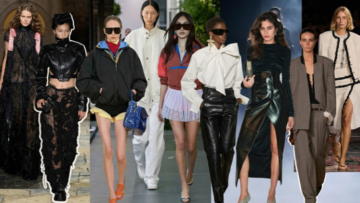
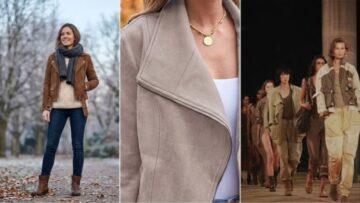
The usage of technology has become an integral part of every industry, and fashion retail is not far behind. Not only have they integrated technology in the back-end and supply chain processes, but also used it for enhanced consumer engagement. The fashion industry is a hotbed when it comes to adopting the latest trends as well as technology, hence virtual reality, augmented reality and mixed reality have found their niche to help transform the way this industry creates, presents and retails its products.
In the recent times, it has become evident that the brands that undermined the importance of e-tailing have lost out to those who grew to embrace it. The world is now a ‘phygital’ sphere where even stores are reinventing their points of sale through digitisation. Augmented reality has been described as “the use of real-time information in the form of text, graphics, audio and other virtual enhancements integrated into real-world objects,” according to research and advisory firm Gartner. AR does not create a simulation, but integrates and adds value to a customer’s interaction. Virtual reality, on the other hand, provides a computer-generated 3D simulation that can surround a user and respond to their actions in a natural way.
Here we discuss the different aspects of fashion and retail that have employed the use of these two forms of technology to add an edge to their customer experiences.
The ramp

Lately, many brands have turned digital in their endeavour to display their collections on the ramp. It started with Topshop, when the British retailer decided to stage the world’s first virtual catwalk. The brand selected four winners of a contest who sat in the window of Topshop’s Oxford Circus flagship store and wore virtual reality headsets to watch the fashion show live from the Tate Modern gallery. They could also revel in the experience of feeling that celebrities were sitting right next to them.
Another example is that of British internet service provider, Three, teaming up with Central Saint Martins’ MA Fashion to amalgamate technology and fashion. They created a 46-metre long projection for the runway along with spatial audio and haptic feedback, which was all a part of Three’s campaign to launch 5G in the country.
However, as the world currently suffers from the ramifications of the coronavirus pandemic, the use of technology in fashion shows may become more of a necessity than an experiment. A collaboration that exemplified the reach of AR-enabled fashion shows to audience sitting in different locations was that of London College of Fashion’s Innovation Agency and augmented reality pioneers HoloMe. Users from around the world were able to experience the show live as it was superimposed into their immediate surroundings, a breakthrough for such technology which is generally required to be pre-recorded to be transformed into the surroundings of an individual.
Try and buy
Retailers can now bridge the gap between online and offline channels by offering the patron, the ‘try-before-you-buy’ option. It is now being widely used for everything from clothes and makeup to eyewear and accessories in order to help consumers not only gauge if the product will suit them, but also to reduce the number of returns as the consumer becomes surer of what to buy.

Enhancing the luxury experience, Dior came out with a filter on Instagram through which users could add the DiorSoLight sunglasses onto their faces as a way to virtually try them on. ASOS was one of the first brands to launch an AR fitting tool that could help shoppers see a garment on 16 different body shapes to give them an idea of how it would look on them.
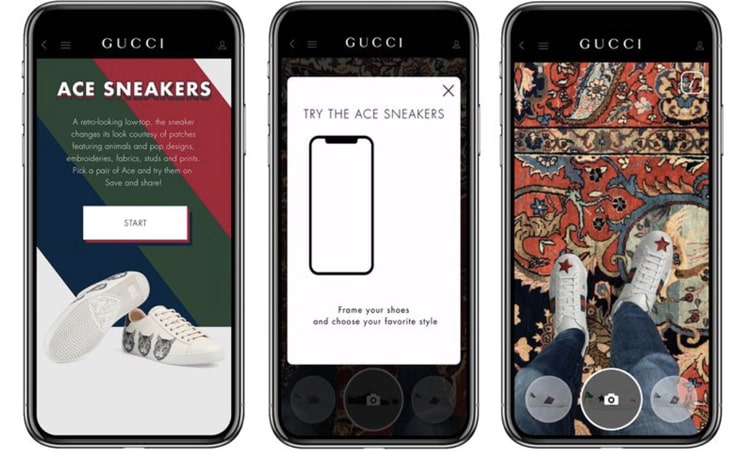
Similarly, Gucci has enabled customers to point their smartphone cameras at their feet to see a digital overlay of different sneakers. They can swipe to look for options as well. However, one of the most innovative ideas that some brands have implemented in marketing is that of making billboards, vehicles and product packaging come to life with Snapchat’s AR marker tech. When the user points their camera towards the said surfaces, they seem to display hidden messages that catch the fancy of anybody watching. Foot locker created the illusion of LeBron James coming out of a Nike poster in an ad campaign.
Also Read: Fashion retail embraces video analytics for footfall counting
In-store experiences
Since the online world is abound with experiences that are increasingly drawing customers to stay indoors and shop, physical stores have had to step up their game in order to attract footfall.
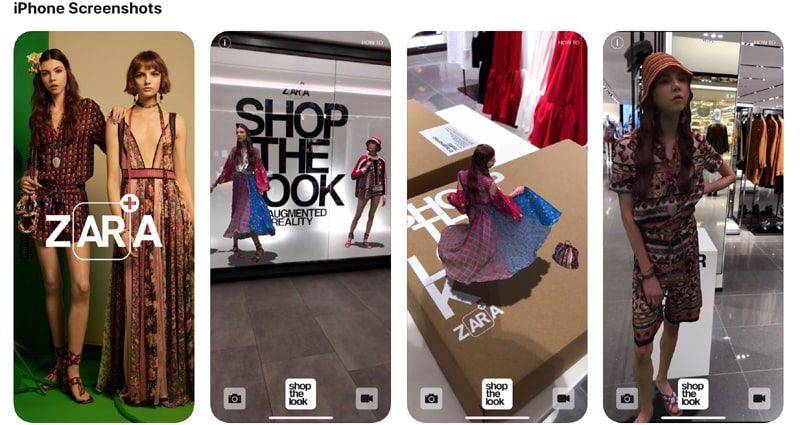
Zara, for example, used AR to bring virtual models to life in-store. In 120 stores globally, all patrons who had the brand’s app, could hold up their phones to the shop window or a sensor within the store to see models wearing Zara’s latest collections, walking and talking around them. Users could also click on products and buy them. Gap and Burberry have also dabbled in similar experience enhancing technologies in-store.
VF Corp has opened a retail space in London that uses technology to showcase virtual mannequins wearing their collections in 3D. Visitors can use touchscreen displays to view products in different scenarios as well as change features such as lighting and context.
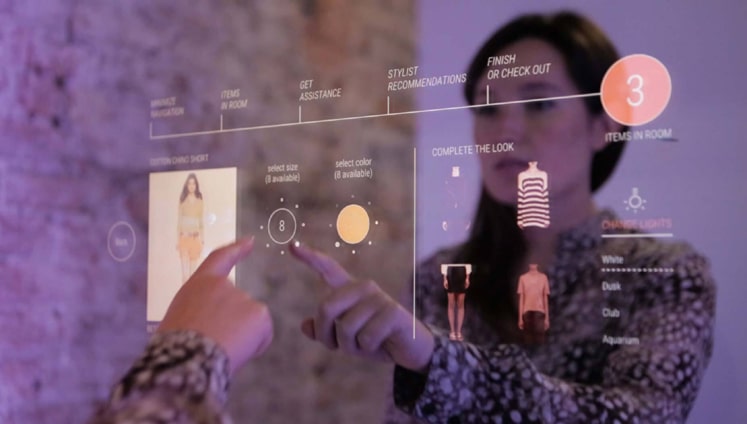
Another tool that has garnered a lot of success is Smart Mirrors. They enhance the shopping experience by allowing users to try on different colours and styles effortlessly. Several platforms can now help enable customers to change the colour, try different outfits, add accessories or change patterns without ever having to move or getting into the hassle of trying on a plethora of outfits. It can also be used to precisely map and analyse data to provide accurate, real-time, personalised recommendations for individuals.
The Oak Mirror provides a technology that aims to transform the in-store experience, focusing on the fitting room. Acting as both a mirror and touch screen, shoppers can use the interactive surface to change the lighting of a fitting room, or contact sales associates to request additional colours or sizes or “complete the look” with accessories.
Also Read: Is facial recognition the future of retail?