Embroidery has always been about detail. But as customer demands rise, manufacturers are being pushed to deliver greater precision, consistency and design flexibility, while meeting higher standards on sustainability and compliance. For Pioneer Embroideries, these changes are shaping both how it operates and where it sees its next opportunities.
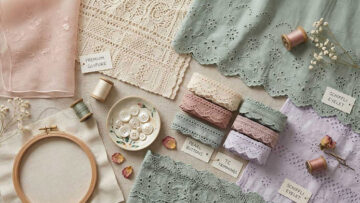
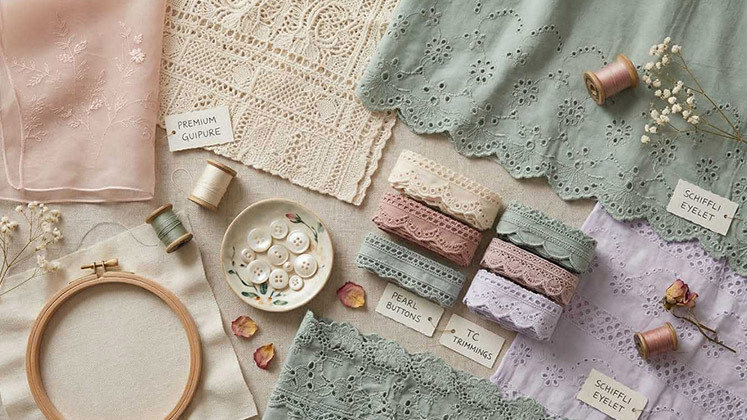
Pioneer Embroideries has 35 years of experience in manufacturing and exporting Schiffli embroidery, Torchon and Bobbin laces, Raschel laces and other garment accessories. Its products are used across a wide range of applications, from women’s outerwear and innerwear to sleeves, other garment details, basic innerwear and petticoats, as well as premium segments such as high-end lingerie, fashion, sleepwear and casualwear. The company also caters to the home-textile segment.

“Sleepwear is one segment where we have recently seen success with niche brands. There is also significant potential in traditional wear across markets such as Cambodia, Thailand, Myanmar and Sri Lanka, where white embroidery is particularly popular,” said Manoj Pillay, Senior VP, Pioneer Embroideries Ltd.
The company serves both the domestic market and exporters, with its products also reaching markets such as the US and Europe. It also supplies to countries such as Vietnam, Sri Lanka and Bangladesh, where its products go to nominated garment manufacturers and vendors.
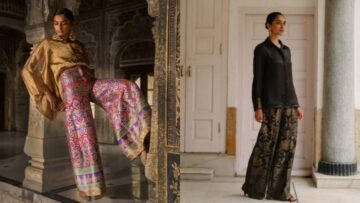
Alongside its manufacturing business, Pioneer also owns Hakoba, the heritage brand established in 1959 and known for its embroidered fabrics, with a focus on Indian ethnic and fusion wear. The company is also one of the largest manufacturers and exporters of dope-dyed polyester filament yarns.
In an exclusive interview with Apparel Resources, Manoj spoke to about where demand is moving, how quality, sustainability and compliance expectations are changing, and where he sees the next opportunities for the company.
What does it take to secure a brand nomination today compared with a few years ago?
Today, customers have much more specific and stringent standards. It is no longer just about the product; quality, sustainability and compliance all play an important role, particularly for brands operating in premium and niche segments. We are among the few factories in our industry in India that are audited and certified for sustainable production, and we are currently nominated by several well-known brands globally.
There are also value brands that buy in large quantities but require a minimum level of sustainability and compliance assurance. For example, OEKO-TEX Standard 100 has become a basic requirement for most brands. It is essentially non-negotiable, and without it, we cannot move ahead with many customers. Some brands ask for additional requirements beyond these basic certifications, including their own audits and compliance standards.
Some brands, for example, work with audit firms such as Elevate, which conduct very rigorous assessments of our factories. These audits cover everything from labour and social compliance to environmental practices, building structure and other aspects of factory operations. We have to give them access to the entire factory and allow them to speak to anyone as part of the process. I consider this one of the most rigorous forms of auditing, and these requirements are becoming increasingly stringent.
Quality expectations have also become much more stringent. In the lingerie industry, for example, embroidery on bra cups has to be extremely precise. A flower motif on the left and right cups must be symmetrical, with no missing elements. We also have to ensure there are no deviations in dimensions and that the design retains its geometry throughout processing.
These are things we have always worked on, but today there is much less room for deviation. Production rejections can be high because of these stringent requirements, but ultimately, they result in a better product.
I think this is also part of the larger shift happening in the Indian industry. India has traditionally been known for mass-produced products, but we are now increasingly moving into premium and niche segments, where customers expect a much higher level of quality, sustainability and compliance. Over the last three to four years, we have successfully entered this space and have been able to meet those requirements.
Are brands willing to pay for higher standards, and are they supporting suppliers in meeting these requirements?
The niche segment is willing to pay a premium. These customers expect us to meet their standards across quality, sustainability and compliance, and they have also been helping us get to that level.
At the same time, some brands are willing to support manufacturers in meeting their standards. When one such brand approached us, we were not 100% compliant with all its requirements. They studied the company, felt it was worth investing time and resources in, and decided to work with us. They have effectively acted as a partner, helping us understand what needs to be done and handholding us through the process. Even during audits, if we encounter an issue, we can approach them for guidance on how to address it.
Some brands are also assuring us of business, which gives us the confidence to make these investments. So, there is a mutual commitment from both sides.
What new opportunities is home textiles opening up for Pioneer, and how do you see the market developing?
Home textiles is an important segment for the company, largely because the fabric consumption is much higher than in apparel. A garment may use two or three metres of fabric, whereas a bedsheet, curtain or other home-textile product can require significantly more material. This makes the volume opportunity quite attractive.
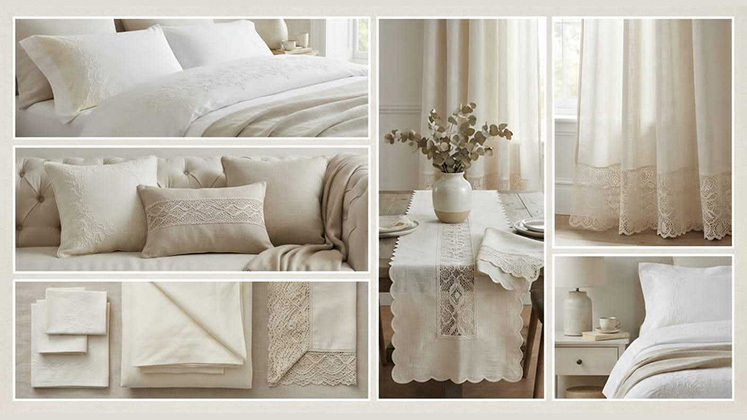
Our embroidered fabrics and trims are used in products such as curtains, pillow shams and duvet covers. We work with leading home-textile manufacturers and brands, including Indo Count and Faze Three in India, and have also worked on programmes with IKEA.
We cater to both domestic and export markets, but the use of embellished home furnishings is still relatively nascent in India and largely limited to niche markets. There is a much wider use of products such as pillow shams, duvet covers and seasonal curtains in Western markets, while these categories are still developing here.
As the Indian market matures and consumers become more familiar with these products, we see significant potential for embroidered and embellished home furnishings. Home textiles is already a growing business for us, and we see it as an important area of opportunity going forward.