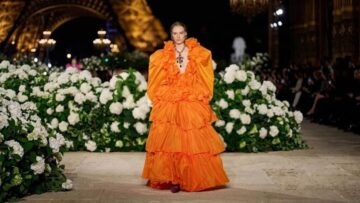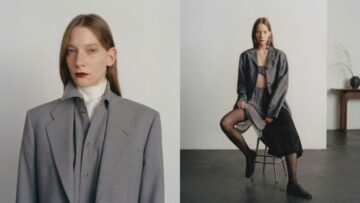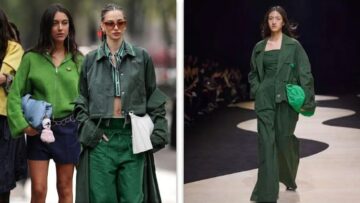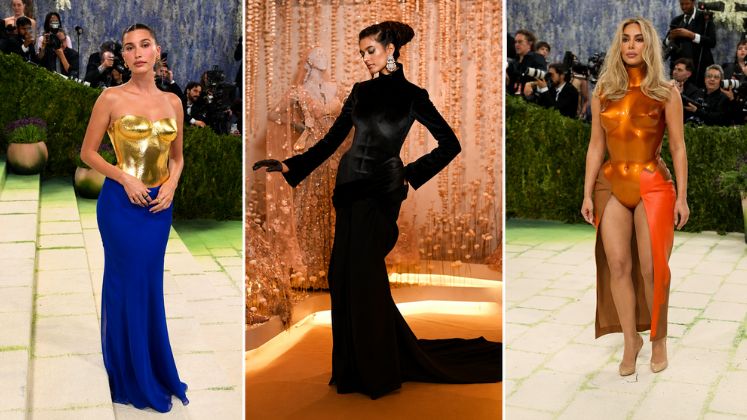
Sculpted, corseted bodices are emerging as fashion’s defining silhouette of 2026, with couture houses and red carpets both pushing the torso into increasingly architectural territory. The trend moves beyond conventional waist-cinching corsetry into what is being termed body engineering, where the garment redraws the bust, ribcage and hips rather than simply following the body’s existing lines.
Schiaparelli has led the shift under creative director Daniel Roseberry. The house’s Spring 2026 couture collection introduced exaggerated, sculptural forms, while its Fall 2026 line advanced the idea further with silicone, moulded surfaces and hyper-realistic corsetry that treated the torso as a cast object rather than a sewn one. Ashi Studio and Jean Paul Gaultier, under debut couturier Duran Lantink, showed comparable moulded bodices in the same season.
The trajectory traces back to the return of corsetry through lingerie-inspired tops and boned, body-conscious dressing over recent seasons, itself a callback to Vivienne Westwood, Jean Paul Gaultier and Thierry Mugler’s structural work of the 1970s and 80s, and the bandage-dress era of the 1990s and 2000s. What distinguishes 2026 is the degree of construction: the corset has moved from shaping the body to designing it outright.
The silhouette’s rise coincides with the wider visibility of GLP-1 weight-loss drugs and a cultural pull back toward smaller frames, a timing the industry itself has flagged even while cautioning against reducing the trend to a single cause. The sculpted bodice offers an alternative to that narrower ideal: it can tighten the waist while manufacturing curves elsewhere through boning, padding and moulding.
The 2026 Met Gala, themed Costume Art, became the trend’s most visible showcase, with moulded busts and breastplates from Saint Laurent, Schiaparelli and GapStudio on the red carpet, alongside a sculptural piece for Kim Kardashian developed with artist Allen Jones. Off the red carpet, Zendaya wore Schiaparelli’s porcelain-effect silicone bustier look to a film premiere within hours of its runway debut, while Emily Blunt’s raffia-bodiced Schiaparelli gown showed a softer, more romantic reading of the same construction principle.
Tarun Tahiliani’s 2026 couture presentation, Navaratan, placed sculpted corsetry at its centre, pairing engineered bodices with fluid saris and tailored gowns — a structural approach that sits within a broader pattern among Indian couturiers of treating the torso as a construction problem. Gaurav Gupta’s sculptural draping and Rimzim Dadu’s metal-and-cord bodice work have built similar vocabularies around body-as-architecture in recent India Couture Week showings, while Amit Aggarwal’s moulded, technical silhouettes have long anticipated the engineered-torso aesthetic now surfacing globally.
For the Indian couture and bridal segment, the trend has direct commercial relevance: corsetry and structured blouse-and-lehenga pairings are already established categories, and the global shift toward visible engineering over soft draping gives domestic designers a framework to position existing craft with zardozi-embellished boning, hand-embroidered corsets as aligned with, rather than derivative of, the current international runway conversation.