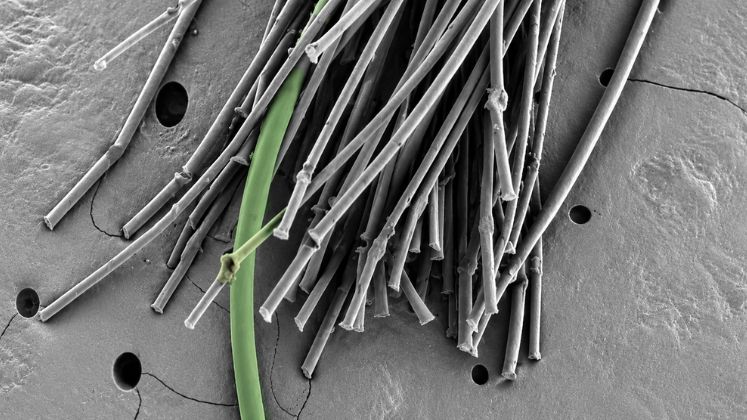
MIT engineers have created a stretchy yarn made entirely from polyethylene, offering a recyclable alternative to spandex blends that currently dominate the activewear and stretch-fabric market.
The yarn matches spandex in stretch and strength but is built from a single plastic family rather than mixed fibers. Researchers led by Svetlana Boriskina of MIT’s Department of Mechanical Engineering used two polyethylene formulations, a softer one for the stretchy core and a stiffer one for the outer sheath, melted at roughly 350°F and extruded into hair-thin fibers before being spun into yarn. Because both layers share the same chemistry, the finished yarn can be melted down and respun without any separation step. In testing, the yarn retained its strength through ten cycles of melting and respinning.
The innovation targets a persistent recycling gap. Conventional spandex is a polyurethane fiber wrapped in polyester or nylon for durability, and separating those materials requires chemical treatment that is costly and often relies on toxic solvents. As a result, most stretch garments are discarded rather than recycled. The researchers noted that a large share of textiles sold in the US market contain spandex, rendering them effectively non-recyclable under current systems.
Since polyethylene is already widely recycled in packaging, worn-out garments made from the new yarn could potentially be processed through existing recycling infrastructure rather than requiring new facilities. The next phase of research involves weaving and knitting the recycled yarn into finished fabrics to test real-world performance against virgin material.
This technology also opens an opportunity for Indian textile manufacturers to start investing early in polyethylene-based stretch fabric R&D and position themselves as suppliers for circular activewear lines, an area where India currently trails synthetic fibre innovators like Japan and South Korea.