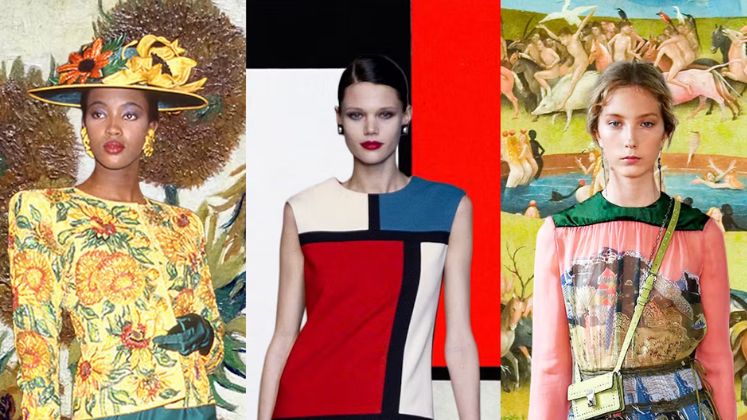
Fashion’s love affair with its own history has moved from occasional homage to a defining creative strategy this year, with houses digging into their own archives for their strongest storytelling. The trend spans both runway and retail, and 2026 has been its breakout year.
The clearest example is Versace. Dario Vitale’s debut for the house at Spring/Summer 2026 drew directly from Gianni Versace’s late-1980s and early-1990s catalogue; baroque prints, pop art references, and the Miami party-culture glamour that defined the label before Gianni’s death. Donatella Versace had already laid groundwork for this with her own archival tribute collection, resurfacing prints made famous between 1991 and 1995, including the Vogue, Andy Warhol and Butterfly motifs, remixed onto updated silhouettes, with one look built around an actual archive piece: the tasselled skirt Naomi Campbell wore in 1992.
Prada has taken a parallel path. Its Fall/Winter 2026 womenswear show, staged inside the Deposito at Fondazione Prada, built an entire collection around archival dresses tucked into stripped-back, minimal styling, with fabrics intentionally faded and embroideries aged to suggest garments with a lived history. The house has run archive-print capsule drops before, revisiting recognisable prints from its own back catalogue as wearable reissues. Marni’s Meryll Rogge used her first collection for the house, Autumn/Winter 2026, to reinterpret the Marni archive with unexpected print combinations and colour-blocking. Emilio Pucci, under Camille Miceli, has been steadily reviving heritage prints like Vivara alongside new patterns built in the same visual language.
Elsewhere, Armani relaunched its Archivio project, reissuing 13 menswear and womenswear designs spanning 1979 to 1994; Dior’s Maria Grazia Chiuri referenced Yves Saint Laurent’s Trapèze line in couture; Valentino’s Pre-Fall drew on founder Valentino Garavani’s mod-’60s and jet-set-era archive; and at Ann Demeulemeester, Ludovic Saint Sernin reworked the house’s 1992 feather top.
On the Indian side, the same instinct is playing out through homegrown craft rather than Western reference points. Ritu Kumar built its identity on reviving vintage Indian embroidery and textile prints since 1969. Varnavastram recreates archival weaves and prints sourced from museum records, including V&A-archived Kanjeevaram patterns, while WeaverStory works with master weavers to revive GI-tagged heritage prints and weaves.
Label Santanu Guha Thakurta’s 35th-anniversary collection revives hand-painting and block-printing techniques merging Bengal and Tamil Nadu textile traditions. FabIndia is known for traditional block-print archival motifs across its ethnic-casual range, and Anita Dongre regularly draws on archival Indian embroidery and print traditions in contemporary silhouettes. Nicobar reinterprets archival Indian prints within fusion-casual silhouettes, Sabyasachi is known for reviving vintage Bengal textile motifs and Rajasthani miniature-painting-inspired prints, Injiri works archival hand-block and weaving techniques into artisanal textiles, and House of Masaba reworks archival, retro pop-art-style prints into a contemporary fusion signature.