Tailoring has re-entered the fashion conversation this season, but not in the sharp, hyper-structured form associated with power dressing of the past. Instead, designers are leaning into a softer, more fluid version of the suit; one that borrows from menswear proportions without adhering strictly to them. Androgynous suiting, as the trend is being called across recent runway seasons, is less about erasing gender in dressing and more about giving tailoring room to breathe.
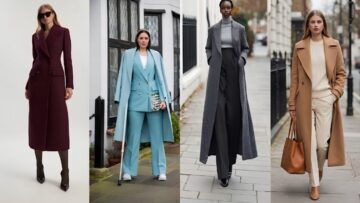
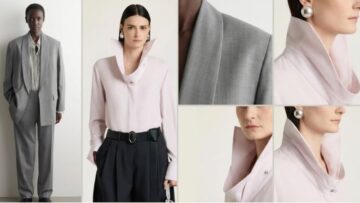
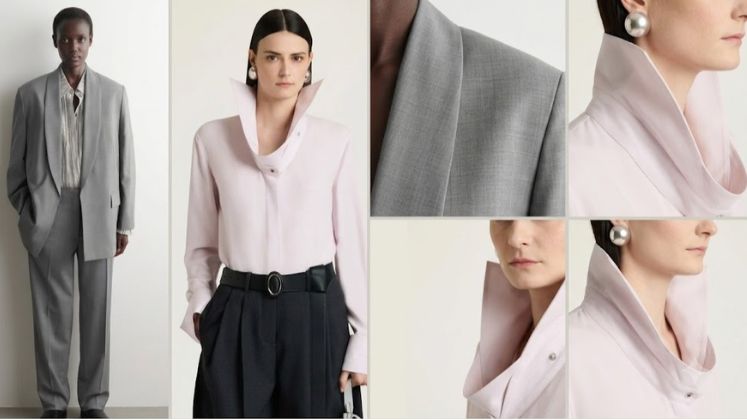
The defining characteristic of this trend is looseness. Blazers are oversized through the shoulder and body, often single-breasted with minimal embellishment, favouring shawl or notch lapels over sharply structured peak lapels. Trousers follow suit with straight-leg or wide-leg cuts with front pleats have replaced the skinny tailored trouser that dominated in earlier years. Cropped jacket lengths and Bermuda-short pairings are appearing as directional variations for warmer-weather markets, offering a way to signal the trend without committing to full-length tailoring.
Fabric choices lean toward wool blends, twills and structured cottons that hold shape without adding bulk, important for a silhouette that depends on drape rather than rigidity to read as intentional rather than sloppy.
From a retail standpoint, androgynous suiting sits at a useful intersection for brands: it can be merchandised as separates (blazer and trouser sold individually) rather than a matched two-piece set, which widens its addressable customer base and improves sell-through flexibility. It also lends itself well to a capsule-wardrobe pitch — a single oversized blazer can be positioned to work across multiple occasions, from office to evening, which aligns with slower-fashion, cost-per-wear messaging that many D2C and premium labels are currently using in their marketing.
A growing set of Indian designers has been building androgynous and gender-fluid tailoring into their core design language, rather than treating it as a seasonal capsule. Akshat Bansal’s Bloni remains among the most established names in the space, working in gender-agnostic, minimalist tailoring built around monochrome palettes and experimental fabrics. Anvita Sharma’s Two Point Two operates entirely outside conventional menswear and womenswear categorisation, offering contemporary tailored pieces designed to move across gender expressions, while HUEMN, from Pranav Mishra and Shyma Shetty, has built its identity in luxury streetwear around oversized, unisex-styled silhouettes, including tailored outerwear. Anaam takes a more avant-garde approach, deliberately blurring category lines with structured, unisex jackets.
Delhi-based designer Dhruv Kapoor is another consistent reference point, with oversized silhouettes and experimental tailoring that fuses menswear and womenswear construction running through his collections, while Urvashi Kaur brings a sustainability lens to fluid, gender-neutral tailoring rooted in Indian textiles. Shani Himanshu and Mia Morikawa’s 11.11/eleven eleven works relaxed, gender-neutral silhouettes in natural fabrics using traditional Indian textile techniques, and Kartik Kumra’s Karu Research takes a similarly craft-driven approach, presenting relaxed, artisanal tailoring outside rigid gender categorisation. Ayushman Mitra’s Bobo Calcutta folds gender-fluid, boundary-pushing tailored pieces into its broader maximalist design language, and streetwear-rooted label Six5Six Street rounds out the list with gender-neutral tailored and semi-tailored pieces aimed at an urban aesthetic.
For the Indian market, androgynous suiting arrives as Western-style tailoring steadily gains ground in metro workwear and occasion dressing, particularly among younger, urban professionals. The labels above show the aesthetic is already established at the designer level; but most remain designer-led or made-to-order rather than mass-retail. That gap is where the commercial opportunity sits: mainstream Indian pret and D2C labels have yet to scale unisex tailoring the way streetwear brands have scaled unisex casualwear, leaving room for a bridge-to-market play in separates-based, gender-neutral suiting.