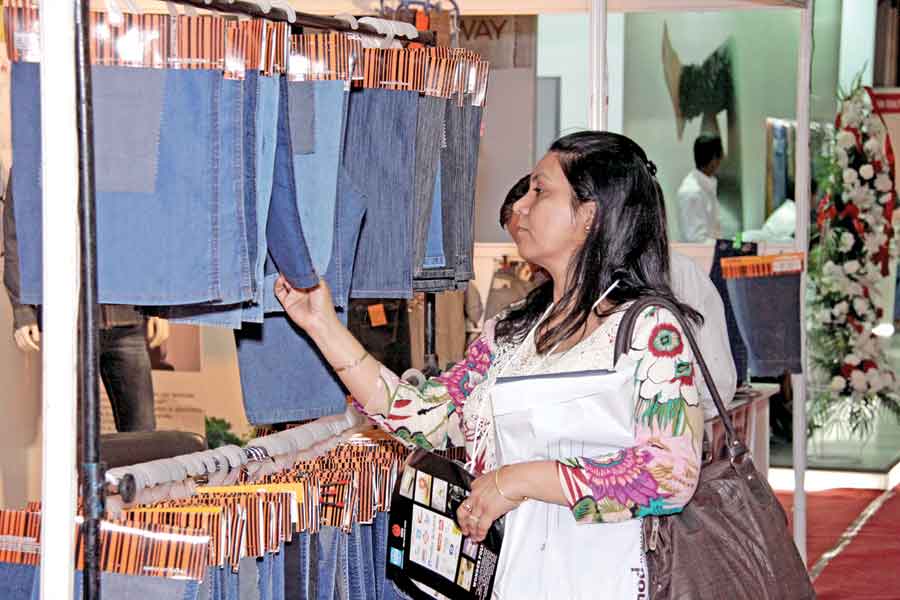
 The second edition of Indigo saw a wide visitor profile from top domestic brands and exporters to Gandhi Nagar (Delhi) based jeans manufacturers and traders of denim fabric. The event saw five denim fabric companies, namely Malwa Denim, LNJ Denim, Vinod Denim, Modern Denim and a new entrant in denim from Surat, R& B Denim showcasing their latest developments in denim along with a few yarn manufacturers. However, the star attraction at the event was the operational assembly line for jeans manufacturing at the EH Turel & Co. booth right from cutting to bundling to sewing, using Vibemac machines for special operations and machines from Typical for basic operations. A hit with the industry, the display attracted attention from many companies, both already into jeans manufacturing and those looking to foray into the segment…
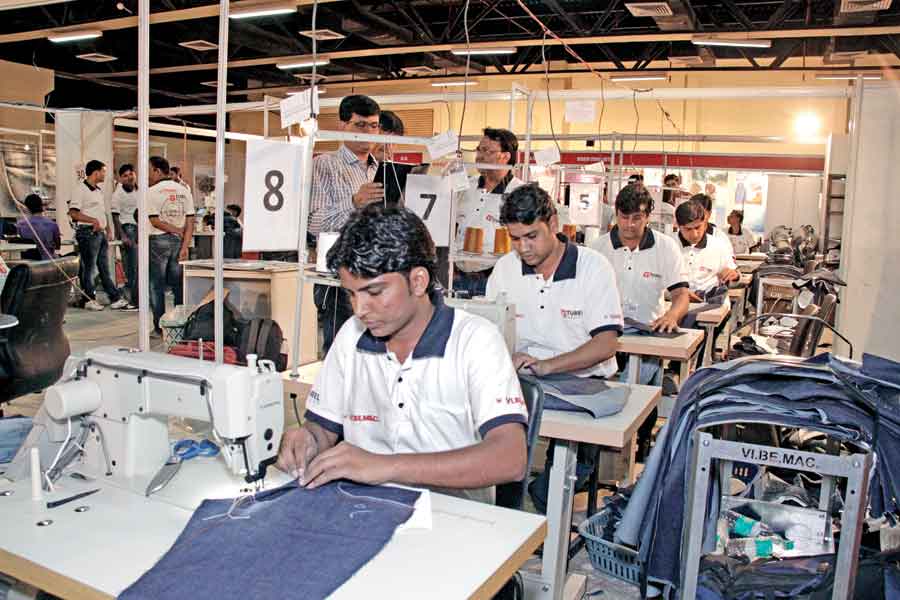
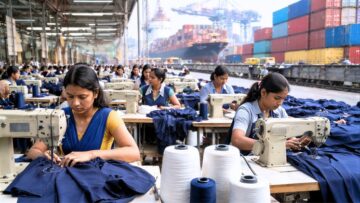
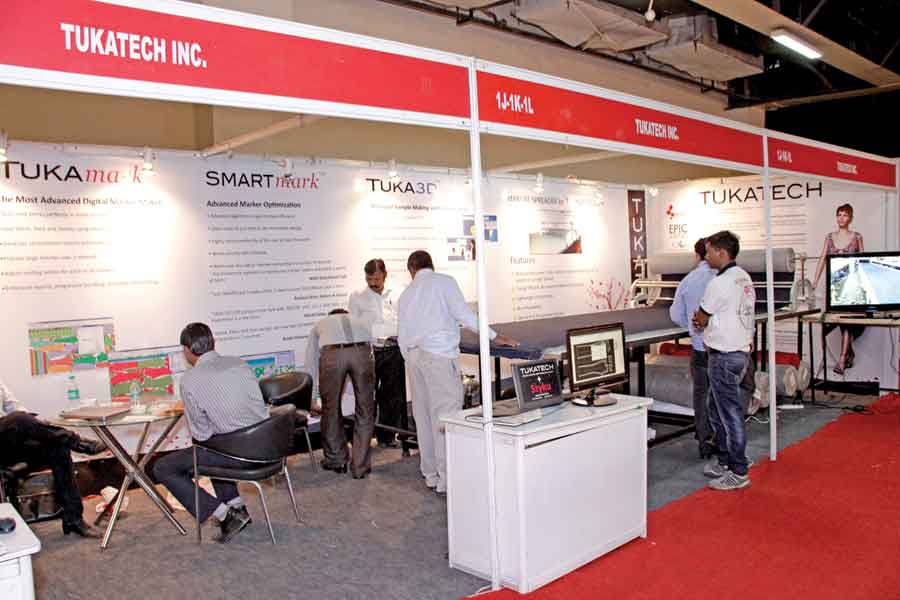
The impressive denim sewing line at Indigo, promising an output of 1000 denims per 8 hours with a setup of total 27 sewing machines underlined why Vibemac has become synonymous with denim jeans. With additional machines for snap button attaching, pressing, and finishing, denim jeans were prepared and given away to important visitors at the fair. “Denim jeans have always been in demand in the world market, and back in India denim has a huge potential in the domestic market with a population of more than 1 billion, and even if everyone buys one pair of jeans every year, there is a demand of a billion jeans every year,” reasons Enrico Guerreschi, Global Sales Director, Vibemac. The showcase was made possible with the partnership of Preet Buttons & Fasteners, Tukatech, Chaudhary Labels, Groz-Beckert, Nahar Spinning Mills, R&B Denim, Sangam, Vinod Denim, Kompressor Systems Inc and YKK Zippers.
Apart from automated sewing stations from Vibemac, lockstitcher, bartack and overlock sewing machines were from Typical while button holing and snap button attaching machines were from Kaiyu. The sewing line with a total of 30 machines was divided in three batches – front preparation, back preparation and final assembly. “The average production in India is between 12-15 jeans per worker, whereas with the line we showcased it is easily possible to produce 33 jeans per operator without any supervisor or helper,” says Enrico. Giving the assembly line very much the shop floor feel, the labour for the part preparation, front and back, was hired from the Delhi-NCR region, whereas the labour for doing the final assembly was flown in especially from Bangalore, which is a major centre for jeans manufacturing.
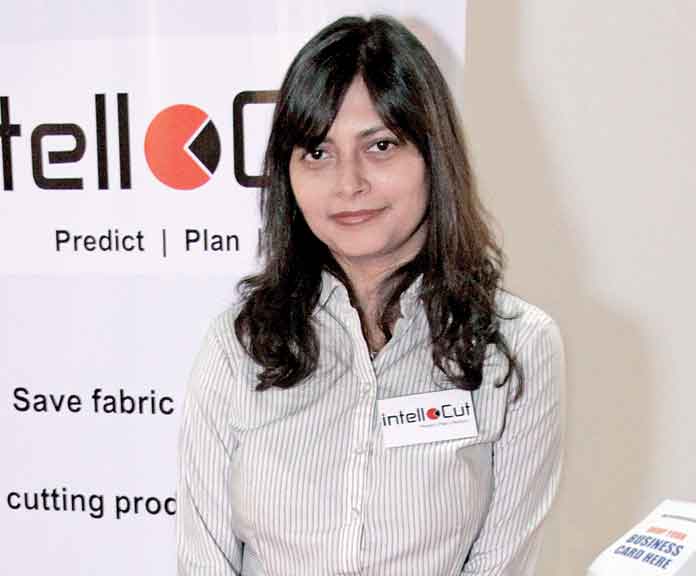
Mausmi Ambastha, CEO, IntelloCut
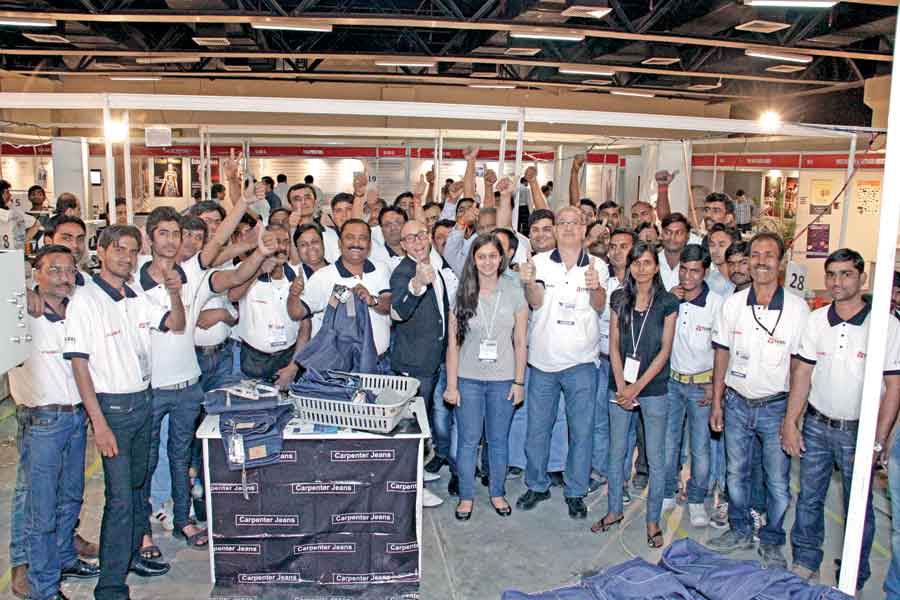
The main aim of the showcase was to educate the industry regarding the benefits of automation and what can be achieve if a similar setup is installed in their factories. “Stand at the left side of the line from where the cut parts are fed, one can see the final jeans being packed on the right… that is the kind of speed and transparency we are talking,” said Viraf Turel, MD, EH Turel & Company. The success of the showcase can be gauged by the fruitful deals that have taken shape with Arvind Mills, Malwa Industries, Four Creations and Shell Apparels placing on site orders for the machines. “People earlier used to come to us for asking the price of one machine, but now when they see the complete unit in operation, they only asked for the price of the complete unit,” added Viraf.
In fact, the technical team of Shell Apparels, Bangalore spent more than 3 hours at the Vibemac booth studying the live demo. “We are doing good business and want to double our capacity, but manpower shortage is an acute problem. The advance setup of Vibemac will definitely help in this situation,” said H N Vindoa, Head Marketing & Merchandising, Shell Apparels. Currently the company is making 4,000 jeans per day for export as well as domestic market. Four Creations, Bangalore is also looking to expand its jeans manufacturing capacity, While Must Garments and Ebyss Fiber 2 Fashion Ltd. are now preparing to enter the market.
Limited Fabric displays disappoints
The five denim companies did have some new developments to showcase, though visitors were not fully satisfied. “Most of the fabrics on display are already in our range. However, the visit was fruitful as we could meet a new company like RB Denim, Surat,” said fabric supplier Vipul Jain, Director, Goyal Fabrics. RB Denim showcased its basic denim range, while Vinod Denim showcased its shirting range in denim along with coated denim, heavy weights, 580 to 600 gm weight and 100% cotton denim.
The most captivating developments were from Malwa Denim and Modern Denim. Malwa Denim’s new developments were printed denim, denim with 3D effect to give jacquard look and light weight shirting fabrics. “This time we have also showcased our new development in knitted denim which was actually derived from weaving and not knitting having four-way stretch,” said P.G. Niyogi, CEO, Oswal Denim. The printed denim was appreciated by many visitors. “Printed denim at the Oswal booth was interesting and we will use the same for the coming season as most of the retailers are playing on prints,” said Shyam Sunder, Director of Sonam Collection from Gandhi Nagar, Delhi.
[bleft]“We have always brought in new technologies and showcased the latest automation for the industry. At this show we have taken a step ahead and created a live shop-floor for the first time, which the visitors are really appreciating and many are studying on how they can improve upon their lines.” – Viraf Turel, MD, EH Turel & Company [/bleft]
Anticipating the big brands to visit the event, Modern Denim showcased its performance denim apt for workwear. The company also showcased double-faced fabric with one-side denim and other side laminated fleece. This fabric is anti static and can be used for reversible jacket. The fabric has laminated membrane in-between to absorb perspiration. Denim with fire retardant finishes for workwear was also on display. “We have turned denim into a functional fabric,” informs Kiran Panchal, President (Marketing), Modern Denim.
LNJ Denim showcased indigo knits which have been knitted on a knitting machine with indigo yarn. The company also exhibited its coloured denim both in bottom and shirt weights, and sulphur coloured denim. The company is now looking at developing printed and jacquard denim in a month’s time. “Light weight shirting is the main focus for us as it’s a growing segment both in the international market and India,” shares Chetan Vohra, Chief Manager (Brands).
With very few denim fabric manufacturers on display, visitors were disappointed with the few developments that they were able to see. Sanjiv Mehan, Head Marketing and Dalip Bakshi, Manager-Factory & Garment Processing, both from Numero Uno found nothing extraordinary in the fair. “We wanted to see the latest collection of Arvind and Raymond but they are not here, it is disappointing,” said Mohammad Ammar, Proprietor, 47 Fashion Creator, Malerkotla (Punjab). The company is manufacturing more than 15,000 jeans per month for its brands.
There were two yarn manufacturing companies also present at the event. PKPN Spinning Mills/Goodwill Textile Mills, Erode producing 500 tonnes per month with its 60,000 spindles had a wide variety of yarns like 100 per cent viscose, modal, viscose bland, acrylic, organic cotton, slub yarn, tencel, cotton silk bland, cotton bamboo (anti bacterial) and it claims that its cotton lycra is very popular among denim fabric manufacturers. “We have very good hold on domestic market and were expecting domestic players but it did not happen,” said a disappointed C. Suresh, GM- Marketing, PKPN Spinning Mills. Talking about the market conditions, Suresh felt that the business is growing gradually and the domestic market is doing better compared to the export segment. The company exports 25 per cent of its product to 30 countries including Europe and Bangladesh. It also manufactures knitted fabric as per buyers’ requirement and specifications.
Indo Rama Synthetics was another company displaying its lycra products mainly focusing on denim and was happy with the fair, as apart from regular customers they got two new customers. The company observed that due to cost issues people are now moving towards polyester lycra and since they have a good hold in this category, the future is looking bright for them. “To give a different experience to the visitors we displayed the final denim fabric of our customers so the visitors can see and feel how effective our yarn is,” said Rajiv K. Girotra, Head – Marketing (DTY). The company is producing 225 tonnes yarn per day and is now planning for bright yarns.
Among the visitors there were some startups exploring the opportunities in the jeans market and such companies were happy with the show as they got to see and interact with fabric, technology and the accessory players on a single platform. Majestic Handicraft, Noida having 300 stitching machines for export is soon starting jeans manufacturing. Harpal Singh, Director of the company met the various denim mills’ representatives to discuss how to move forward. CTA Apparels is another export house planning to enter into jeans segment and the company’s product development team visited the fair to understand better the complete chain, as our design team is already working on sampling. Few jeans manufacturers and wholesalers also visited the fair from Khanapur (Maharashtra), Hyderabad, Chennai, Raipur and Ahmedabad.