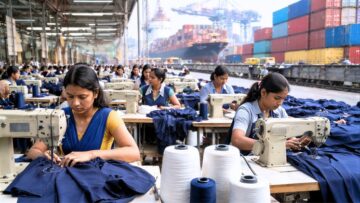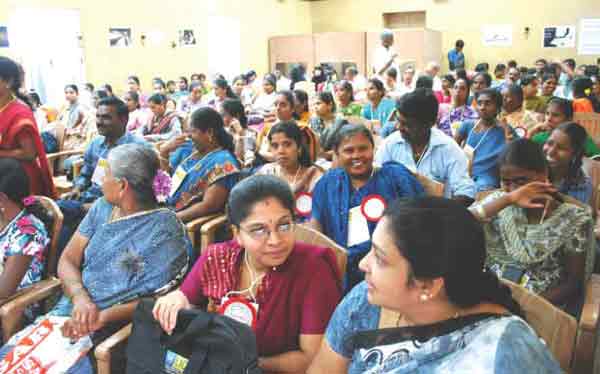
The International Asia Floor Wage Alliance in collaboration with Indian garment workers’ trade unions and workers’ rights groups, recently held deliberations in Bangalore under the aegis of The ‘National People’s Tribunal on the Right to a Living Wage’. While the call to participate to all leading brands and retailers was well received, GAP Inc. chose to stay way, irking local trade unionists. ‘If brands like GAP refuse to take part in worker-led processes that could see real change fostered in the industry, these problems will never be solved. This is a multi-stakeholder problem that requires everyone to work towards the solutions. GAP’s CSR promises are hollow if they refuse to hear from workers who experience the daily results of their pricing and sourcing practices,’ said Anannya Bhattacharjee, the President of the Allied Workers Union in North India.
Wages below poverty levels are an ongoing problem in the Indian garment industry. The monthly minimum wage for garment workers in Bangalore is Rs. 4472, (around € 64), which is said to be only 43% of a living wage enough to support a family. Garment workers alongside international brands and Government representatives gave evidence at the tribunal where over 250 garment workers from Bangalore, Gurgaon and Tirupur, foregoing their daily wage and attendance bonus, to share testimonies of rights abuses and exploitation at the hands of western brands, surveyed by a panel of international judges.
Many spoke about sexual harassment, verbal abuse, as well as poverty wages and the endemic problems around overtime and the right to join a union. Multinational fashion retailer H&M, was also present and a representative spoke about their role in the supply chain. “We agree that wages should be enough to live on. We are working with our suppliers to ensure compliance on this,” said Tobias Fischer, Relations Sustainability Manager for H&M. The brand acknowledged that overtime was also a problem in its supply chain with a significant proportion of suppliers involved in non-payment of overtime wages.
International workers’ rights group the Clean Clothes Campaign also participated in the tribunal and urged Governments and global buyers sourcing from India to take the findings seriously. “With this tribunal we hope to see some real commitment from big brands buying from India to start addressing the needs of their workers – a living wage should be at the root of these policies,” said Jeroen Merk, Clean Clothes Campaign International Secretariat.