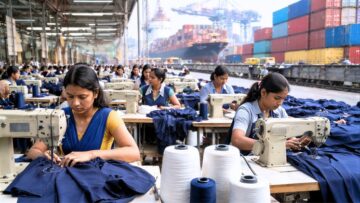
Till 2010 end it was BDT 1,662.50, which was subsequently hiked to BDT 3,000. And after almost 80 per cent hike following the 2013 wage review, the monthly wage was fixed at BDT 5,300 for the garment workers.
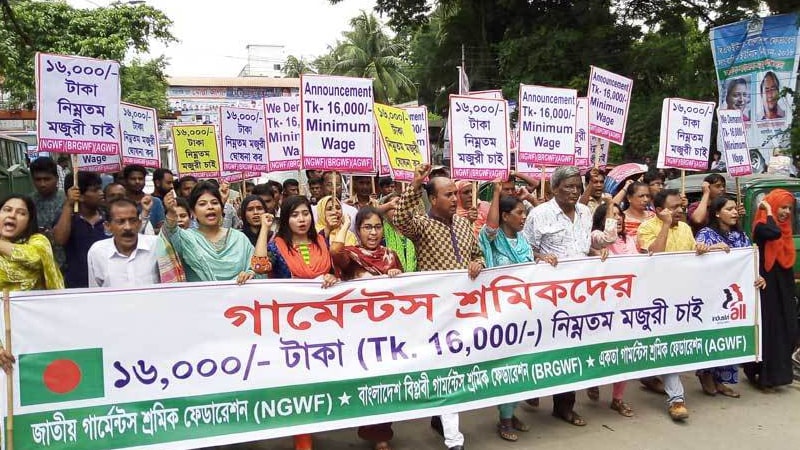
Keeping with the country’s labour laws (which mandates that minimum wage of workers is revised every five years), 2018 is set to witness the next raise. So what would be the new wage structure? Some workers’ union have already upped the ante demanding BDT 16,000 as the new base even as the apex traders’ body (BGMEA) has reportedly ruled out this possibility underlining the same as an ‘impossible demand’.
With the next meeting of the Bangladesh’s wage board expected on July 8, all eyes are now on the outcome of the same.
Though a much-needed reformative step considering it’s been five years since the last wage hike, it has the industry – already reeling under falling margins– at wits’ end.
“…A minimum wage of even Taka 7000-8000 would be very difficult to manage. If the helper starts getting this salary, the operators’ would be almost double of that,” explains Md. Aminul Islam, CEO of City Apparel Tex and Secretary General of the Bangladesh Garment Buying House Association (BGBA).
Considering the buyers’ uncompromising stance on prices offered Islam is apprehensive about the overall business and its ramifications on the industry.
“If CM is not increased, carrying out the existing orders will also become difficult…We need to think about raw materials, prices of which are going up day by day. Besides, most raw materials being sourced from overseas, prices are dependent on the global market, and are very volatile,” points out Islam.
It’s no secret that the garment business always chases the next cheapest pair of hands. Due to the labour-intensive nature of garment manufacturing, the industry is typically concentrated in locations with relatively low labour costs. And Bangladesh has been a major beneficiary of it.
Of all manufacturing hubs in Asia, labour in Bangladesh is still the cheapest. The range of monthly minimum wage in China ranges from US $ 165 – US $ 265, Indonesia (US $ 74 – US $ 200), Vietnam (US $ 70-US $ 131), India (US $ 90- US $ 128), Cambodia (US $ 100) and Bangladesh (around US $ 68).
But at a time when the cost of living is escalating, experts feel the focus now should be on offering living wage rather than minimum wage.
“Bangladesh is still far behind when it comes to paying living wage. I would say 99% of the factories do not pay living wage to the workers,” maintains Md. Abdul Mottaleb, Managing Director of Global Sustainable Certification Services Limited (GSCS). The one per cent that does predominantly are the sweater manufacturers, Mottaleb opines.
Nazma Akter-President of Sommilito Garments Sromik Federation and Executive Director of Awaj Foundation too feels that the current salary structure is not enough to lead a decent life!
“Even if one is getting US $ 80 or US $ 100, is it enough for a family of 3-4 to sustain…,” asks Akter posing a question to the global buyers, the primary concern of most of which seems to be the price points. “The international buyers are only keen on sourcing cheap. The concerns of the end consumers following the Rana Plaza incident resulted only in remediation, renovation and improving factory infrastructure but the workers’ overall living standards, sanitation, healthcare facilities hasn’t improved,” rues Akter.
The stakeholders all set to meet in few days time to hammer out nitty-gritty of the revised wage structure, a feasible outcome that could create a win-win situation for the industry, is all one could ask for.