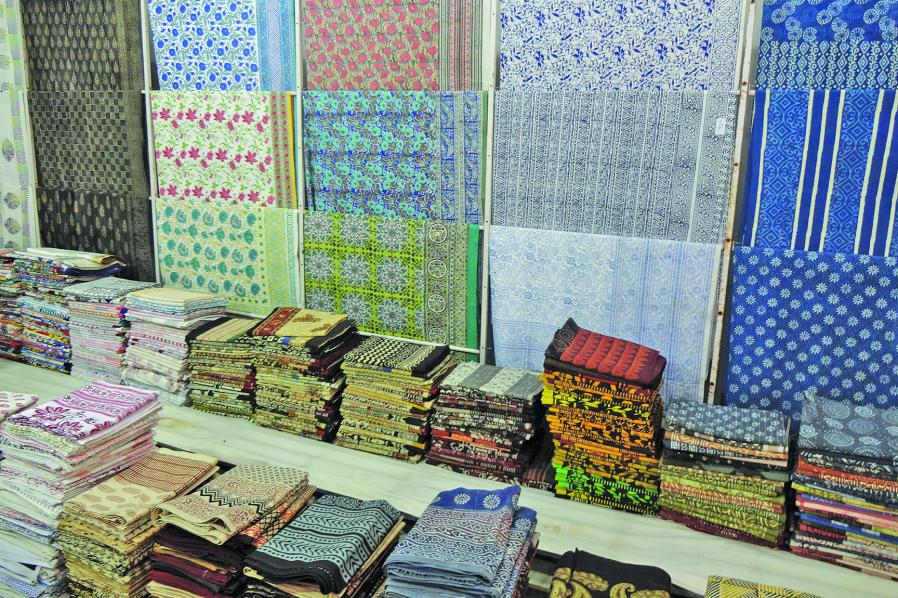
Sticking to own specialization is still a reasonably good idea for sustainable growth especially when it comes to traditional or heritage techniques. It also gives the advantage of less competition and establishes a company’s reputation in that particular segment. Jaipur and many other cities of Rajasthan are perfect examples of this phenomenon and are globally known for their specializations, be it traditional prints or specific type of handwork. There are many companies in this region that have for many decades stuck to one particular traditional technique. Though they have limitations too, and can’t grow multifold, but are still satisfied with the stable growth seen over the years, in spite of global business environment becoming more challenging. Priva International and Khatritex are two such companies which have continued working with traditional techniques and are slowly but steadily growing in home furnishing export.
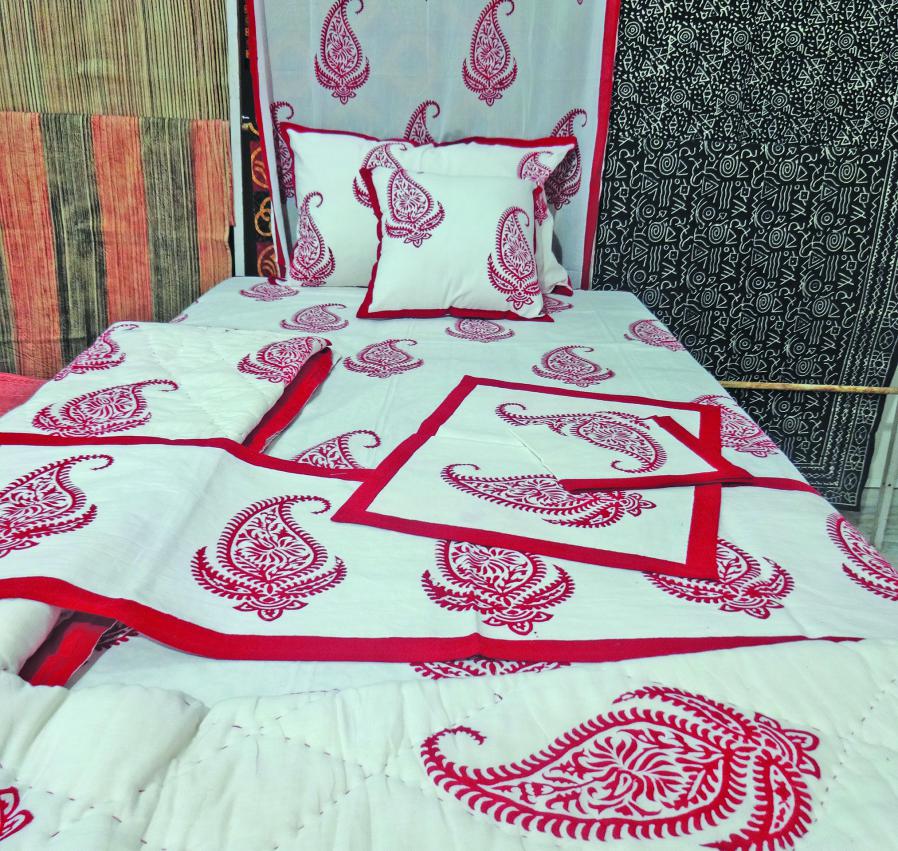
Deep roots of trust and understanding with traditional techniques and the artisans who create the magic, is not only a common feature, but also the strength of both the companies. While Priva International is known for handwork like cutwork, mirror work and kantha work, Khatritex is famous for hand block prints. As a strategy, both accept that they have niche products; so variation in order flows globally or market fluctuations are not a big issue for them and demand for their products was evergreen and will remain so in future also. “We have the satisfaction that buyers came to us themselves rather than we following the buyers. We don’t have any debt, loan or any other such financial burden; similarly we don’t have any bank limit and use simple current accounts to do business. It’s all because of our traditional technique of handwork and that too with good quality as we provide 365-day work to 2,000 women in their homes in various villages of Barmer and Dhanau (600 km from Jaipur). We give annual average gift of Rs. 20 lakh to these ladies in terms of motivation/incentive. Women from these villages are happy to work with us as there is no middleman between us. On the other hand, women in Jaipur city don’t have this kind of expertise in heritage skills and they prefer other jobs,” says Kailash Karwa of Priva International. His family originated in Barmer district and they still have a factory at Dhanau where cutting takes place and also functions as a distribution and collection point for hand-workers. The Design Master and some printing workers also work at the factory, rest all others work from home.
“We are ready to cooperate with any NGO to support these women as we can provide direct platform to support women in remote villages.” – Kailash Karwa, Priva International

“There is always regular demand for block prints and we find that in trade shows, buyers of other products like furniture also get impressed with our products and wish to add these in their product portfolio. 10-15 per cent growth is what we are achieving on regular basis over the years, and the same is expected this year also. Our level is set, as we have never seen market very low or very high. We are quite hopeful that this demand will continue,” says Hira Khatri of Khatritex. Established in 1989, the company gets its handblock done from artisans situated at Bagru, Sanganer and Jahota, in and around Jaipur. Parents of Hira belong to Sindh (Pakistan) and they used to do block prints themselves. They did block printing for other exporters of Jaipur also. Now the company has strong association with almost all the artisans in Bagru as they are doing this work for the company from decades.
Sustainability is also part of these traditional techniques as buyers are impressed by natural dyes like indigo and traditional ways of colour making in Rajasthan; these are regular part and process of production in such organizations.
Steady demand remains for traditional skills despite increasing price of the products. Printing cost is almost doubled in hand block work compared to screen printing, similarly products with hand block print would be at least 25 to 30 per cent more expensive than other products. Both of the companies offer complete range of home furnishing products and cater to various buyers of US, Europe and South America. Japan is a strong market for Khatritex.

Yet, despite being in the trade for three decades, Priva International is doing annual business of only US $ 1.23 million (Rs. 8 crore) and Khatritex too has monthly production of just about 30,000 pieces. The critical question is…Why it is so when there is enough demand for the products of both companies. No doubt, market fluctuations do matter to business but in traditional skills, what is more impacting is the decreasing availability of experts in these skills. Kailash once had 5,000 women doing handwork for his organization, but now there are only 2,000 women and day-byday these numbers are reducing due to well-known reasons like easy availability of other means of employment in villages, and most importantly the reluctance of GenNext in continuing to work in handcrafts.
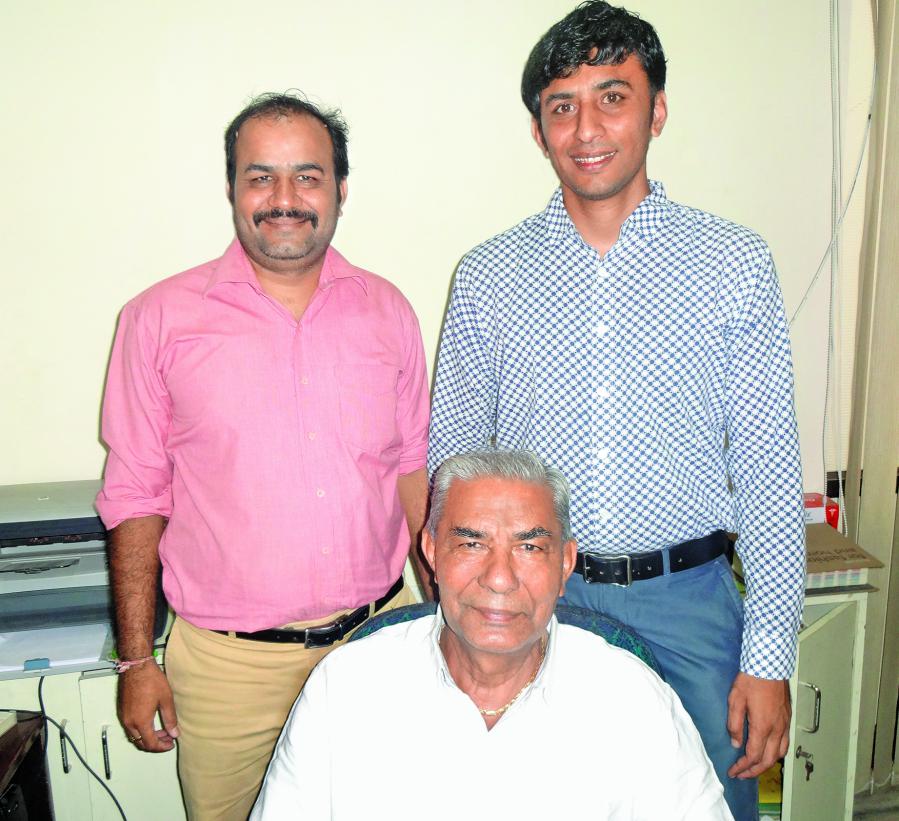
“We do have limits to how much we can expand our capacity, as labour problems are strongly affecting our growth potential in block prints, as it can only be done by trained artisans. On the positive side, existing buyers are increasing their order size, so we never feel the urge to work with more and more new buyers or to add newer markets. We do keep in mind these limitations before we finalize any order,” says Ramesh Khatri of Khatritex. Both organizations don’t want massive quantities from buyers and can cater orders of 100 prints comfortably. Khatritex is happy with order of 100 pieces in bed covers per design, per colour, as it proves an easy selling proposition and creates a good collection for buyers, including all allied products.
It is sad that perspective business growth in long run is being hampered as there is no solution to increasing the number of home workers or artisan so that these techniques can sustain and grow with time. In the particular case of these two companies, their management is satisfied with business and don’t want to commercialize these heritage skills or move into other areas. Hira Khatri gives an interesting example, “We tried to work with some items of Surat and Mumbai, but could not succeed, so we realized that block printing is the only thing for us. Now we are of the strong opinion that if you stick to and maintain your specialty, you will achieve stable growth rather than diversification.” On the other hand, Priva International is exploring garmenting and it has installed a few specialized machines for shirt manufacturing and is exploring this segment for growth.






 Bharat Tex Special Report 2026