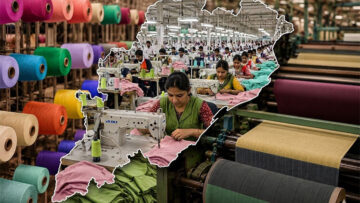
While the Indian textile and apparel industry at large is trying to cope with the recession that hit the globe in 2008-09, the knitwear capital of India – Tirupur – has been crippled not only by the global economic slowdown, but also turbulences within the country. Suspension of yarn exports in January 2011, fluctuations in cotton prices, slump in demand for yarn and a major hit on the processing sector of Tirupur that was surrounded by pollution-related issues led to devaluation of stocks and crunch in working capital availability. A lot of plants in the region were closed down by the orders of honourable High Court. Though, a few plants have returned, the damage to the business has already been done.
As Tirupur units were unable to execute the orders on hand, creating a negative impact on the credibility of their deliverables, buyers shifted to new bases for work last year. These bases now, do not want to lose their business and are thus, providing the buyers with more economical services than Tirupur, to maintain their market share. “Nearly 700 processing units around us were closed down and only 300 have returned to business after a year. There was no dyeing taking place for nearly a year in the region, and so the buyers moved to other bases like Delhi, Punjab, Kolkata, Chandigarh and Gujarat for their work. Now, these places are offering buyers with better prices than Tirupur (inclusive of transportation) and so the buyers are staying with these people only,” said Neeraj Permanandka, Director, Neeraj Enterprises from the Tirupur region.
Though the market conditions have improved a little compared to that of last year, the accumulated losses of last year and the loss of a business year can be offset only with continuous profitable operation. The units have to repay the loans and they need adequate funds to continue operations. Commenting upon the prevailing situation, N. Padmanaban, Partner, PSR Color Solutions, Tirupur said, “It’s really a bad time for the Tirupur industry and we have been surrounded by problems from all the sides. Without the Government support it will become impossible to sustain in business. We require a good unified solution from all the sides, for the issue.” Padmanaban also claimed that without the Government and bank support, the Tirupur industry is bound to head towards a downfall and will be unable to survive if something is not done immediately.”
With the production schedules going topsy-turvy as well, the Tirupur industry fears they will lose more buyers to their competitors within the country and new ones outside such as Vietnam, Bangladesh and Cambodia. “We’ve lost a lot of buyers to other regions when the dyeing units were closed and they are still working with the areas they shifted to, for timely deliveries and price points. I believe unless the Government steps in and do something about the same, things won’t look up,” adds John Milton, MD, Cotton Blossom.
Though the Tirupur Industry is going through a series of tough challenges, few people believe the industry and the units in Tirupur are limping back to normalcy. Shanmugham, Production Manager, Mars Garments said, “I agree the industry is moving through a rough patch, the prices have been badly affected and since the cotton prices have also risen, we have lost some big quantity orders. But, such problems are being faced throughout the world due to the recession and the overall business everywhere has been affected. I’m sure the industry would be back on its feet in a few months time.” For now, everyone in the industry is keeping their fingers crossed and hoping for better opportunities in the coming times.