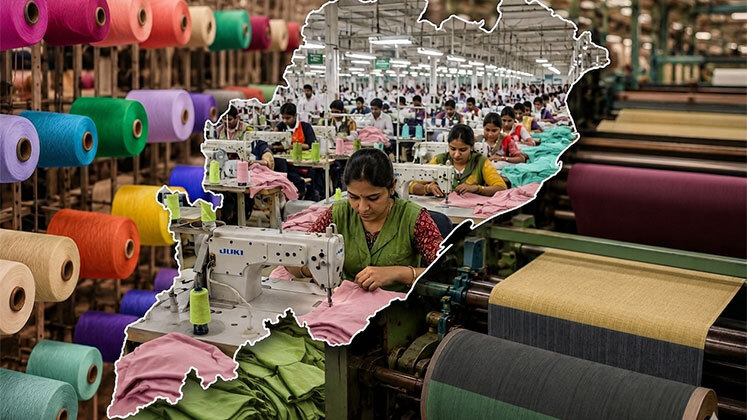
For years, Odisha was known more as a backbone of India’s garment workforce than as a manufacturing hub itself. Thousands of workers from the state migrated to apparel centres such as Tiruppur, Bengaluru, Surat, and Noida, quietly powering India’s export factories from shop floors far away from home. Today, Odisha wants those factories to come to them instead.
With rising pressure on traditional apparel hubs due to labour shortages, rising costs, and infrastructure stress, Odisha is rapidly emerging as one of India’s newest manufacturing destinations. Backed by aggressive incentives, labour availability, and faster industrial development, the state is now attracting a growing mix of domestic and global apparel players.
As of now, around 55 companies, largely apparel manufacturers, have signed MoUs with the Government. Nearly 10 companies are already operational in the state, including Shahi Exports, ABFRL, Epic Group, SAPL Industries, and Page Industries.
Several other companies that have signed MoUs with the state are currently at different stages of land acquisition, approvals, and factory development. These include MAS India Clothing, KPR Mill, Cotton World, MAF Clothing, Techno Activewear Private Limited, SCM Garments, Toray MAS Apparel India, Colortone Textiles Private Limited, Sportking India, Bonnie Enclave Private Limited, Anubhav Apparels, Pooja International, Meenu Creation LLP, Rainbow Fabart Pvt. Ltd., Golden Seams Industries Pvt. Ltd., Sonu Exim Pvt Ltd, and many others.
While large national and global players are driving Odisha’s investment momentum, a parallel growth story is also unfolding among local and homegrown manufacturers. Many Odisha-based companies are now expanding capacity, entering new product categories, and preparing for exports as the state’s apparel ecosystem slowly starts taking shape.
To understand how this transformation is unfolding on the ground, Apparel Resources travelled across Odisha, speaking to local manufacturers and industry players about what is driving the state’s apparel growth, their expansion plans, and the chinks in the armour that still need attention as Odisha scales up its manufacturing ambitions.
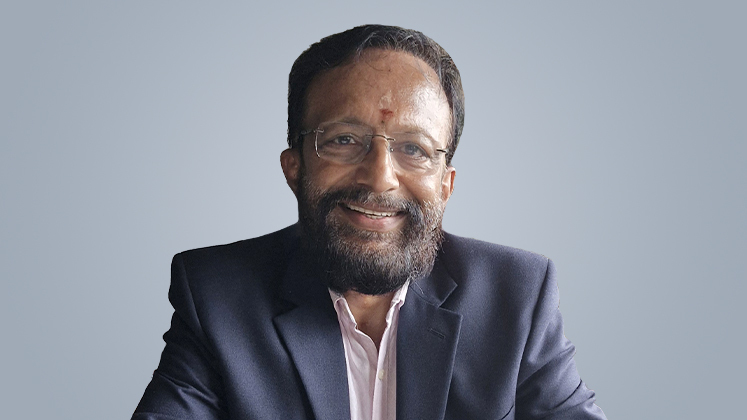
“Odisha is emerging as an important manufacturing destination because of supportive government policies, affordable land, improving infrastructure, and labour availability. Many skilled Odia workers employed in hubs like Tiruppur, Bengaluru, and Surat are now willing to work closer to home,” said Subrat Prusti, Director, Wild Lotus.
Part of the MGM Group, which has businesses in mining, steel, biofuels, hospitality and apparel, Wild Lotus started operations in September 2021 and currently produces around 1.8 lakh garments every month. The company mainly manufactures shirts, while also expanding into kidswear and casualwear. At present, around 80% of its business comes from the domestic market, while exports contribute the remaining 20%.
Speaking about exports, Prusti said the company is particularly optimistic about Russia. “Not many Indian manufacturers are actively serving that market. We have onboarded Sportmaster, one of Russia’s largest sporting goods retailers. Currently, we are manufacturing woven products for the Russian market, especially shirts designed for cooler weather and autumn demand,” he said.
He added that while the styling is broadly similar to other international markets, Russia has stronger demand for transitional and winter-focused products because of its shorter summer season.
More recently, the company has also started supplying to Big W, a leading discount department store chain in Australia.
On the domestic side, Prusti said India’s market is too large to ignore, and going forward, both domestic and export businesses are expected to grow together. Wild Lotus currently supplies to brands including Raymond, Blackberrys, Ace Turtle, Reliance, and Fabindia.
The company is now preparing for expansion. Once all three floors of its existing facility become operational, the plant is expected to house nearly 1,000 machines. Wild Lotus has also secured another three-acre plot near its Khurda facility, where it plans to set up a second unit with an additional 800 machines.
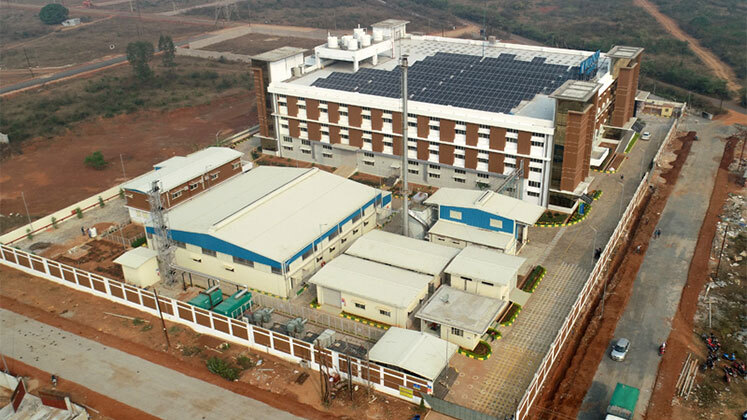
Another domestic player, Cedrafil, originally started in the filtration business and entered the sportswear segment last year, supported by the industrial incentives offered by the state. The company is targeting growing demand in Tier III and Tier IV cities through its own sportswear brand, which is sold through general trade channels.
Cedrafil currently produces around two lakh pieces of sportswear every month across men’s, women’s, and kidswear categories with features such as moisture-wicking, anti-microbial treatment, four-way stretch, and breathable mesh integration. It also specialises in heat and fire-retardant workwear for industrial use.

“Today, the market opportunity in sportswear is much larger than our existing manufacturing capacity. To bridge this gap, we are also working with manufacturing partners in Tiruppur and Delhi who produce under our brand. Alongside polyester-based dry-fit fabrics, we are increasingly working with fibres such as Tencel, nylon-spandex blends, and other technical materials,” said Mukesh Kumar, MD, Cedrafil.
Currently, the company operates two factories, one in Khurda and another in Bhubaneswar. It has also acquired nearly eight acres of land in Khurda for its third manufacturing unit. The new plant, with 600 machines, will initially focus on the domestic market, although the company has also started engaging with buyers in the US.
| Odisha offers strong incentives to manufacturers, including up to 40% capital subsidy on plant and machinery investments and monthly employment subsidies of ₹6,000 for female workers and ₹5,000 for male workers for five years after commercial production begins. |
Tripathaga Textiles, which caters to both domestic and export markets, is also upbeat about the future. The company is part of the Samal Group, which operates in the automobile spare parts business.

“We primarily export kaftans and gowns to the Dubai market. In addition, we have supplied sportswear products to South Africa. More recently, we have started focusing more on the domestic market, particularly because of the ongoing geopolitical situation and disruptions caused by the war, while also filling production gaps during lean periods,” said Salina Samal, MD, Tripathaga Textiles.
For the domestic market, the company currently supplies to clients such as TIGC, an Aditya Birla company, and Myntra.
Samal added that the company prefers working on larger MOQs to maintain factory efficiency. “Ideally, we look for at least 50,000–70,000 units of orders per month. This allows us to operate overtime or double shifts when required,” she said.
Tripathaga Textiles currently operates around 200 machines and is now setting up a new 1,000-machine plant. Construction of the facility is expected to begin within a month, with operations likely to start by October or November.
Alongside these larger companies, several smaller manufacturers with 50 machines or fewer are also optimistic about Odisha’s growth potential.
“With government support, we have already secured land for a new manufacturing facility that will house around 150–200 machines in Berhampur (Ganjam district). Construction is currently underway and is expected to be completed by 2027,” said Prabhat Kumar Das, MD, Adimata Attire Pvt. Ltd. The company primarily manufactures school and corporate uniforms.
Likewise, Pulak Ranjan Patra, Founder, Balram Manib Garments, based in Balasore, said, “The entry of large companies into Odisha may not directly impact businesses like ours because our products, customer base, and quality positioning are very different from theirs.”
At the same time, the industry also pointed out a few areas where the state government still needs to focus more. One of the biggest gaps remains the lack of ancillary units. Today, most trims, accessories, and other supporting materials still have to be sourced from Bengaluru and other manufacturing hubs, which increases lead time and affects production efficiency.
Going forward, some industry players also believe Odisha’s biggest strength, labour availability, could come under pressure as more manufacturers set up operations in the state.
“Our upcoming second unit in Khurda will be located near companies such as Colortone and BK Textile. Colortone alone is planning around 2,000 machines, which would require nearly 4,000 workers. Similarly, if we set up around 1,000 machines, we would need close to 2,000 workers ourselves. And this demand is coming from just a few companies at the moment, while many others are still in the process of setting up operations,” Samal said.
Industry players also pointed out the need for better worker housing and supporting infrastructure as the sector expands further. At the same time, attracting more buyers to Odisha and encouraging sourcing offices to set up locally is still a work in progress.
Despite these challenges, manufacturers remain confident about Odisha’s long-term future as an apparel manufacturing hub.