Outerwear jacket is an engineered product and the domain of the matured manufacturing destinations. Korea, being the highly preferred destination with unparalleled skilled people, was the first to see an opportunity in Bangladesh as a low wage country, which can be developed as a garmenting hub. In fact, jackets were the first product introduced to the country and the reason for the same could be with the foreign firms first bringing the complicated business to newer destinations; secondly, the product is small in quantities which none of the established destinations want to touch; and thirdly, it requires trained manpower and new technologies which the new companies are ready to invest in, since the cheap local labour compensates for the same. Team Apparel Online spoke to some of the leading outerwear and casual jacket manufacturers, namely NIPA Group, GH Haewae, Duke Group and Sikam Outerwear on how they are geared to handle US $ 23 billion US outerwear market.
[bleft] The first person to recognize the long-term feasibility of jacket manufacturing in Bangladesh was Kihak Sung, CEO of YoungOne Holdings which established its first outerwear jacket manufacturing plant in Chittagong in 1985, becoming both the first jacket manufacturing company of Bangladesh and also the first foreign investor in Bangladesh based out of Korea. [/bleft]
Like every other product category which first got introduced into the country, outerwear jackets were also manufactured for the first time in the mid 1980’s, but the real boom in the business came in-between 1993 and 1998, when the low wage advantage of Bangladesh was realized by the global buyers and brands.The first person to recognize the long-term feasibility of jacket manufacturing in Bangladesh was Kihak Sung, CEO of YoungOne Holdings which established its first outerwear jacket manufacturing plant in Chittagong in 1985, becoming both the first jacket manufacturing company of Bangladesh and also the first foreign investor in Bangladesh based out of Korea. As of now, YoungOne stands at an astounding turnover of US $ 1.2 billion with more than 25 apparel and footwear manufacturing facilities in Chittagong.
Many pioneers of Bangladesh who are now manufacturing jackets agree to the dominance of the Korean pioneer in outerwear manufacturing. Khosru Chowdhury, Chairman & Managing Director, NIPA Group says, “YoungOne was the first company globally to recognize the potential of both the product and the country. Their success in the product category boasts of the same.” NIPA Group, which is among one of the biggest jacket manufacturers of the country today with a turnover of US $ 60 million, was established in 1999 and presently has a total of 30 sewing lines distributed in three manufacturing facilities, of which 14 are dedicated for jackets, producing 3 million pieces per month. The rest of the sewing lines are engaged in manufacturing of knits and bottoms, with 6 and 10 sewing lines dedicated to each, producing 2 million bottoms and 1 million knit products annually.

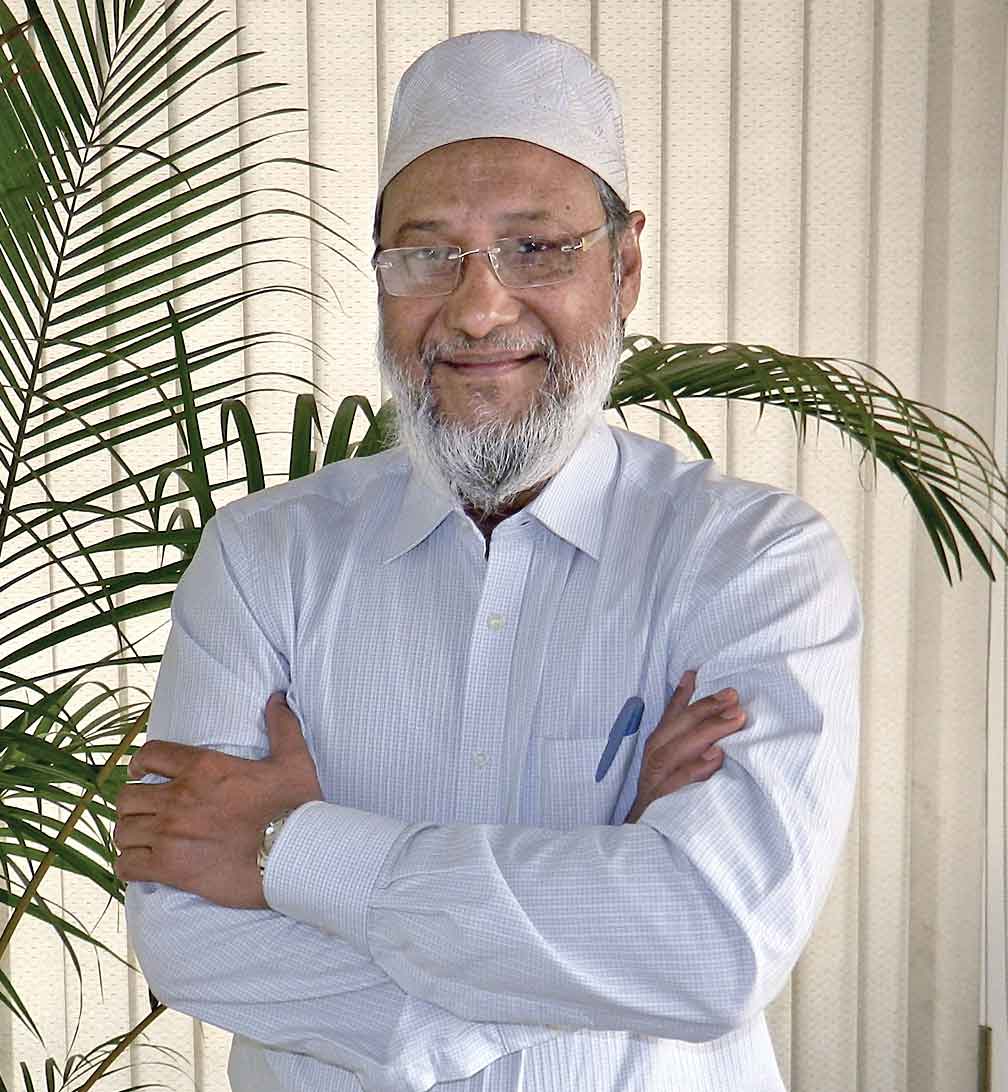
Chairman & Managing Director, NIPA Group
Another old timer Anwar Hossain Chowdhury, Chairman & Managing Director, AJ Group, who started manufacturing in 1997 recalls, “We never knew anything more than sewing shirts in the beginning, but when customers came asking for making jackets and shorts, we got the expertise from Hong Kong and Korean companies.” With a turnover of US $ 18 million, AJ Group has three factories with 1200 machines. While Anwar Hossain got his experience working for Linmark, Khosru Chowdhury, who started his career in the apparel industry as a synthetic fabric supplier to jacket manufacturers, got expertise in jacket manufacturing from dealing with fabric and jacket manufacturers of Taiwan, Korea and China. “When the influx of jacket business diverted in 1998 from Bangladesh to China, I saw the opportunity and it was easier for me to establish a jacket manufacturing facility as many companies were closing their jacket operations, which left a large pool of skilled but unemployed workforce,” recalls Khosru Chowdhury. Bangladesh was never able to develop a base for fabrics and accessories used in jackets and the same were sourced from Taiwanese and Korean companies who had the expertise in manufacturing synthetic fabrics.
Later when China acquired the niche in these types of fabrics, buyers shifted to the country due to the presence of a seamless supply chain, which proved to be a much more cost-effective proposition with better on-time delivery percentages and lead times. “It was between 2002 and 2006 that China was able to ship jackets at a very low price due to an efficient supply integration along the textile chain and greater productivity. But after 2006 the boom in jacket business which we witnessed in the 1990s, is again happening with China moving towards manufacturing of more lucrative products,” asserts Minhajul Islam, Chairman, Sikam Outerwear, who now is working as a buying agent and sourcing jackets from the country; he was earlier a jacket manufacturer himself.
[bleft] “When the influx of jacket business diverted in 1998 from Bangladesh to China, I saw the opportunity to establish a jacket manufacturing facility as many companies were closing their jacket operations, which left a large pool of skilled but unemployed workforce.” [/bleft]
A proof of this shift back to the country has been the increased sourcing of jackets from Bangladesh-based NIPA and GH Haewae by the Indian brand Woodland, which earlier used to source jackets only from China. “When the business moved out of Bangladesh back to China from 2000 to 2006, I had to change factory from jackets to bottoms, but now we have buyers to make jackets and bottoms. In fact, the market is very good right now since not everyone can make such kinds of products,” says Anwar Hossain.
To support growth in the sector, many polyester and nylon padding manufacturing facilities have been established in the country and NIPA itself sources 100% of the padding used in its jackets locally. Even some synthetic fabric manufacturing facilities have also come up in the country. But such companies are still very few, offering limited varieties and at a higher price than China which offers on special advantage when the manufacturing is directed to US and Canada since both the countries do not allow GSP facility. “Buying from China keeps us more competitive as even the lead time for delivery from Shanghai to Chittagong has come down to just 15 days, unlike the previous period of 60 to 70 days,” says Mahboob Siddique, Chairman & Managing Director, Duke Group.
With two manufacturing facilities in Dhaka, Duke Group has 500 sewing machines manufacturing 1.2 million jackets annually. The company is making polyester padded, polar fleece lined and unlined flannel jackets majorly for Canadian brands like Zellers and Target. “Our company was setup in 1984 and we started with shirts, and jackets came in 1992. Since then jackets have been our core product category, followed by formal trousers as both the products require similar types of machines and skill levels,” shares Siddique. “The sole reasons for switching from shirts to jackets was that the latter gave us better margins and we faced no difficulty in doing the product initially as we started with simpler jackets such as windbreakers and tuff shell items, similar to shirts style and gradually moved to much more complex styles,” he adds further. The company claims to have acquired a niche in manufacturing casual outerwear jackets for kids, which the company attributes to its flexible manufacturing setup, not seen with most of the bigger companies.
[bleft] “If you talk about shirt, there are a lot of automatic machines for collar, cuff, placket. But in case of jackets, somebody wants zipper and somebody doesn’t want collar, so there is lot of difference.” [/bleft]
Another Korean pioneer who started jackets manufacturing in the 1980s in Korea, GH Haewae moved to Bangladesh in 2004 after setting up a factory in Myanmar in 1997. The company has 19 sewing lines for woven items and 10 sewing lines for knits, consisting of 2,400 sewing machines in its facility in Chittagong. With an outerwear product basket focussed on jackets, 65% of the 4 million apparels manufactured by the company are winter (40%) and spring jackets (25%), of the rest 20% are bottoms and the remainder being knit items. Columbia, Puma, Adidas, Reebok and 5.11 Tactical are some key buyers, with Columbia being the biggest, sourcing 40% of the company’s output. Contributing US $ 14 million to the group turnover of US $ 70 million, GH Haewae has recently started working with another American brand North Face.“Manufacturing jackets is not an all year business because March to September are hot months and the orders dry up,” informs Kim Youn Ki, Managing Director, GH Haewae.
Product range in jackets
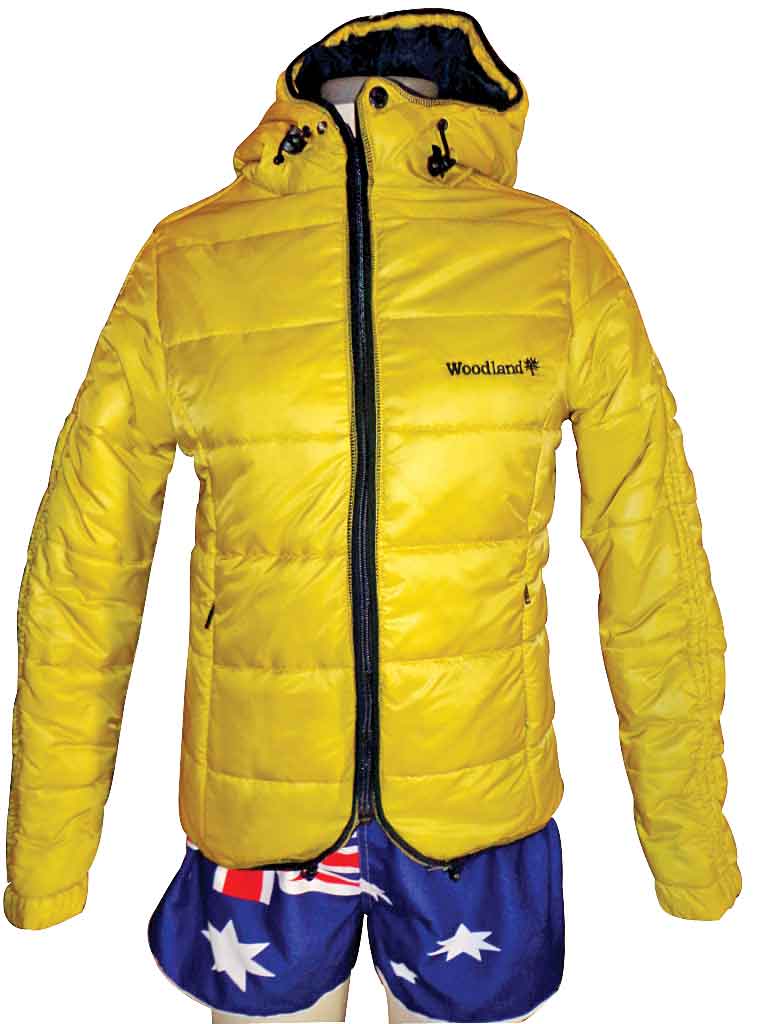
NIPA Group is the only company that has been successful in maintaining a perennial flow of jackets throughout the year by catering to the regions of North America, Europe and Australia. “Year round, flow of jacket orders is not only maintained by catering to two different regions experiencing different seasons at the same time, but also by manufacturing two different jacket products. One is the heavy jackets with down feather filling or polyester fibre padding and second is the windcheater type jackets without filling or padding,” explains Khosru Chowdhury. Bangladesh mostly does polyester padded jackets, rather than down filled jackets because of the missing expertise of filling in the right quantities; and secondly the buyers are reluctant to give higher FOBs to compensate for the higher price of down feathers.
Another line of expansion for the companies in jackets has been the manufacturing of seam sealed and welded jackets using bonding and welding machines. “We specialize in seal taping and welded items, as most of the sportswear and outerwear brands demand enhanced functionality of the product,” shares Kim Youn Ki, whose company has been doing such products for the past 5 years. Both NIPA and GH Haewae have been doing raincoats and workwear with a high FOB of US $ 40, double of the FOB of a regular padded or filled jacket having an average FOB between US $ 5 to US $ 20. “Jackets manufactured with a much more utilitarian construction were majorly manufactured by us before the removal of the quota system and we even manufactured body suits for mountaineering, but now this product only accounts for 10% of our annual output as it is now mainly sourced from China, Vietnam and Indonesia,” says Khosru Chowdhury.
The companies’ manufacturing jackets in Bangladesh do not consider themselves to be in competition with companies from Indonesia and Vietnam, as the latter countries focus more on the high-fashion jackets for females which are an amalgamation of different fabrics and intricate construction not padded.
Manufacturing still archaic
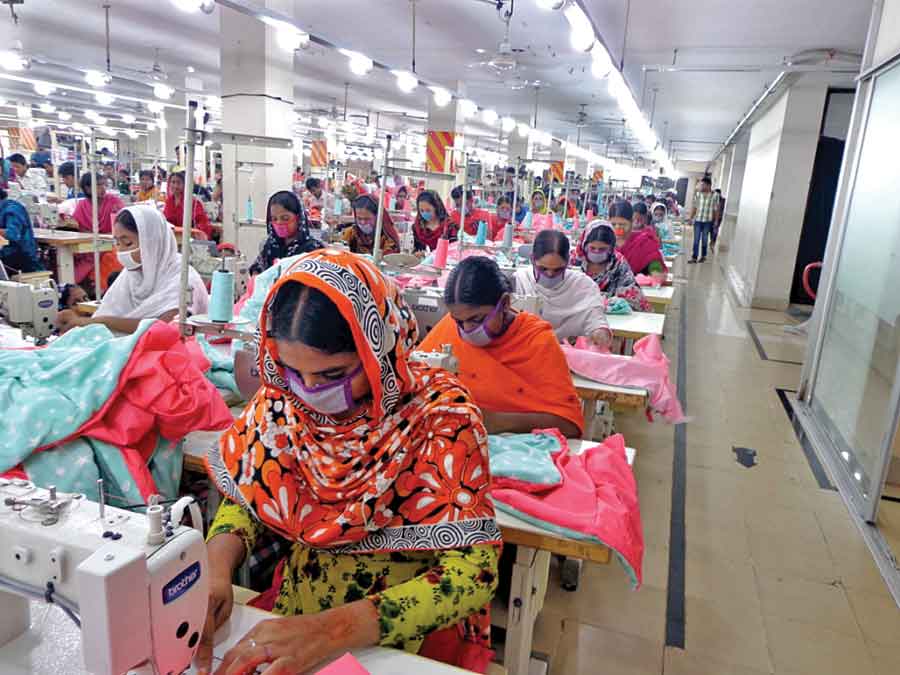
Jackets have one of the longest sewing lines ranging from 70 to 80 sewing machines per line with part preparation and final assembly all together in a single sewing line and producing 400 to 600 jackets per 8 hours depending on the style. “The reason for having such long sewing lines is due to the complexity in construction requiring too many sewing operations to construct a jacket and we have to break it down in the simplest form for the operator to make it efficient,” explains Siddique. Adds Anwar Hossain, “If you talk about a shirt, there are lot of automatic machines, collar, cuff, placket, but in case of jackets somebody wants zipper and somebody doesn’t want collar so there is lot of difference. You get many variations in orders. Then each and every individual jacket is dissimilar, but the core processes for shirt is same.”
Endorsing the complexity of the sewn product, Duke Group claims to produce just 400 jackets from 140 sewing machines in 8 hours.The companies cited as the experience of sewing operators and production managers as the strongest reason for manufacturing such a critical product. “We can easily do such complex products as over the years manufacturing processes have attuned to handle small quantities of jackets ranging from a 1,000 to 5,000 pieces per style and also because most of the sewing operators have been working with us for the past 25 years,” he adds. Agreeing with the same, Khosru Chowdhury adds, “On an average we get operator efficiencies of 65% to 75% and can go up to 85% in case of basic jackets, but can also drop to just 40% in case of complex styles. Due to which the learning curve for a basic style is just 2-3 days but in case of complex style the same time can be stretched to 10 days.”
[bleft] “It was between 2002 to 2006 that China was able to ship jackets at a very low price due to the presence of a seamless supply chain and greater productivity, but after 2006 the jacket business again started moving towards Bangladesh.” [/bleft]
“Owing to the criticality and non-standardization in the product, the sewing machines used by us are basic single needle and double needle lockstitch heavy duty sewing machines,” opines Khosru Chowdhury, for whom operator is more important than the machine and who takes keen interest in the sampling and product development since he believes that a fine sample not only guarantees regular business but also solves half the production issues. NIPA also follows a formal and on the job training procedure, under which a sewing operator is first hired as a helper in a sewing line, where she learns about machine and product handling through observation and only after six months she is put on the sewing machines.

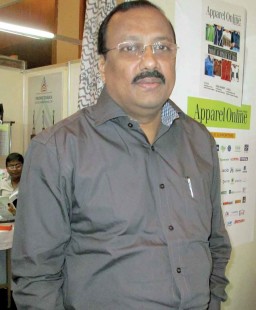
Chairman & Managing Director, Duke Group
Training which is usually taken as a cost to the company is in reality an investment for GH Haewae, which has setup a training centre for fresh recruits. About 10 days’ training is given to new recruits, under the guidance of technical consultants, and then put in the line befitting to the quality, efficiency and versatility of the sewing operator and later taken out for further training and skilling while in the sewing line.“The manufacturing is very much dependent on the labour skills as it is very difficult to automate the process due to the variations from jacket to jacket being too wide to automate and streamline. But by breaking down a jacket into the simplest of operations we actually avoid the presence of any critical operation which requires a highly skilled operator,” adds Kim.
GH Haewae has placed 20 helpers and 4 quality checkers in a 70-machine sewing lines which in turn are divided as per the parts like the hood, sleeve, front and back with a final assembly line, unlike most companies. Agreeing to further reduce the man-machine ratio in the sewing lines, Kim explains, “Lean manufacturing means using less people by making the multi-skilled, which requires consistent labour so that the training can be done at its maximum potential but 10% of the sewing operators keep switching jobs every month making it hard to skill them consistently.”