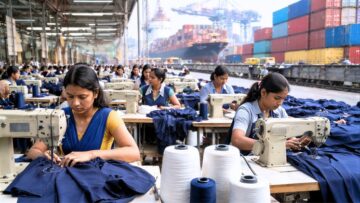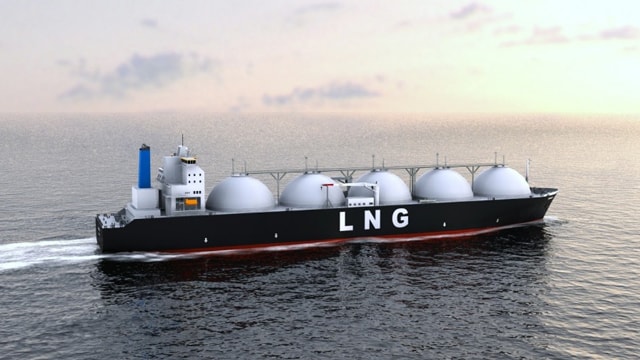
Bangladesh has taken up the initiative to import Liquefied Natural Gas (LNG) to ease the crisis that has been plaguing its economy and production, including its largest export industry – the readymade garments.
Planning Minister AHM Mustafa Kamal has said that there will be an abundant investment in the country once it starts to import LNG. He underlined this at a ‘Meet the Press’ programme at Sher-e-Bangla Nagar, Dhaka on February 15, 2018.
Speaking further on solving the problem of future supply of gas-based fuel, the Minister averred, “Recently, we discovered two new gas fields in Bhola. We had 27 trillion cubic feet (TCF) of gas available which would have run out in 14 years but these two gas fields added 1.5 TCF to the reserve.”
Apparel Resources got in touch with Mohammed Nasir, Vice President (Finance) of Bangladesh Garment Manufacturers and Exporters Association (BGMEA), to understand the issue. He told us that the basic infrastructural problems like gas and power are currently the major barriers to the growth of the garment industry. “Without these problems, we could have aimed for more aggressive growth,” he added.
Many of the apparel manufacturing units rely on captive power – transforming gas into power in factory-based power plants – for the production of apparel products. There have already been discussions on whether LNG could be an energy alternative but fears are on that it would be costlier.
The US-based Excelerate Energy and local Summit Group are already building two floating LNG terminals in Bangladesh which would have a daily production capacity of 500 million cubic feet (MMCFD). The Government will pay about US $ 1.56 billion a year each for the projects. A third terminal, with the same generation capacity, is also on the cards.