Over the last decade, many processors who were earlier having their process houses in the middle of the city either in Delhi or Noida have shifted their base to Greater Noida as they faced a lot of pressure from the Pollution Board and other Environment Protection bodies, while many others closed down. Color n Style, a company under the umbrella of Superfine Group, shifted its base from Sector 1, Noida to Greater Noida only last year. “A lot of commercial buildings and five-star hotels have come up in Sector 1 and they complained about the smoke and polluted water being discharged by our factory. Though eventually we did get a green signal from the pollution board but we decided to shift to avoid any complaints in future and we also felt that we need bigger space,” says Girish Wason, Director, Color n Style.
“In our older unit we had just one stenter and we could dye 50,000 metres a day for which we had to work on Sundays as well to catch up the deadlines. In our new plant, we are dyeing one lakh metres/day as we have installed two new stenters. One machine gives us 75,000 metres a day in the drying process and the other 50,000 metres/day.” – Girish Wasan, Director, Color n Style
With almost two decades of existence Chemico Processing, based in Noida Phase II has its own ETP and the pollution level in the water is checked frequently. “Harmful chemical level is checked frequently and if any deviation is found we get the remedial action done immediately. We have to send the sludge regularly for checking the level of harmful substances and to get clearance certificates time to time for the same. With these strict norms no one wants to get into processing business anymore as the running costs are very high. Only those companies that are already in this business are continuing,” shares Ankit Mehta of Chemico Processing.
Besides stringent pollution norms, the real estate price in Delhi as compared to NCR is much higher and with many garmenting units shifting their base to NCR region; the process houses too shifted their base as the large chunk of their business comes from garment exporters. However, shifting base to places like Greater Noida was quite challenging for the dyers initially. “Many of my existing clients who are based in Noida, Okhla and Gurgaon complained about the distance and it took some time to convince them, but when they came here, saw our infrastructure, they liked the place, the machinery, maintenance, everything. The quality which we are giving from here is far better than what we were doing earlier,” points out Girish as per whom Skylark and Jagdamba had already put up their process houses in Greater Noida when he made the shift. Bir is one of the old factories in Greater Noida; the other process houses are Hotz, JPC and Nalini (which now is called Samtex). “Greater Noida is a place where serious buyers come and get their orders executed. If your factory is in mid city, people come, spend 3-4 hours, chat with you and go back, but here only those who mean business make the effort to come,” adds Girish.

Shri Jagdamba Dyeing Mills with its strong footing in Faridabad came up with its polyester dyeing and printing unit in Greater Noida in 2013. This unit is a highly specialized and modern unit. “We imported machineries from Austria and Europe. This unit has capacity of processing and printing 50,000 metres of fabric/day and with business growing we are now putting up more machines,” shares company’s Director Rohit Sachdeva, a software engineer by qualification who joined his father’s business in 2006 and since then there has been steep growth for the process house.
Surat, still the preferred choice for polyester processing…
Surat is still the preferred choice for processing by a majority of the garment exporters and the most important reason is that the processing cost in Surat is ¼th or may be even lesser to that of NCR due to lower labour cost and also because the city is doing volume business. Sharing his perspective on Surat’s way of doing business Ankit says, “If a particular colour is running, they will multiply it into ten and keep the extra lots to sell when the demand comes in. Over here, we get precise order from an exporter, if he needs 500 metres of a particular colour, we just make 500 metres. There are more benefits if one does volume business.”
However, with fabric coming from Surat, there are major quality issues like colour matching and finishing. In NCR region, one gets customisation as per the buyer’s specifications and they can keep close watch on quality, but one has to pay higher price for the same. “The major issue with Surat, besides quality is lead times; they cannot catch up with short lead times which are the need of the day. We are buying greige polyester from Surat but before dyeing we first check it here which is not the practice in Surat because they still have domestic quality mindset. I tell the weavers in advance that when you send me the fabric, I will first check it at my end, if I find any defect, I will send it back and you will have to weave fresh fabric for me no matter if I have to pay a little extra. We purchase 7 to 10 lakh metres of fabric in a month from Surat right now and normally 25% of the fabric is returned after checking, we take just the flawless fabric,” avers Girish.
New challenges for the processors today…

Shrinking margins and lead times along with spiralling raw material cost are the biggest plight for the processors these days. No buyer or garment manufacturer is ready to share their margins with the job workers. “The price of the dyes and chemicals has increased about 200% in last two years. While the exporters pay as per inflation to the fabric suppliers, the dyer when asked to increase Re. 1 per metre says no, and instead states, “We will look for other dyers.” This is the mindset people have in the industry. As neither buyers nor exporters are willing to share their margins in the value chain; the biggest loser is the job worker,” laments Girish.
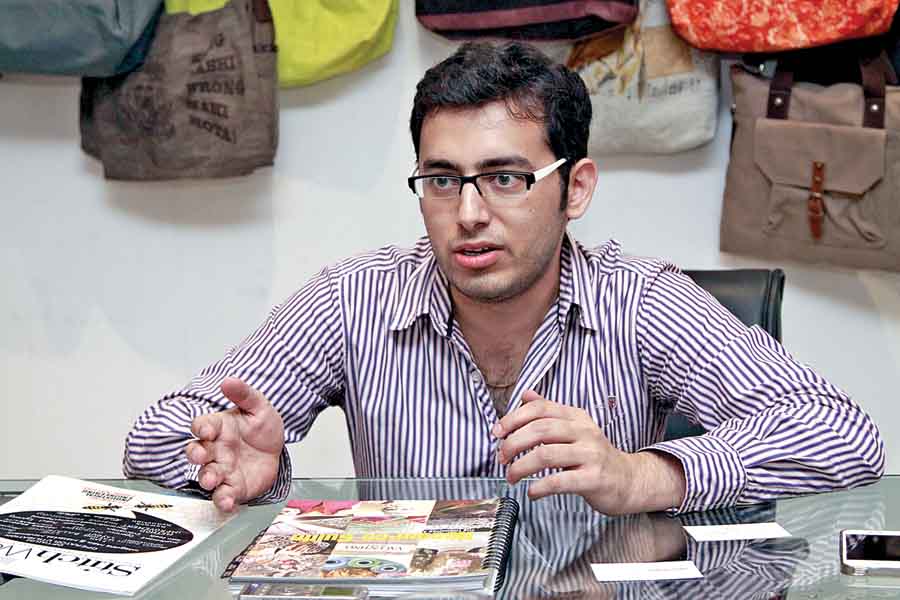
The other challenge is shrinking lead times which have come down from 120 days to even 30 days. “The buyers place orders very close to the season now; they don’t want to keep the inventory. We at times get 15-20 days from order placement to delivery,” avers Rohit. Girish feels that though it’s not easy to work on shorter lead times but since now he has larger setup he manages it. “I personally feel happy when I am able to deliver in shorter lead times as I can demand better money and the payment is in cash immediately after the fabric is delivered,” states Girish who himself is a textile technocrat and has hired B-Techs and M-Techs in his company.

The major problem with processors is that they keep on doing what they started with. If they started with plain cotton dyeing, they are still doing that no matter where the fabric demand is going. “Ours is a seasonal business which is for 8 months; it starts from August end to early April. After March, the lean period starts so that is the good time to innovate because you are not disturbing your production,” advises Girish. He further adds, “Market is growing fast and cotton is getting expensive, so many buyers are going towards polyester. One should be smart enough to move with the time. We are working with Forever 21, Zara, Gap… all big brands and all have moved to polyester and polyester blends.”
“Slight negligence on the part of the processor can lead to rejection of the entire shipment if the quality of the chemicals is compromised. At times to quote lesser prices, processors compromise on the raw material like going for cheaper chemicals and dyes which straight away impact on the quality of the fabric.”
The silver lining…
The closure of many process houses in Tirupur/Erode has worked as ‘boon in disguise’ for many processors in Delhi-NCR region. “After Tirupur processing crisis, 2-3 dyeing units in Greater Noida region have started dyeing of knitted fabrics,” shares Ankit. Color n Style was also among the processors which grabbed the opportunity. “The installed capacity for knitted fabric is 6 tonnes/day and it took one year to settle down in this business, but now it is doing very well,” adds Girish, who also ventured into dyeing of home furnishing fabric. He continues, “Earlier we were not doing wider width of 120 inches as we had limited space; when one has bigger space the work comes automatically. Polyester dyeing has been our forte but now we are expanding are product basket to sustain ourselves in the processing business.”
Color n Style, which is presently doing both jobwork and fabric sales, admits that the turnover of the fabric sales is much better than earnings made from jobwork, even though jobwork occupies a much larger chunk of the business. “In March 2014, we touched Rs. 25 crore in our jobwork business and around Rs. 14 crore in our sales business. In three years we tripled the size of our jobwork and doubled the size of our fabric sales. In the coming year we are looking at touching a combined turnover of Rs. 50 crore,” avers Girish whose fabric business is all polyester which is Surat’s forte. The company is also planning to add rotary printing facilities for polyester by April 2015. “I want to increase my fabric sales business, I just need to divide my existing resources and generate more money to fetch better margins,” justifies Girish who also believes that to remain in business he needs to work with big vendors along with looking for devices which can reduce his production costs. “I am now looking at investing on turbine and attach it to the boiler so that it will generate electricity. With Rs. 25 lakh investment, I will save Rs. 4 lakh every month and we get the ROI in 14 months,” he adds.
“We are catering to just the exporters and the kind of dyeing and finishing we are giving; no one in NCR is doing that. So even if we are 4 to 5% more expensive than Surat, at the end of the day we are more cost-effective for the buyers as we give the quality and on-time delivery.”
To remain in business Jagdamba has taken expansion cum product diversification route along with installing those machines which save energy and water resources. “In normal course, in wet dyeing and printing-washing process consumes a lot of water. In our new plant we have installed automatic continuous washing range; so after printing once you have to wash the fabric as it utilizes much less water as compared to conventional methods,” shares Rohit who is also looking at installing digital printers.
Chemico has taken a different route to remain in business. The company has gone for forward integration by getting into bag and belt manufacturing. “Because of shrinking margins in processing business, it is better to forward integrate and use our dyeing and printing as backward linkage. As far as jobwork is concerned, we are not interested in taking it forward as problems are much larger than monetary gains. However, if things get better then we might increase our capacities,” reasons Ankit.
After Tirupur processing crisis, 2-3 dyeing units in Greater Noida region have started knitted fabric dyeing which indeed is a smart move. The more one grows their product folio, the more clients one can have.
Seize price war… Form Processors Association
With margins shrinking, there is a fierce price war between the processors and to get business many are quoting Rs. 1 lesser per metre than their competitors…, this mindset has to be banished. Suggesting solutions to stop this practice Ankit says, “There should be an association where minimum rates should be defined by the job workers so that no one can quote below that price just to grab business. The garment exporters have to realize that the manufacturing costs like electricity, coal, manpower, etc. along with raw material costs like dyes and chemicals are going up each year but processing cost to the exporters is still the same as it used to be five years ago. If the exporter wants good quality and customized services at their door step, they should come forward and pay better prices to the processors.”