While India has the world’s third largest start-up ecosystem, the percentage of women entrepreneurs is comparatively lesser than their male counterparts. However in the few years, this scenario is changing and women are consistently raising benchmark and are transforming the world of start-ups, in ways more than one. Women are well known for their leadership skills and hence dominate in new-age industries. According to IBEF, in India, 20.37 per cent of women are MSME owners which account for 23.3 per cent of the labour force. Also, India has 432 million working-age women and 13.5-15.7 million women-owned businesses that provide direct employment to 22–27 million people. Further, according to McKinsey Global, India can potentially add US $ 700 billion to global GDP by only increasing women’s participation in the labour force.
The month of March recognises women across the world even as women are quite significantly taking over the business world to show their efficiency and prowess in multi-tasking and running some of the best and most successful firms across the world and India. Veterans like Kiran Mazumdar Shaw, Chanda Kochhar and Indra Nooyi paved way for women to come forth and start something they could call their own and become an independent entity, one that cannot be undermined by gender politics or bias. Furthermore, this Women’s Day is overtly special as the businesses running under losses due to the ongoing pandemic are, under their women bosses, standing tall and pivoting to innovate and strategise in order to survive and even flourish.
Now, talking about start-ups, India, during the pandemic years of 2020, 2021 and now 2022, has been witnessing a rise in the number of start-ups being launched across segments and many of these are run by women entrepreneurs. We are today way past the days when women were confined to domesticity or being defined by their household duties. We are witnessing a ‘New India’ where we are seeing women emerge as efficient multitaskers and leaders in true sense. The country today has around 45 per cent of its start-ups run by women, of which over 50,000 are recognised by the Government. Also, most of these women-led start-ups are seen turning into unicorns in the year 2021.
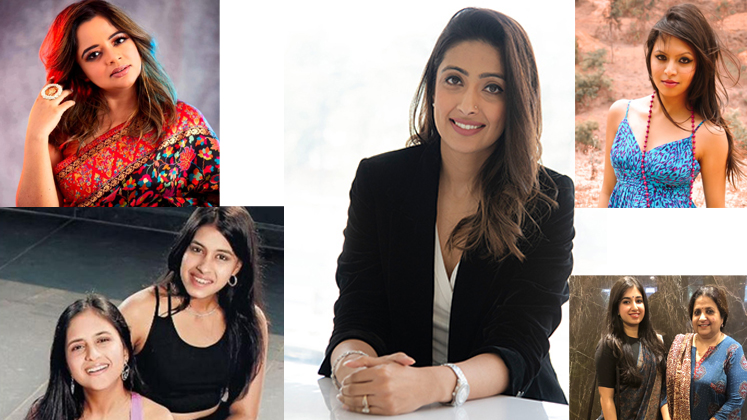
Here is a list of few of these she-preneurs who are paving the way to a more conducive environment for the entrepreneur in every woman out there, fearlessly following her instincts.
Anusha Chandrashekhar, Founder, Berrylush

Berrylush is a D2C women’s apparel brand. Based in Noida, Berrylush was founded in 2018 by IIM graduate Anusha Chandrashekhar who had a dream of building a womenswear brand. Chandrashekhar left her well-paying job at Deloitte to accelerate this brand, with the initial investment of Rs. 10 lakh from her father and support of her partner and Co-founder Alok Paul. Chandrashekhar said, “I noticed a gap in the market that I could fill. I saw that trendy clothes made by established brands were of good quality but were too expensive, and cheaper alternatives did not have the same quality and so decided to make and sell well-designed products of similar quality below Rs. 1,000.”
Berrylush manufactures and sells female clothes including dresses, tops, jumpsuits and skirts. While manufacturing on their own was not their initial plan, the duo decided to manufacture products after getting damaged products, irregularities in rates and delays in production, from vendors. The brand got a much needed push when it started selling on Myntra; the couple partnered with exclusive fabricators and increased the brand’s production capacity to over 100 machines. Berrylush sells through online platforms like Myntra, Ajio, Flipkart, Amazon and their own website. The brand’s USP is providing quality trendy products at affordable prices. The Co-founders said that Rs. 999 price range has been their bestseller so far.Berrylush’s turnover touched Rs. 15 crore last year and is now inching towards Rs. 35 crore this year.
Shirin Mann, Founder and Creative Director, SAND
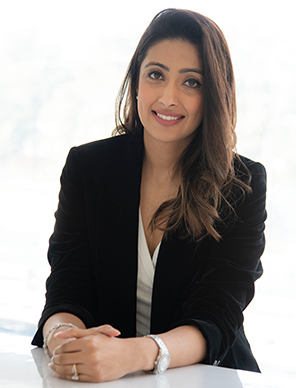
Shirin Mann, the force behind handcrafted footwear brand NEEDLEDUST, ventured into clothing space with SAND (Such A Nice Day) in the first half of 2021. The pandemic-induced lockdown hit business of NEEDLEDUST, but it also gave Shirin time to conceptualise SAND.
Shirin noticed a massive gap in the Indian fashion industry where majority of the brands use polyester and the like to make garments and Indians are wearing it, despite living in humid weather conditions. This made her spend over a year-and-a-half on extensive research and sampling fabrics that are made from natural fibres of rose petals, eucalyptus, aloe vera, lotus, banana and more, along with organic linen and cotton. SAND is a brand that celebrated all things simple, unrestrained and fluid, and positions itself as India’s first fluid-fit, affordable luxury label. Shirin, with SAND, offers international silhouettes that will make women feel a lot more special. The prices start from Rs. 3,000 and go up to Rs.7,500.
SAND’s apparel range has jumpsuits, overlays, trousers, kaftans, dresses and asymmetric tops. SAND is available on the brand’s own website www.sandbyshirin.com and the brand ships across the globe.
Ria Mittal & Shreya Mittal, Co-founders, CAVA Athleisure

The two pandemic years have accelerated the demand for comfortable clothing and loungewear and athleisure were the two apparel categories that got a tremendous push during this period. Tapping this potential market, Bengaluru-based sister duo Ria Mittal and Shreya Mittal launched their athleisure brand CAVA in 2020. While Ria studied BSc. in fashion management from the University of the Arts, London, Shreya is in her first-year undergrad at Warwick University, UK. The duo sisters, having travelled abroad, found a gap in the Indian fashion industry when it came to athleisure. “We also noticed that our friends and many other young millennials who were experimenting with street style athleisurewear could not find good labels to shop from. We really thought it was the right time to enter this space,” Ria said.
The brand targets audience in the age group of 15-35 years. A strong base of a family background in garment business gave the Co-founders the backing they needed to start the brand. “We did multiple presentations for our family, which has invested Rs. 8-10 lakh into this venture, before we took the plunge,” said Ria. CAVA is completely bootstrapped and the operations started with a capital of Rs. 40 lakh from personal and family’s savings.
CAVA uses 100 per cent polyster and BCI (better cotton initiative) fabrics which conserve water and other vital resources and the products are retailed at a price range of Rs. 800 to Rs. 2,500.
Roshni Mukherjee, Founder, Myosutra
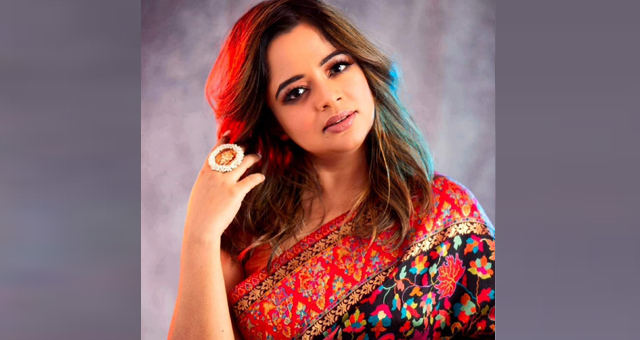
London-based fashion brand Myosutra started its online operations in 2017 and the brand now ships worldwide, giving people a taste of Indian ethnicwear fashion through both its classic collection and contemporary styles. The brand now has 25,000 followers on Facebook and 9,000 followers on Instagram. “Our collection includes curated traditional pieces from weavers, like outfits in muslin, kalamkari or Jamdani and our in-house contemporary designs that are more relatable to people living here, featuring the London skyline in saris, the red telephone booth on blouses, Potter saris or Durga-themed gowns. Our weavers’ collections are my way of supporting their community,” said Roshni Mukherjee.
Born in Kolkata, Roshni Mukherjee developed the deepest of love for centuries-old art and crafts. This unconditional love for the Indian craftsmanship has translated into Indian ethnicwear like saris, kurtas, dhotis and accessories under her label. The founder of this ethnicwear brand has completed her certificate course in Fashion and Textile design from British Academy of Fashion Design.
Hetal Desai and Lekhinee Desai, Co-founders, Indian Ethnic Co
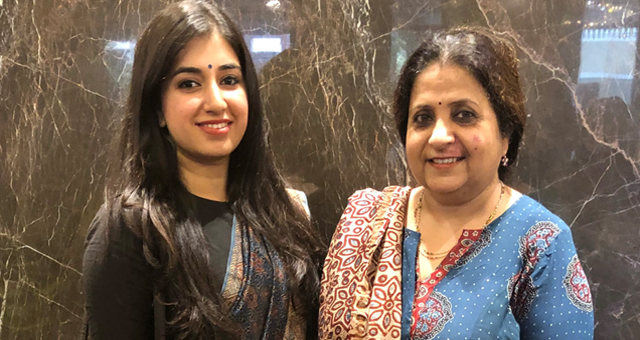
Hetal Desai, who has done her Masters in Home Science from MS University, Baroda, has always been an ardent lover of handloom textiles. Hetal’s daughters — Lekhinee Desai and Twaraa Desai — never had to buy readymade garments, for Hetal would source ethnic fabrics, design outfits and get it stitched by expert tailors.
It was in 2016 that the Desai family, with no business background, decided to turn Hetal’s passion for handlooms and designing into a business. At the time, Lakhinee was pursuing her MBA from NMIMS, Mumbai.
Hetal and Lekhinee, as Chief Creative Directors headed sales and marketing respectively, and launched The Indian Ethnic Co. in 2016 and sold products rooted in Indian handloom and handicrafts via Instagram and Facebook. In 2018, the brand launched its e-commerce website.
The business got a major boost when Lekhinee, a trained Odissi dancer, went ahead with her father’s idea of mixing Indian Ethnic Co.’s products and her dance, to lure customers. Lekhinee, along with her sister and a couple of friends, made videos of them dancing, wearing The Indian Ethnic Co. saris. Videos went viral, with the first Instagram reel getting over a million views. Saris were sold out overnight too.
The Indian Ethnic Co. is a brand that promotes Indian culture ethnic culture and sustainable fashion. It also believes in celebrating real beauty by featuring women of all sizes, age, shapes and colours.
The Indian Ethnic Co. has seen 200-300 percent growth year-on-year since 2018 and is close to touching a turnover of Rs.10 crore. Products range from Rs.1,999 to Rs.17,850 The brand is also planning to launch new ranges for men and kids.