The business of retailing fashion clothing might be going through a period of renovation in context of the physical realm, but digital retail is performing better than ever.
This industry has witnessed an unstoppable growth trajectory, being valued at US $ 481.2 billion in 2018 and is expected to touch US $ 712.9 billion by 2022. In fact, the number of potential fashion consumers shopping online will grow to more than 1.2 billion by 2020, according to data from ‘Shopify’.
However, this upward spiral is not protected from some hurdles of its own. Brands today have the power to connect with shoppers at countless touchpoints before they even consider making a purchase. This inadvertently means more responsibility to figure out where your shopper spends most of his/her time.
Multichannel retailing is not a value addition but rather a compulsory prerequisite to sustain business growth. In order to have a competitive advantage, you must make effective use of the available marketplaces and pre-targeting initiatives to target a digitally-native consumer profile.
It is a domain riddled with heavy competition and the fact that you can reach a buyer from different touchpoints also means that there are an astonishing number of these sales points to capture.
Right from using WeChat or Facebook’s Messenger platform for client interactions to attracting people using innovative membership models, there is room for every kind of retailer to sell creatively.
In this article, we have tried to explore some of the most popular e-commerce business models puzzling the fashion industry at the moment and how some key players are incorporating them into their strategy.
CONVERSATIONAL COMMERCE

‘Conversational commerce’ is a popularly defined umbrella term for using chat, messaging, or other natural language mediums (such as voice) to interact with people, brands, or services and chatbots in a commercial context.
The feature has major league takers, like Walmart that partnered with Google to launch a service that allows people to shop over 2 million products using voice assistants. Similarly, British retailer Ocado launched a feature that makes it possible to directly order its products via Amazon Alexa in 2017.
Jon Stine, Global Director of Retail Sales, Intel, says that, “Voice search and conversational commerce is deeply disruptive, and will become an important interface in as soon as three years – important enough that retailers, consumer brands, and their marketers must pay attention now.”
SELFIE COMMERCE
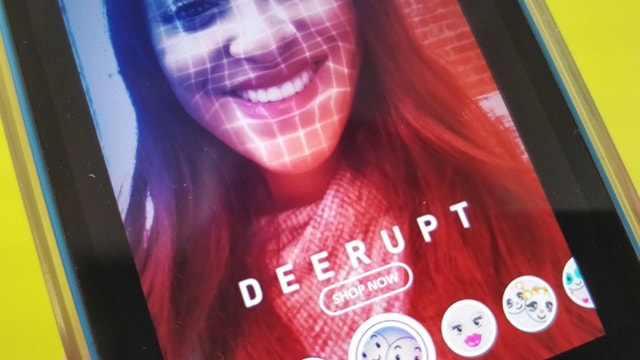
A comparatively newer term, ‘selfie commerce’ was coined with Snapchat’s introduction of shop-ability to its augmented reality lenses. With 166 million daily active users to boast of, the feature enables Snap’s advertisers to let people perform actions like ‘shop now’, ‘watch video’ and ‘install now’ right from the face filters’ page inside the app.
Also Read: Snapchat makes augmented reality filters shoppable!
After Snap, popular social platforms like Facebook and its subsidiary Instagram, also added the ‘stories’ format of sharing content so that it will not take them longer to follow suit and make themselves shop-able as well.
“With this move, Snap Inc. is giving brands the opportunity to not just drive engagement with AR Lenses, but also seamlessly drive them to commerce with a new tap to visit.com feature,” said Chris Murphy, Head of Digital Experience, Adidas US at the time of the launch.
SUBSCRIPTION COMMERCE
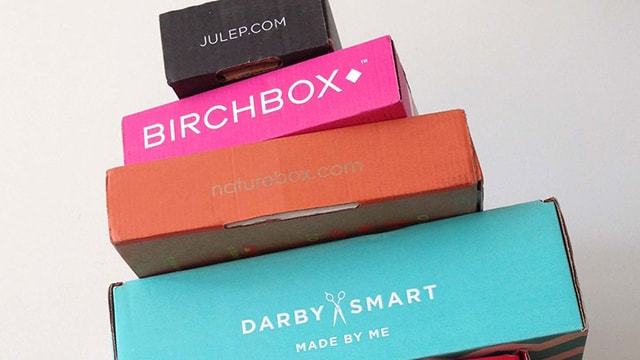
Asking people to subscribe or become a member is not a new selling concept but retailers have artfully reinterpreted it for the digital generations and the results are clearly favourable.
According to a McKinsey report, the subscription e-commerce market has grown 100% Y-o-Y for the last five years, with the largest retailers generating more than $ 2.6 billion in sales in 2016, up from $ 57.0 million in 2011.
While the entire process of subscribing sounds cumbersome, the model promises a better end-to-end experience and only services offering tangible benefits like bigger bargains or personalisation, tend to survive in this space.
Though it has been said that the market for subscription boxes is already overcrowded and majority of the companies are struggling, the model, however, can serve as a great complementary service for e-commerce pure players.
Also Read: Is Subscription Business Model the next Big Thing in Online Retail
For example, Amazon’s ‘try before you buy’ Prime Wardrobe shopping service, that will let people order a cart of items for no cost before they make any purchase, could work wonders for the e-commerce giant. While still in beta phase, the feature removes the issue of no trial rooms from online retail and is definitely an aspect worth considering to entice hesitant shoppers.
CAR COMMERCE

It is a known fact that easily available ride-sharing services are quickly turning us into a passenger economy. Encashing on this development is Cargo, a start-up that has on-boarded prominent cab service providers Uber and Lyft, to start in-car sales.
Jeff Cripe, Cargo’s CEO, aptly calls it ‘arm’s length convenience’. With this launch, passengers can utilise their commute period to browse and shop for products (currently limited to FMCG) while inside the cab.
The system of selling merchandise in cars is a great way to market and push free samples as well as serve people in their time of need. Only available in the US for now, it opens a whole new consumer touchpoint which can be driven by data because you already know a driver’s neighbourhood, time of driving etc.
Sabina Rahaman, Head of Brand Partnerships & Merchandising, Cargo added, “Passengers are at the heart of our merchandising strategy, and our goal is to provide a premium mix of products that are unique and engaging for everyone, whether they are heading to the airport, the office or out for the night.”
SOCIAL COMMERCE

Social media has long been an integral marketing platform for brands ever since its popularity took off. What started with a simple place to connect with friends and family, has now fully immersed itself into the commerce domain.
In between Facebook’s all-integrated ‘Marketplace’, the introduction of ‘Clickable Price Tags’ on Instagram to the ‘Buyable Pin’ feature on Pinterest, there are enough direct-to-consumer social media platforms to choose from.
Also Read: Instagram introduces ‘shopping feature’ to 8 new markets
Although there is still time before consumers fully trust the purchase platforms, Octavio Maron, Executive Creative Director at Fetch, a mobile marketing agency explains, “There’s a lot of friction from the user to go through the steps [to purchase] because there’s also this learning curve of buying something on this new platform.”
What started out simply as a medium for retailers to engage, develop brand relationships in the hope of ‘followers’ turning into ‘customers’, has now become a space for brands to gauge consumer data and response to products in real time.
In conclusion, more options mean more key strategy decisions on the brand’s part. Going forward, it is quite possible that brands and retailers will decide to sell different products selecting specific mediums, rather than pushing everything through every channel.
The ultimate winner in this day and age will be the one who understands at the right time where his/her consumer wants to shop for what.






 Bharat Tex Special Report 2026