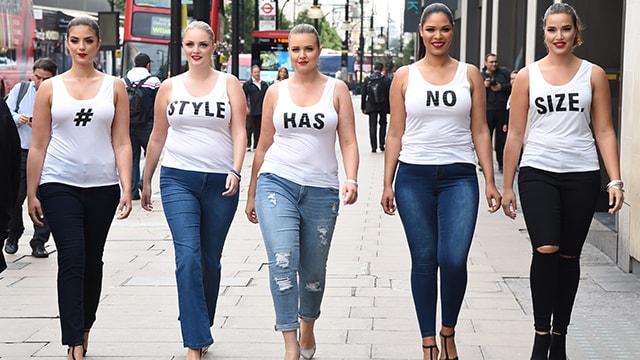
What was once considered a section to be displayed at the back of the store, with few items to select from, has finally gained pride positions at stores with retailers acknowledging that plus-size is not an exception, but an inclusion to the womenswear category. The most recent stamp on the growing importance of plus-size is the renaming of the segment by Kmart to ‘Fabulously Sized’. In fact, the segment has been among the few that has escaped the market slowdown, registering growth of 6% to US $ 21.4 billion in 2016 – double the growth rate of the overall apparel sales – which totalled US $ 218.7 billion at the year end, according to data from market research firm NPD Group.
The realization has finally seeped in that any brand or retailer looking at growth in the womenswear category has to think ‘big’. “Brands that focus on only the S-M-L-XL consumers will never win the women’s business,” said NPD’s Apparel, Sports and Footwear Industry Analyst Matt Powell in a post predicting 2017 sports business trends, adding that NPD research shows the most common size in women’s apparel is 16 and over 67% of American women wear size 14 and above. The research also shows that growth is not only in the women’s category but the percentage of US teens purchasing plus-sized clothing has almost doubled to 34% in 2015 from 19% in 2012.
All retailers/brands have gone after the segment and many are looking at it as a growth driver. Even as sales at JCPenney struggle, its CEO Marvin Ellison admits that plus-size is one of the company’s ‘strategic growth initiatives’ for this year and beyond, adding the ‘plus-size community remains under-served’. “We want to become the destination for providing style, value, and an appealing shopping environment,” Ellison said, adding the company’s first-ever plus-size private label fashion line Boutique+ introduced last year ‘continues to resonate’ with its plus-size customers. The retailer is expected to further introduce swimwear and other accessories under the label, which it said targets ‘fashion-minded millennial shopper’. JCPenney said it has a dedicated design and product team to make sure colours, prints and fabrics fit ‘curvy silhouettes’.
Kmart created a stir by changing the name of its plus-size clothing to ‘Fabulously Sized’; the section includes extended sizes from Kmart labels including Jaclyn Smith and Basic Edition. Two other Kmart brands, ‘Intimates’ and ‘Attention Plus’, now come in a wider range of sizes, up to 4X/5X. “The average American woman is a US size 16 to 18. Often, it’s hard for women to find extended sizes, and even harder when these options force women to choose from certain styles, patterns, and sizes,” says Kelly Cook, Kmart’s Chief Marketing and Digital Officer. Yet, changing the name has not really gone down well with everyone. Plus-size Supermodel Ashley Graham has spoken out against the term, calling it ‘divisive’, and model Kate Upton has also rejected the category, arguing that “no one should be labelled by their body size at all.”
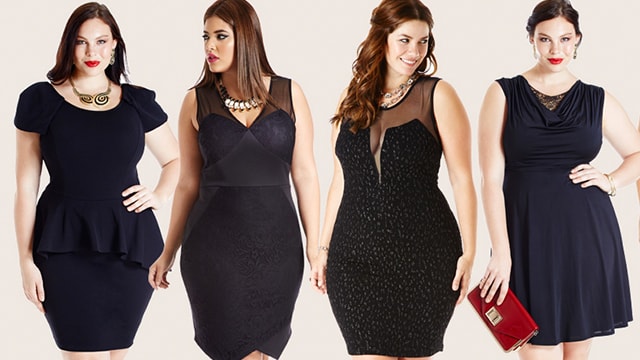
The fact remains that plus-size is no longer an after-thought and Kmart is the latest major retailer to offer a more inclusive range of sizes, without a clear separation between the plus and non-plus departments. As of today, among the retailers, Walmart sells the most plus-size apparel. Following the direction, Target earlier this year debuted ‘A New Day’, a clothing line that caters to sizes XS to 4X, while Nike launched a new collection of activewear sizes. And recently, Joe Fresh expanded its lines to include sizes up to 3X. The change in mindset is imperative, especially for those seeking to win over the millennial and Gen Z consumers.
The role of social media is changing the perspective of the retailers, many of whom always wanted to be associated with the fashionable women whose proportions were in reality far from the ‘real American woman’ that cannot be undermined. On Instagram, there are 5.3 million posts including the hashtag #plussize. A search of ‘plus-size fashion’ on YouTube yields some 1.6 million results with top searches, including various plus-size fashion “try on haul” videos. One video, titled “Women Break Plus-Size Fashion Rules” by BuzzFeed’s Boldly channel generated almost 3.9 million views.
The rising clamour to hear plus-size women has become so strong that for the first time ever Vogue magazine made news this year by featuring Ashley Graham on its March cover alongside other models. Upping the game, traditional plus-sized retailers such as Lane Bryant, owned by Ann Taylor with over US $ 1.1 billion in fiscal 2016 sales, have introduced exclusive collections in partnerships with designers from Isabel Toledo to Prabal Gurung that features model Graham in some of its marketing campaigns.
The race to get a bigger share in the plus-size market is heating up as NPD’s forecast indicates that the plus-size women’s apparel market would grow by an annual average rate of 4% to US $ 24 billion by 2020. Nonetheless, designer brands still hold back as it is considered a risky category. Some brands, such as Michael Kors, do sell plus-size ranges but do not advertise them or display them on websites. For those who are willing to take a chance, several internet start-ups that deliver personally styled outfits to individuals, including plus-size women, offer data to ‘straight-size’ designers. Gwynnie Bee, Stitch Fix and Dia & Co, for example, share information with designers on preferred styles and fits.
There is still a lot to be done to capture this growing segment of women who are finally discovering fashion that looks good and fits nicely on their curves. Many plus-size customers still feel that many upmarket department stores keep their clothing sections poorly organized, badly stocked and dimly lit, if they stock larger clothes at all.






 Bharat Tex Special Report 2026