Buyers today expect apparel suppliers to deliver smaller MOQs, faster development cycles, continuous innovation, value-added functionality, sustainability and complete traceability. Many of these expectations are now being addressed upstream, with textile suppliers playing a much more active role in shaping the final product.

“Buyers today want performance with purpose,” said Vijay Vashishth, Head of Exports and Business Development, Indorama India (INVIYA Spandex).
He added, “Athleisure has gone fully mainstream; people expect fabrics that work from the gym to the office. Stretch alone isn’t enough anymore; moisture management, shape retention, and durability are now baseline expectations. Chlorine and UV resistance are increasingly demanded, especially for swimwear and outdoor performance wear. Heat resistance for seamless knitting applications is another growing requirement.”
Talking about emerging innovations, Vashishth pointed to smart spandex with integrated sensor technology that can monitor movement, compression and even certain health parameters in real time “We’re also seeing advances in fine-denier spandex for seamless knitting, delivering lighter, softer hand-feel without sacrificing recovery performance,” he said.
Others also pointed to buyers’ growing appetite for variety and newness.
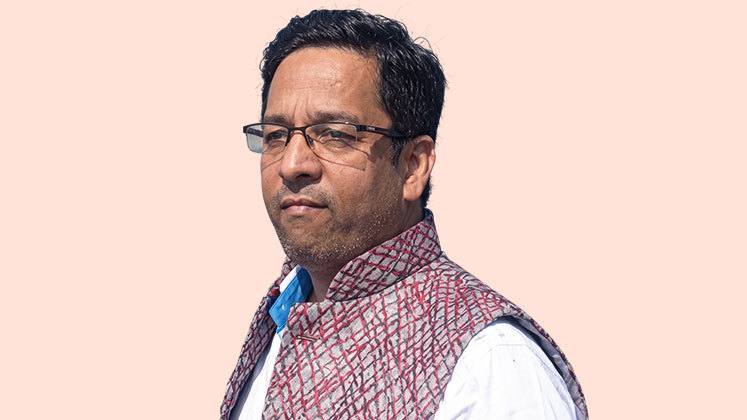
“Buyers no longer demand large volumes; instead, they want a constant influx of new varieties in smaller batches. In terms of market segments, the demand for ethnic and fusion wear is rising continuously among the younger generation, while the baseline market demand for traditional garments remains highly stable and consistent,” said Dinesh Gupta, Proprietor & Founder, CTC Jaipur (Chandra Trading Corporation). The company manufactures printed fabrics and finished garments, specialising in block prints, Bagru, Ajrakh and screen prints on cotton, rayon and voile. It caters to buyers looking for smaller, flexible orders, accepting fabric orders from 30 metres and garment orders from 50 pieces per style.
Alongside changing buying patterns, manufacturers are also seeing a clear shift in the choice of raw materials. “The absolute growth leader in the textile industry is MMF, driven by cost-efficiency and unmatched processing adaptability. Polyester has always been in demand, and its popularity continues to grow because of its cost-effectiveness,” said Kishore Kothari, Director, Valji, a manufacturer of corporate, industrial and school uniforms.
Kothari also reiterated that flexibility is becoming non-negotiable. Suppliers will need to support low MOQs so brands can test new products without building excess inventory. He added that local or multi-country manufacturing hubs will also become increasingly important to deal with tariffs and other geo-political disruptions.
Manufacturers say blended fabrics made with cotton, polyester and viscose are becoming increasingly common.
However, manufacturers pointed to the challenges of providing value with the increase in price points. “Raw material volatility complicates longterm planning; cotton prices experience heavy fluctuations, and polyester remains linked to crude oil shifts, yet buyers still demand completely fixed pricing structures and long-term commitments,” said Dinesh.
Likewise, Vashishth mentioned, “Buyers expect technical collaboration, codevelopment of new fibre solutions, and faster sampling cycles. That demands continuous R&D investment on our side. And increasingly, buyers expect price stability despite our volatile input costs — that gap between their expectations and our reality is where the real pressure lives.”
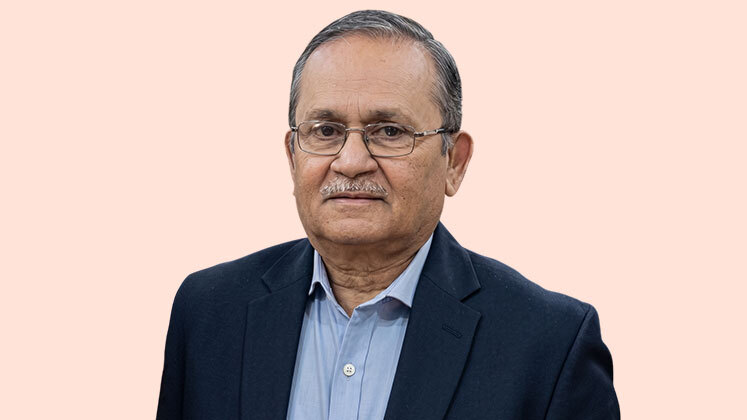
Echoing the sentiments, Prabir Bandyopadhyay, Vice President, Sri Shyama Denim Pvt. Ltd., an Ahmedabad-based manufacturer of premium denim fabrics, mentioned, “Price still dominates purchase decisions at the shelf.”
Beyond rising cost pressures, textile manufacturers say they are grappling with several structural challenges. Continuous investment in new machinery, product development and sustainability is becoming essential, but not every manufacturer has the financial capacity to keep pace. The industry also faces stiff competition from low-cost imports and cheaper fabrics, putting additional pressure on margins.
The Era of Certified and Traceable Textiles
The regulatory environment in key export markets, particularly the EU, is tightening in ways that are fundamentally changing how textile suppliers operate. The EU’s Extended Producer Responsibility framework holds producers accountable for the full lifecycle of their products. The EU Green Claims Directive is making it harder for brands to indulge in greenwashing. And the Digital Product Passport, which will require garments sold in the EU to carry traceable, machine-readable information about their materials, production processes and environmental impact, is moving from regulation to reality. For Indian textile manufacturers these parameters are defining the sourcing criteria.
“On the material side, certified recycled elastane and PFAS-free fabrics have moved from premium offerings to standard sourcing requirements, particularly among European and American brands operating under regulatory pressure. Buyers want spandex that performs harder and impacts the environment less. That is exactly where we are focusing our innovation,” said Vashishth.
Indorama is expanding its range of sustainable materials. The company now offers ECOMODA100, a 100% recycled spandex, and is also investing in biobased spandex made using plant-based raw materials instead of petroleum based inputs.
Manufacturers supplying to international brands are increasingly expected to meet a broad set of certifications.
“Certifications for the Social and Labor Convergence Programme and environmental modules are essential as proof of sustainability,” said Bandyopadhyay. The company works with organic and recycled inputs, aniline-free dyes and operates a zero liquid discharge system.
Gupta from CTC Jaipur also pointed to the growing role of eco-conscious processing alongside sustainable materials. The company uses Azo-free dyes and sustainable printing methods across its organic cotton fabric range, which includes printed dress materials, voile, cambric and mulmul.
However, the tension between sustainability ambition and commercial reality, runs through every negotiation. Buyers want certified, traceable, lowimpact materials, but they benchmark their price expectations against conventional suppliers who carry none of those costs. The manufacturers steering this most successfully are those who have built sustainability into their product development from the start rather than treating it as an add-on, and who can demonstrate the value of that investment in the language buyers increasingly understand i.e. certifications, traceability documentation and verified emissions data.