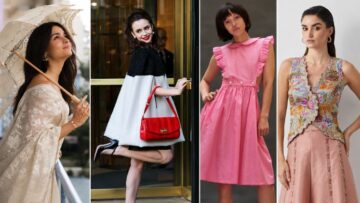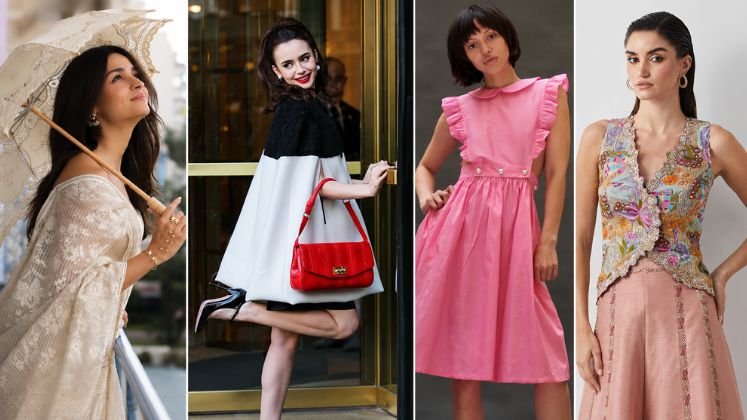
Grandmillennial dressing has emerged as one of 2026’s defining fashion trends, bringing embroidered blouses, pearls, tweed, and heirloom florals into sharp, contemporary silhouettes rather than costume-like styling. The aesthetic reflects a shift towards understated luxury, where craftsmanship, quality, and timeless design take precedence over overt branding.
The aesthetic is defined by its balance of old and new. Heritage-inspired floral dresses feel contemporary when paired with sharp boots or oversized blazers, while puff sleeves are tempered with clean tailoring and antique-style prints are offset by minimalist accessories. This blend is reflected in New York-based Hill House Home’s The Analiese Nap Dress and The Margot Dress, alongside LoveShackFancy’s signature puff-sleeve florals, Batsheva’s Bow Pinafore Dress in Sky Taffeta and Peter Pan Apron Dress in Rose Taffeta, and Sandy Liang’s Palisade Top in White Eyelet.
Together, these designs embrace nostalgia and craft-inspired detailing while reinterpreting them for a modern wardrobe. The aesthetic has also moved beyond the runway, gaining traction through celebrity wardrobes and street-style dressing.
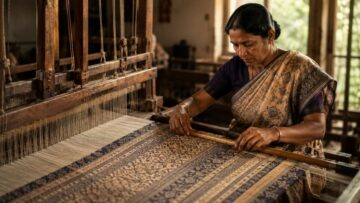
The key difference lies in the depth of its references. While Western grandmillennial style draws on mid-century interiors and vintage thrift aesthetics, its Indian counterpart is rooted in generational craftsmanship, incorporating centuries-old techniques such as zardozi, gota patti, and chikankari rather than decades-old design traditions.
India has embraced the grandmillennial aesthetic long before it had a name. Ritu Kumar has built her label around heritage block printing and handloom revival since the 1960s, while Sabyasachi’s maximalist embroidery and deep reverence for Bengal’s textile heritage champion heirloom dressing over fast fashion. More recently, Jaipur-based Suramya, founded by Eti Jain, has interpreted the aesthetic for a younger audience through pastel palettes, pearl embellishments, and delicate hand embroidery designed for everyday wear rather than exclusively for special occasions.
Newer labels are reinterpreting the grandmillennial aesthetic for younger wardrobes. Nidhika Shekhar pairs intricate embroidery and mirror work with sculptural, asymmetric silhouettes, as seen in the Haritah Sanyoga Saree and Neel Kamal Lehenga Saree Set.
AUM by Ashima & Asit takes a similar approach, applying hand embroidery and patchwork across contemporary silhouettes, from the Pastel Patchwork Embroidered Corset to the Patchwork Heritage Bandi Sherwani Set, proving that traditional craft can thrive beyond occasionwear.
Meanwhile, Jaipur-based Rana’s, with over a century of expertise in heirloom sarees and lehengas, exemplifies the aesthetic through pieces such as the Sequin & Cutdana Work Drape Saree and Rust Lehenga with Jacket; designs created to be collected, cherished, and passed down rather than worn for a single season.
This is one of the few trend cycles where Indian fashion is the reference point rather than the follower. As global demand grows for heirloom-inspired, artisan-crafted pieces, India’s longstanding strengths in embroidery, handloom, and craft-led design position it at the forefront of the movement.