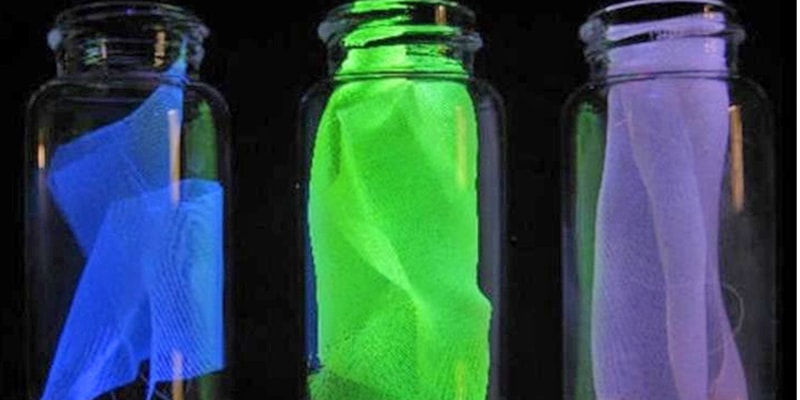
The US National Institute of Standards and Technology (NIST) has developed a technique to embed a damage-sensing probe into a lightweight composite made of epoxy and silk. The probe, known as a ‘mechanophore’, is claimed to help speed product testing and potentially reduce the amount of time and materials needed for the development of new composites.
The NIST team of researchers has created the probe using a dye that changes from dark to light when a force is applied. According to the team, the probe attaches to silk fibres contained within an epoxy-based composite.
As the force is applied further to the composite increases, the dye gets activated; although the researchers say it is not visible to the human eye as they have built a red laser and a microscope to take photographs inside the composite. This allows them to see the points where the fibre fractures.
Also Read – New thermoplastic composite PolyPreg released by BGF Industries
The leader of the researcher’s team, Jeffrey Gilman, commented, “There have long been ways to measure the macroscopic properties of composites,” adding, “But for decades the challenge has been to determine what was happening inside, at the interface.”
NIST is planning to expand the research to explore how such probes could be used in composites, as well as see if such sensors could enhance the capability of these composites to withstand extreme cold and heat.
“We now have a damage sensor to help optimise the composite for different applications. If you attempt a design change, you can figure out if the change you made improved the interface of a composite, or weakened it,” concluded Gilman.