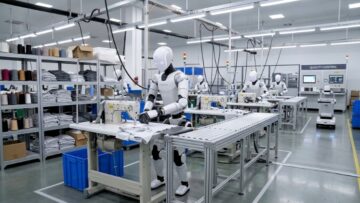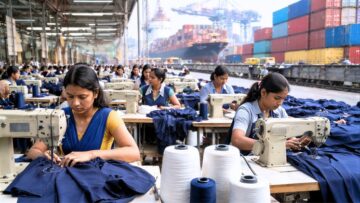
Organizations involved in apparel manufacturing generally use computers to accomplish some of the functions or operations where use of computers results in improvements in performance, rationalization of the operation, error proofing of the outcome, and or quickening the lead time. Almost in every step of garment lifecycle users now has an alternative given by information technology, but in reality not many actually adopt these IT-enabled solutions either due to lack of awareness or apprehension about return on investment. In this article, Dr. Prabir Jana, Professor, NIFT, Delhi analyzes the use of IT in apparel manufacturing.
The apparel manufacturing organizations operate with different models; first, there are organizations involved in CMT manufacturing where companies are primarily selling minutes (companies from Bangladesh, Cambodia, etc.). Then secondly, there are organizations who also design & develop their own collections and present to buyer to choose from (companies from India). Third kind of organizations are those which design, manufacture and retail themselves (Madura, BlackBerrys). The IT requirements for each differs significantly due to different priorities. We will discuss here the IT requirements for all three types separately.
The benefits of IT application can be of productivity improvement, quality consistency, manpower reduction, lead time reduction, space saving, lowering skill set requirement, and material saving. While some IT applications merely improve the productivity of operations, otherwise possible manually, some aspects of benefit may be totally new and cannot be achieved manually. For example, grading of pattern is possible manually and CAD simply improves the speed and accuracy, but viewing the whole marker length at one viewing span is not possible manually and computerized marker making makes that possible. Similarly, cut plan software enables checking all mathematically possible permutations and combinations to arrive at solutions which are not possible to check manually. Some of the applications will increase flexibility of the system or an operation. Not only that, design software also allows one to create unlimited number of design options to best suit your needs.
Every IT solution in one way or another helps the organization to streamline its process and thus needs to be evaluated for its necessity and usefulness for all three different types of organizations. For the sake of better understanding in this article, those applications which are of absolute necessities (must haves) for an organization, are given a ‘mandatory’ ranking; and those applications which are useful value addition and preferred as technological differentiators (sometimes order winners), are given ‘differentiator’ ranking. Following is the lists of software applications and how and why they can help any organization achieve their business objectives better.
Fashion Forecasting
For tracking global and geography specific fashion trends in colour, silhouette, textures online.
This is the first and most important step for full package manufacturers and domestic retailers, as it helps the design team to be updated with regards to different target markets without spending time and money on travel.
Fashion Design
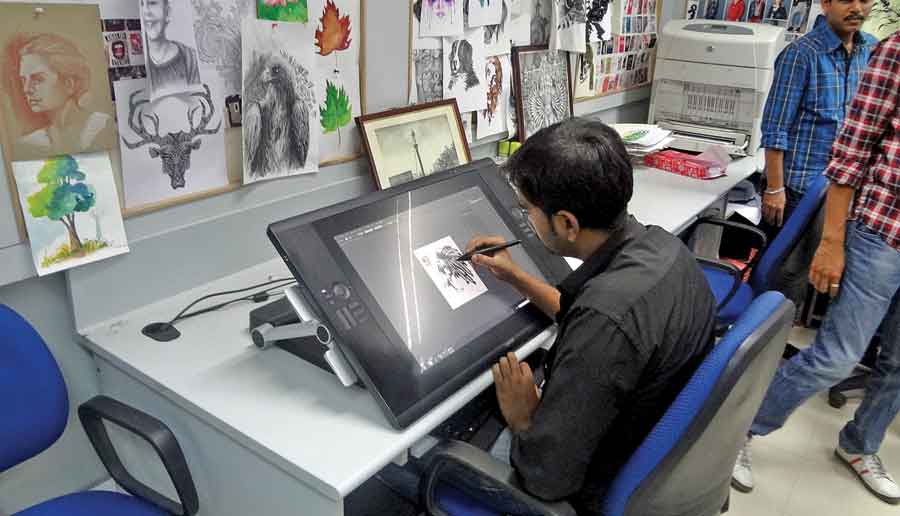
For making up compositions, layouts, storyboards, colour ways, sketches, creation of colour marks digitally in computer and sharing collaboratively with fellow designers across the globe.
It gives the possibility of checking and deciding lot of what-if situations regarding colour-ways and silhouette combinations before finalizing the collection. It therefore, fast tracks the collection development.
Material Development
Such designing solutions allow the design staff to create their own fabric in woven and knits digitally on the computer. Different colour and weave/knit/print effect can be created digitally to finalize the right choice based on manufacturability and aesthetics (designs and prints).
It will perform virtual checking of several what-if situations before physically producing the sample. Several manufacturability options can be checked before putting the design to machine for mass production. This fast tracks the fabric development, be it knits or woven, yarn dyed or prints.
Digital Printing
Printing fabric direct from computer… Any colour, any fabric can be printed for sample meterage or bulk production.
As texture of fabric can be reproduced accurately, any yarn dyed as well as printed fabric look can be digitally printed in sample yardage to cut and sew sample garment for approval. This is a solution towards shorter production cycle and greater design variety during product development stage. This application can cut down the sample approval time from days to hours.
Colour Management Solutions
Colours swatches are scanned and exchanged electronically through calibrated data capture and display equipment. This application also enables automatic recipe generation for ensuring repeatability of shade during dyeing and objective method of shade approval by numeric light reflective value.
Electronic exchange of scanned colour swatch eliminates the need of couriering colour swatch across geographical regions and thus reduces time of colour approval and works towards quicker deliveries. It ensures objective method of colour reproduction, and shade comparison for approval, thus removing the subjectivity.
Computer Aided Design (CAD)
CAD is used for pattern making, marking, grading and marker making, and also helps in calculating accurate fabric consumption to ensure tight control on pricing.
CAD is a pattern master’s tool for increasing production. Replacing mechanical tools with computerized ones, like CAD results in time saving, including manpower saving. Grading also induces quality consistency, productivity improvement and thus lead time reduction. The other intangible benefits includes easy storage and easy retrieval of old patterns (space saving), duplicity of grade rules (lowering skill requirement), easy to see large area during marker making, etc. For large volume multi-style operations, CAD will rationalize the manpower and material utilization; however, organizations who are not handling many styles at a time, CAD utilizations may be low, therefore this concept may be used to minimize cost and better ROI.
3D Simulation Software
Virtual simulation of any garment made out of any fabric, when worn by a virtual human form is created on computer screen using complex mathematical algorithm. The fabric behaviour, i.e. drape, bounce, texture can also be predicted in static and dynamic condition (i.e. when the subject is moving). The virtual human form can also be made by cloning exact body size of live model.
Virtual prototyping of garment sample can be checked and re-done multiple times before actual mass production starts, thus saving of material cost, labour cost, time of making and couriering physical sample and approval time. Companies engaged in full package manufacturing will find tremendous value in this application, as cost and time of development of a collection will reduce significantly giving competitive edge over others in securing business.
Cut Planning Software
Scientific and multiple priority-driven evaluations of millions of permutations and combinations to decide on the most cost-effective solution.
While using costly and fault free fabric, this application will generate considerable amount of saving by analysing different what-if situations of optimizing labour cost, material cost, or time. This application helps material saving and also makes the operation more flexible by offering choice to operator to optimize labour, time or material cost.
Thread Costing
Calculates accurate thread requirement for any style.
Although the cost of sewing thread is negligible in comparison to other inputs, yet this application helps organize, plan and distribute the requirement of sewing thread and saves precious time. This application actually simplifies the otherwise cumbersome calculation (thus improving productivity), reduces chances of error in estimation.
Labour Costing Software
Allows manufacturers to quickly find out the work content of any sewing operation and determine labour cost.
[bleft]The benefits of IT application can be of productivity improvement, quality consistency, manpower reduction, lead time reduction, space saving, lowering skill set requirement and material saving [/bleft]
This is primarily PMTS application and very useful for rationalizing work content of any operation and determining labour cost. Although the essence of the application is PMTS training and not the software, and organizations should emphasize imparting PMTS training to their staff rather than buying the software. Unfortunately, none of the commercially available solution providers impart training without the software; this solution becomes necessary in short terms, but based on solution available in the market.
TNA Monitoring
Uses scientific logic like Gantt chart and Critical Path Management (CPM) techniques to monitor the interdependent activities during pre-production and production.
From order receipt to delivery there are multiple interdependent activities with common executives in charge of separate activities. Decision on activities that are on critical path (meaning any single minute delay will affect the delivery of the order), managing individual and pooled buffer time, and levelling and prioritizing based on manpower resource available (who is allocated to do the task in given time) is not possible manually. The TNA monitoring by Gantt chart and CPM will dynamically help in deciding critical activities, automatic levelling for best possible manpower, manpower resource utilization, alarm for delay, and automatically re-calculating extension of delivery dates, etc. to help managers take rational and correct decisions rather than relying guesswork and gut feeling. Organizations should use suitable project management software for TNA monitoring to be realistic in their commitment. Keeping in mind the importance of pre-production activities which consumes more than 70% of total lead time, this application is given important application status to streamline pre-production application.
Production Planning and Control
Plan capacity utilization of most crucial department and auto schedule the other departments.
It is a very important application for every CMT manufacturer who wishes to get the best usage of its manpower, machinery and equipment. Once the capacity planning of sewing line is done, the scheduling of activities that happens before (fabric inspection, spreading, cutting, embroidery, fusing) and after (ironing, washing, packing) sewing are automatically cascaded to meet the sewing target date. Dynamic re-planning is possible to accommodate constraints during actual sewing production. Multiple calendars with pre-fed customized holidays and less labour availability periods can help realistically to calculate and plan sewing dates instead of last minute change of delivery dates due to festive absentia of labours. This helps cascade scheduling of multi department.
Real Time Shop floor Data Collection
On line tracking of production and WIP and problems in sewing floor
It is important to capture data in real time, especially from sewing line to ensure timely assessment of work in process thus maximum utilization of operators. There are options of touch panel, barcode, RFID, and the latest networked sewing machine. Due to easy and remote visibility of sewing floor and multitude of options available, this is a very sought-after application.
Line Balancing and Simulation
Balancing of workload of different operators within a sewing line for maximizing the output and operator utilization while optimizing the work in process.
The input from real time shop floor data collected can be put to best use by this application. The managers can simulate multiple situations and foresee problems and better prepare for remedial actions.
Overhead Material Handling System for Unit Production System (UPS)
This is a combination of hardware and software solution. Automated overhead material handling system in sewing floor for better accountability, saving handling time, while tracking production and bottleneck.
This computerized versions doubles up as real time sewing floor data collection; however the basic objective is to reduce handling time while sewing specific types (garments with longer components, like trouser, garments that can’t be bundled during sewing like blazers and bulky garments, and white garments) of garments.
Product Data Management (PDM) / Product Lifecycle Management (PLM)
Improvement in the efficiency of information in merchandise management during pre-production and production processes managing information related to merchandise throughout the lifecycle, i.e. from conceptualization to consumer in one virtual place which is accessible to relevant people’s real time.
[bleft]IT applications not only improve the productivity of operations, otherwise possible manually, for example grading of pattern, but they also often perform tasks that cannot be achieved manually, like viewing the whole marker length at one viewing span on a computer screen [/bleft]
Web based applications that allow dynamic updating by users across globe for distributed supply chain. Restricted access to users, history log, and customized report are possible to generate by any user. This helps in organizing information chronologically and easy retrieval when required. Audio, still picture and video can be embedded to add value to information. This is very important for streamlining pre-production activity.
Enterprise Resource Planning (ERP) / Supply Chain Management (SCM)
Seamless integration of all enterprises and facets of the business, including supplier, supplier’s supplier, manufacturer, customer and customer’s customer. All business related data encompassing planning, manufacturing, sales, marketing, human resource and delivery to customers in the shortest possible time.
This application reduces data redundancy, access to updated data in real time, preparing and analysing of data and prepare customized reports about different departments and functionaries of the organization. Data is shared across organizations in the supply chain.
Warehouse Management
Warehouse Management System (WMS) provides a set of computerized procedures to handle the receipt of stock and returns into a warehouse facility, model and manage the logical representation of the physical storage facilities (e.g. racking etc.), manage the stock within the facility and enable a seamless link to order processing and logistics management in order to pick, pack and ship product out of the facility.
[bleft]While some IT applications like CAD, labour costing, real time data collection are proven to be must-have for all types of manufacturing organizations, other applications like visual merchandising, material development, UPS system, though not vital, are extremely beneficial tools for whichever kind of setup they fit in. [/bleft]
Warehouse Management helps manage goods and space more effectively, reduce costs and waste, and gain control over warehouse operations. With access to real-time, accurate inventory data, warehouse professionals save time locating items or performing physical inventories, sales representatives can keep tabs on stock availability, and buyers can maintain optimum stock levels while minimizing carrying costs.
A software application supports the daily operations of a warehouse, i.e. receiving, put away, inventory management, order management, picking, order prepping, shipping and reporting. The application may work on its own, as a single application or be an integrated part of a larger system. Current WMSs are capable of being highly complex and handle significant amounts of data many companies will allocate an entire staff to the operation of the software. The systems also direct and optimize stock put away based on real-time information about the status of bin utilization. It utilizes Auto ID Data Capture (AIDC) technology, such as barcode scanners, mobile computers, wireless LANs and potentially Radio-frequency identification (RFID) to efficiently monitor the flow of products. Once data has been collected, there is either batch synchronization with, or a real-time wireless transmission to a central database. The database can then provide useful reports about the status of goods in the warehouse.
Visual Merchandising
Visual merchandising an artistic and scientific tool to enhance merchandise in the shop, and a method of communicating with the customer for influencing their buying decisions.
 Both goods and services can be displayed to highlight their features and benefits. The purpose of such visual merchandising is to attract, engage and motivate the customer towards making a purchase. It can be applied in retail spaces such as retail stores as well as trade shows. It includes advertising, new signage, window dressing, merchandise arrangement and themes. An effective retail window dressing includes lifesize cut-outs, floor graphics, pop up displays, custom cut objects, hanging graphics, backlit panels, good lighting, posters and banners and wall murals.
Software enabled applications develop and execute channel/account specific merchandising and visual direction in a virtual 3D environment, generating labour cost reductions of 25-40% compared to traditional processes. Minimize costs on merchandise presentation communication. Produce multiple versions of merchandise directions in hours versus days. View 3D virtual representations of products on store fixtures. Create, view, share and collaboratively decide and revise the look of your selling space in a 3D virtual space before production of the first graphic element.
Customer Relationship Management
Customer Relationship Management (CRM) is the application of technology to learning more about each customer and being able to respond to them one-to-one.
By examining a customer’s past purchases, demographics, and psychographics, the company will know more about what the customer might be interested in. The company will send specific offers only to those with the highest possible interest and readiness to buy, and will save all the mailing or contact costs usually lost in mass marketing. Using the information carefully, the company can improve customer acquisition, cross-selling, and up-selling. The software addresses customer lifecycle management business processes, and provides functionality to enterprises in sales, marketing and customer service (including call and contact centres) through collaborative, operational and analytical components.
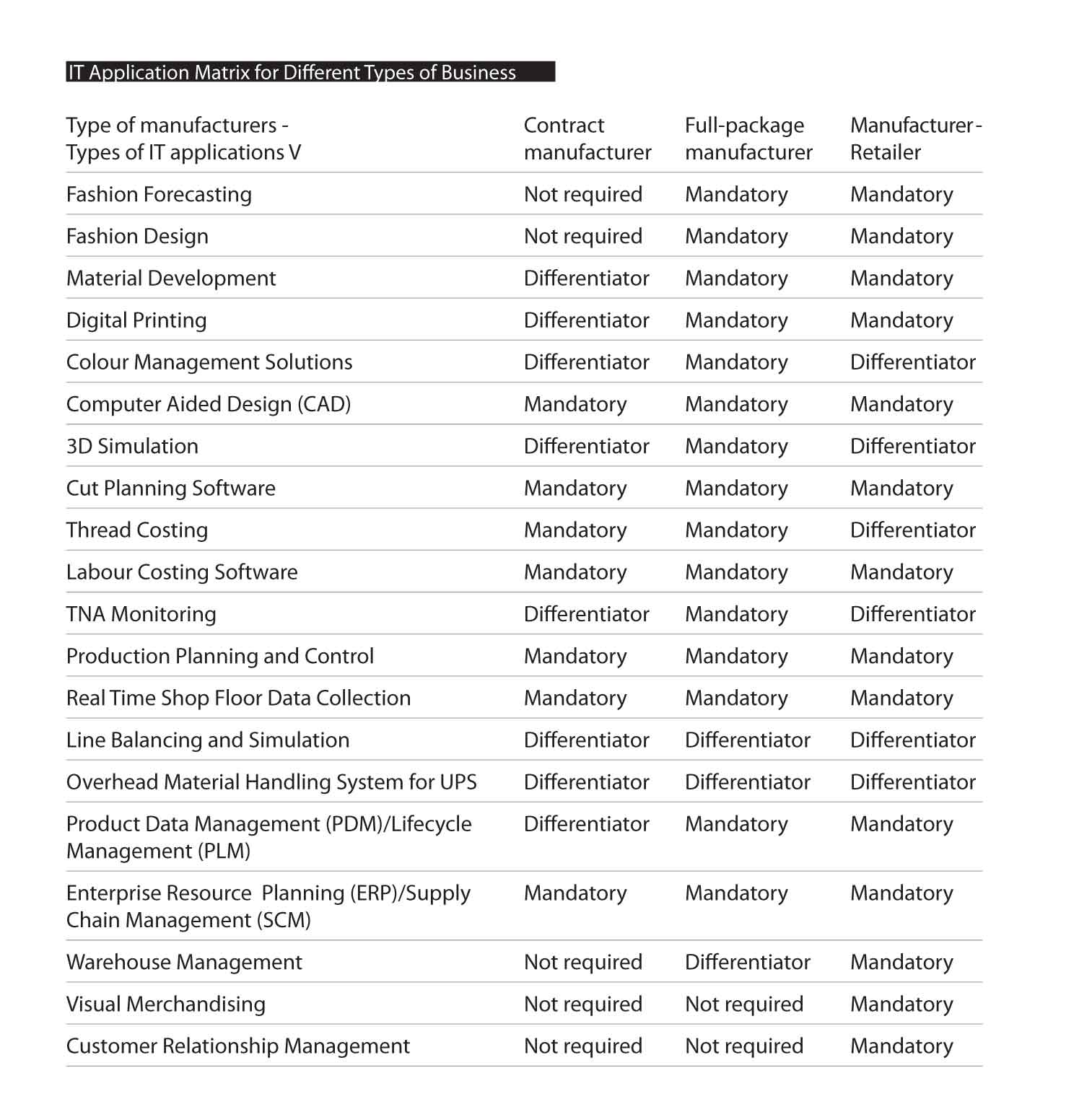
IT Application Matrix for Different Types of Business
The primary business objective for a contract manufacturing or CMT manufacturer is to maximize the utilization of manpower. He first receives a techpack from buyer to develop size set and then get a go ahead with production on approval of size set samples and the IT solution should also complement the aforesaid business objective. The primary business objective of an apparel manufacturing organization engaged in full-package manufacturers is design and developments of the collection from its understanding of the buyer’s market. The IT application of such full package manufacturer should address the need of design, and faster material development while optimizing the use of material and manpower. Wherein in the case of a manufacturer with retail presence, the objective is to increase its market share and offer the best product to customer at right time. The requirement of IT expertise ranges from design conceptualization to retail and customer relationship.
The following table shows the relationship between different applications and their relevance to different manufacturing scenario. The relevance of different IT application is categorized into two heads: The order qualifying applications are those which are mandatory or must-have. The order winning applications are those which give an edge to a manufacturer over competitor.