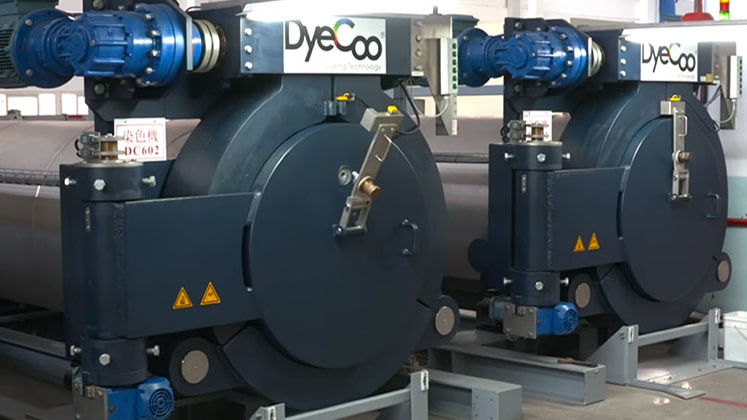
DuPont Biomaterials and the Dutch company DyeCoo, specialising in the development of cleaner dyeing technologies, have collaborated for the development of a sustainable dyeing process for fabrics.
The newly developed process, patented by DyeCoo, utilises carbon dioxide (CO₂)-based process to sustainably dye fabrics made from a combination of Sorona with polyester or recycled polyester at industrial level.
The CO₂ used in the process is reclaimed from existing industrial processes, recycling 95 per cent of it in a closed loop system. The process eliminates the use of any chemical and water therefore does not produce any wastewater or require any wastewater treatment.
CO₂, when used in a pressurised, super-critical state, has high solvent power and thus allows the dye to dissolve easily.
Also, due to the high permeability, the dyes are transported easily and deeply into fibres, creating vibrant colours.
“Our collaboration with DyeCoo on this unique CO2 dyeing process will make Sorona®-based fabrics even more sustainable. We now offer a stretch solution with less impact on the environment while extending the life of the garment. Many apparel brands will benefit from such sustainable solutions without compromising performance and value,” said Hao Ding, Business Manager, DuPont Biomaterials, EMEA.
Sorona fabric is made from 37 per cent renewable plant-based ingredients. It delivers unique benefits including softness, stretch and recovery and is stain resistant.
Moreover, it is a USDA-certified bio-based product and has received OEKO-TEX® Standard 100 Certification.