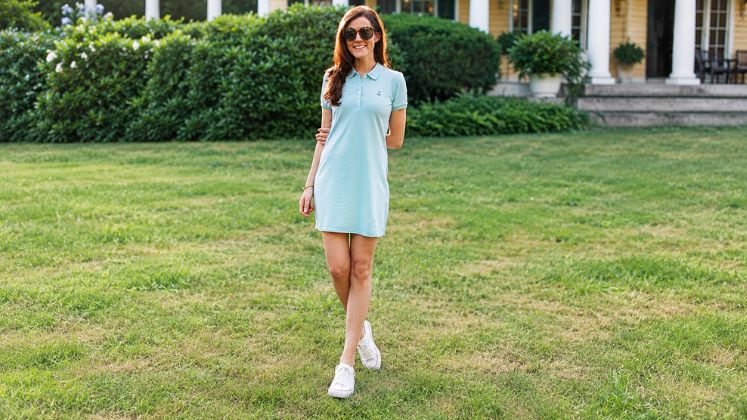
The polo shirt just got an upgrade — and it’s wearing a hemline. As collared, ribbed-placket dressing moves from courtside to runway, the polo dress is emerging as one of the season’s most unexpected pre-fall statements, according to a recent Harper’s Bazaar UK trend report.
The style isn’t new but its comeback is deliberate. Preppy dressing and “old money” aesthetics have dominated 2026’s mood boards, and the polo dress sits at the exact intersection of collegiate ease and country-club polish. The trend has been spotted at Gucci, Theory, Givenchy, and Andreas Kronthaler for Vivienne Westwood, signalling that the silhouette has moved well past its sporty origins into genuine runway territory.
Street style has caught up fast. At Paris Fashion Week, the polo shirt’s popularity surged this season, with brands offering everything from classic and modern styles to rugby polos, silk-blend tops, and mesh laser-cut designs — proof that the polo’s dress-length cousin has commercial runway backing, not just editorial styling.
Part of the appeal is versatility. The 2026 polo category has broadened well beyond safe basics where some versions read relaxed and fashion-led, others refined and smart-casual, using textured knits, soft colour palettes, and modern collar treatments to feel premium rather than utilitarian. Translated to dress form, that means a polo dress can pivot from desk to weekend brunch to resort in a single closet.
Styling-wise, the dress format solves a problem the shirt never quite did. A contrasting or matching collar, solid or print, mini, midi or maxi length, short or long sleeves, the silhouette is difficult to get wrong, which is exactly why it scales so easily across price tiers, from designer collections to mainstream fast fashion.
India’s fashion landscape is primed for this one. The country already has a homegrown polo heritage running deep with U.S. Polo Assn. building a strong identity in India through classic polo tees, chinos, denim and jackets, and continues to grow in 2026 by offering elevated casual dressing at accessible price points. That brand equity gives Indian consumers an existing mental shortcut to the polo silhouette and a dress version is a logical, low-friction line extension.
Fast-fashion majors with a strong India presence, including Zara, H&M and Mango, are natural first movers in translating the runway-to-retail polo dress trend. Among D2C western-wear labels, The Souled Store offers cotton bodycon and striped mini polo dresses, while Alcis Sports focuses on athletic, comfort-led cotton-blend and colour-block styles. Amydus brings the trend to the plus-size segment with printed and coloured polo T-shirt dresses.
Surat-based Neofaa, with its fabric-first, contemporary positioning, is also well placed to adapt the trend for India’s climate. Breathable cottons and piqué blends, shorter sleeves and tonal pastels can offer the polished, pre-fall aesthetic while remaining lightweight enough for a subtropical market.
Homegrown streetwear and casualwear labels have already democratised the trend at accessible price points. For Indian brands and consumers, the polo dress offers a compelling mix of runway appeal, familiar casualwear codes and climate versatility. With the right fabric weight and breathable construction, it can transition effortlessly from a day to night event.