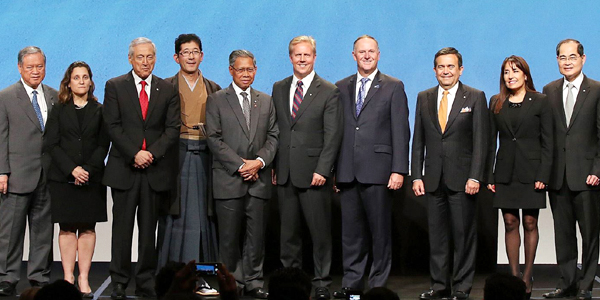
 The Trans-Pacific Partnership (TPP), the biggest and historic trade deal, was signed in Aukland, New Zealand on Thursday, by the Trade and Economic Ministers from 12 Pacific RIM nations — Canada, Brunei, Chile, Malaysia, Mexico, New Zealand, Peru, Singapore, Australia, United States, Japan and Vietnam.
The deal will create a free trade area with 800 million consumers and 30 per cent of the global trade revenue.
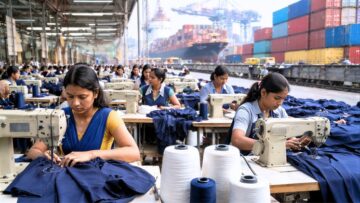
While addressing the event, New Zealand Prime Minister John Key said that the pact would benefit all member countries and their citizens. Ahead of the pact, New Zealand and Vietnam also signed an MoU on fostering trade relations between the two countries. Vietnam has potential in garments and the textile sectors, as well as footwear among other sectors. Vietnam is set to receive extensive support in the thermal coal & liquid natural gas sectors from Australia. This MoU signed will immediately come into effect once the TPP pact comes into force.
Also Read – Most textile associations in US support TPP
The 6,000-page deal dictates issues regarding intellectual property, labour, E-commerce and state utility enterprises, apart from trade-related rules. The member countries now have to complete the domestic procedures within the next two years. After the ratification, the deal would come into force. The agreement can take effect after the approval of at least six-member countries that account for at least 85 per cent of the gross domestic product (GDP), it simply means that US and Japan have to compulsorily pass the trade deal in their respective parliaments.
Trans-Pacific Partnership is an extension of the Trans-Pacific Strategic Economic Partnership Agreement (known as P4) signed by Brunei, Chile, Singapore and New Zealand in 2006. In October 2015, after long and arduous negotiations, comprising 19 rounds of formal negotiations and six ministerial meetings, were finally completed.