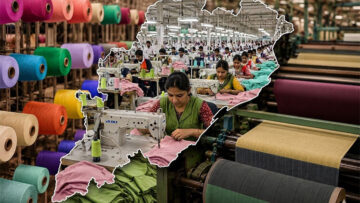
Bangladesh’s Readymade Garment (RMG) industry is on the verge of a significant transformation in its trade benefit regime by the year 2029, coinciding with the country’s departure from its Least Developed Country (LDC) status in 2026, as indicated in a recent report.
This report was unveiled by LightCastle Partners, a prominent national management consulting firm, in collaboration with Policy Exchange Bangladesh.
The report identifies several challenges that the RMG sector currently faces, including escalating labour costs, intensified competition from low-cost nations, and the pressing need to enhance working conditions and sustainability practices.
To effectively adapt to global demands and mitigate risks, the industry must focus on improving operational efficiency through automation, as the study revealed that currently, less than 15 per cent of its operations are mechanised.
LightCastle Partners and The Policy Exchange of Bangladesh conducted an extensive research project titled Threads of Progress: A Comprehensive Landscape Study of the Apparel Industry and the Future for Women Workers.
The findings from this research were presented during a recent discussion in the capital Dhaka.
The research involved interviews with 42 national and international industrialists, international buyers, innovators, and other officials from garment industries in Dhaka, Savar, Gazipur, Chittagong and included the perspectives of more than fifty women workers.
This initiative, funded by the H&M Foundation with The Asia Foundation as the key supporting organisation, is part of the Oporajita: Collective Impact on the Future of Work in Bangladesh program, which spans two years and aims to empower women garment workers in Bangladesh for a future where the apparel sector is defined by automation and digitalisation.