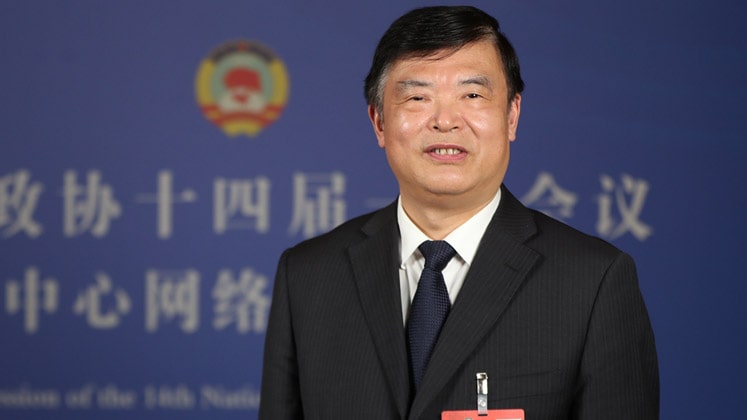
According to Shi Weidong, a member of the 14th National Committee of the Chinese People’s Political Consultative Conference (CPPCC), China’s textile industry has serious challenges in the global supply chain. China’s textile industry is facing a crackdown from the US and its allies as well as growing market competition from Southeast Asian economies.
“We need to make the textile and apparel industry into the country’s top-level design system for foreign cooperation,” said Shi.
“We also need to encourage Chinese enterprises to carry out win-win cooperation via joint ventures, and provide financial support for key investment projects of textile and garment enterprises,” he further added.
The “Uyghur Forced Labor Prevention Act” from the US has seriously impacted Xinjiang cotton and its products from entering the international market, Shi said.
The rapid development of the textile and garment industries in Vietnam and Bangladesh is also causing the competition in the international market to become fiercer.
China’s textile and garment industry output value hit a new high in export scale in 2022, with a trade surplus exceeding $ US 300 billion.
Total exports of textiles and apparel from China hit US $ 340.95 billion in 2022, a year-on-year increase of 2.5 per cent showed data from the General Administration of Customs of China. China continues to be the world’s largest textile and apparel exporter, with an export scale remaining above US $ 300 billion since the last three years.
China’s textile and clothing exports to the US, in 2022, declined by 5.4 per cent, followed by a drop of 1.1 per cent to the EU and 0.2 per cent to Japan.
Currently, there is a lack of raw materials, design and development and brand channels and the textile industry is largely centered on its manufacturing processes.
According to Shi, the country needs to promote the textile industry and ensure a stable supply chin using high-quality development among BRI economies.
He also suggested the encouragement of leading domestic enterprises to actively integrate brands, R&D, raw materials and market channel resources with the global fashion industry using equity mergers and asset acquisitions.
Shi proposed that textile and garment projects could be included in the “national foreign aid projects” system. For example, foreign aid training for textile talents in Asia and sub-Saharan Africa could be enhanced.
Textile and garment projects caouls also be included in China’s “national foreign aid projects” system and that textile enterprises should be encouraged to build the brand image of Chinese enterprises overseas.




 Bharat Tex Special Report 2026