Bangladesh today has one of the lowest minimum wages in the world at 21 cents – Tk. 14.60 – an hour! This has made the country ideal for sourcing garments, but has made survival tough for the Bangladeshis… Being a labour-intensive industry, few manufacturers have understood the importance of retaining the labour and providing them with facilities which will not only contribute to their growth but will enhance Bangladesh’s development as a nation as well. Along with the workers, major buyers such as H&M and Walmart have also been pressurizing the Government to increase its minimum wage per month to Tk. 5,000 from Tk. 3,000, being the present minimum wage in the country.
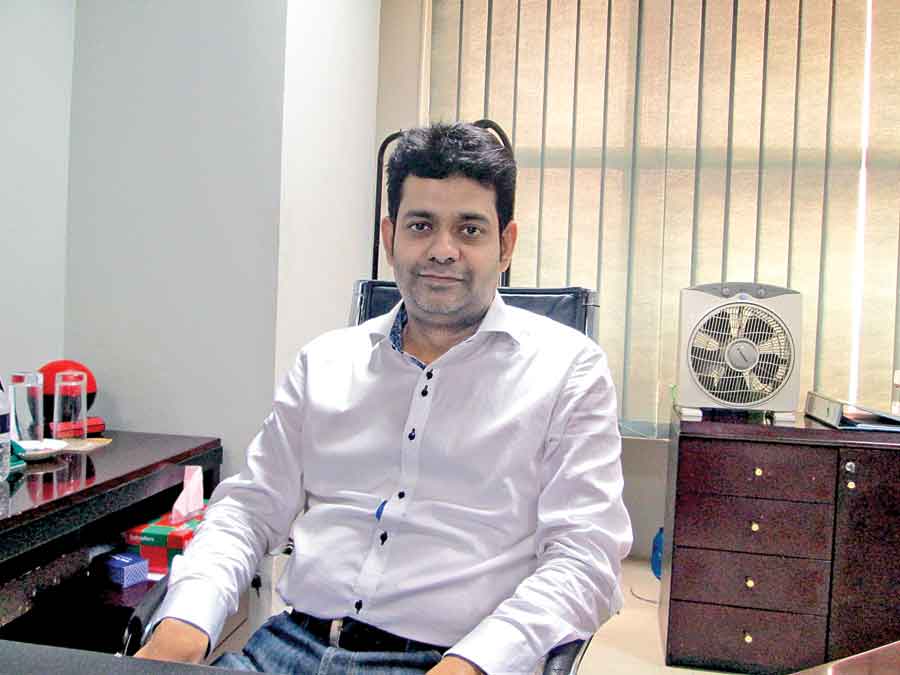
Sensing the urgent need to uplift workers’ wages, La Belle Group – manufacturing T-shirts and pullovers with a turnover of US $ 40 million, has charted out a production bonus plan to encourage its workers and enhance productivity. “The plan is based on the salary structure of the employees. On meeting the set target, a Tk. 5,000 paid worker will get 15%, Tk. 7,000 will enjoy a bonus of 20% and workers with salary above Tk. 8,000 are liable to get 30%. One would not find such bonus systems in a woven factory,” states Reaz Bin Mahmood, Managing Director, La Belle Group. He further added, “The biggest asset of the country is the workforce and for me automation means managing the workforce in an improved manner to increase productivity.”
Intensive debates regarding which system to follow – either piece rate or fixed wage have been on for a long time. While the latter ensures quality and lower attrition rate, one can ensure more quantity from a worker employed on a piece rate system. Piece rate system in the industry is as old as the industry itself and thus restricts any manufacturer to follow fixed salary structure. “The operator who has once earned additional in a month by manufacturing more pieces will never be willing to come down to a fixed salary,” opines Reaz.
As a matter of fact, about 61% of the population of Bangladesh is of working age (15 to 64 years old), while 34% is under the age of 14, indicating a moderate youth bulge. Widespread poverty, underemployment and a youthful age structure have all contributed to the predominance of economically motivated international migration from Bangladesh, being another challenge for the country to deal with. “The Commerce Ministry of Bangladesh and BGMEA are putting in efforts to educate the people on problems associated with operators working or migrating to other countries such as the passport getting stuck with the company, no job security and many other such issues,” shares Reaz. The purpose is to motivate the workforce to work within the country instead of going out.
All the stated issues of salary systems, migration and de-motivated workforce, training and educating the operators is the best way to uplift the industry as well as nation’s growth. “At La Belle, we definitely take raw hands and train them according to their capabilities, starting from a basic style to stitch complex styles,” adds Reaz. The company follows a grade system of A, B, C, where each operator is graded as per the performance. Regarding the middle level management, he further reveals, “We have absolutely no expats working in my company. We have hired graduates from BIFT institute and some who have hands on experience of working in the industry.”
La Belle Group has a total of six units, catering largely to European markets – including buyers from Germany and Scandinavian countries. Currently handling both basic and fashion garments, the company is exploring newer markets such as Latin America, Australia, South Africa and Japan. “I believe if I do 1,00,000 pieces of basic or 50,000 pieces of fashion garments, the turnover will be pretty the same and so we don’t mind doing small quantities,” concludes Reaz.