The sustainable fashion movement is growing with leading retailers like Zara and Marks & Spencer (M&S) focusing on high quality and great value clothing to appeal to the conscious consumers. With a vision to establish itself as sustainable international multi-channel retail business, these brands have been in the spotlight recently with reports of their individual progress to meet goals. M&S shared its sustainable strategy with the recently released ‘Plan A’ report, whereas a report by Interbrand, a brand consultancy firm, declares that Zara is today amongst the 50 most sustainable brands in the world. As sustainability strengthens brands, Apparel Online outlines the initiatives taken by these two retailers in increasing their brand value and also their efforts to work with communities where they produce to ensure ethical sourcing.
ZARA leading in Fast Fashion Sustainability Receptive to quickly change on consumer demand
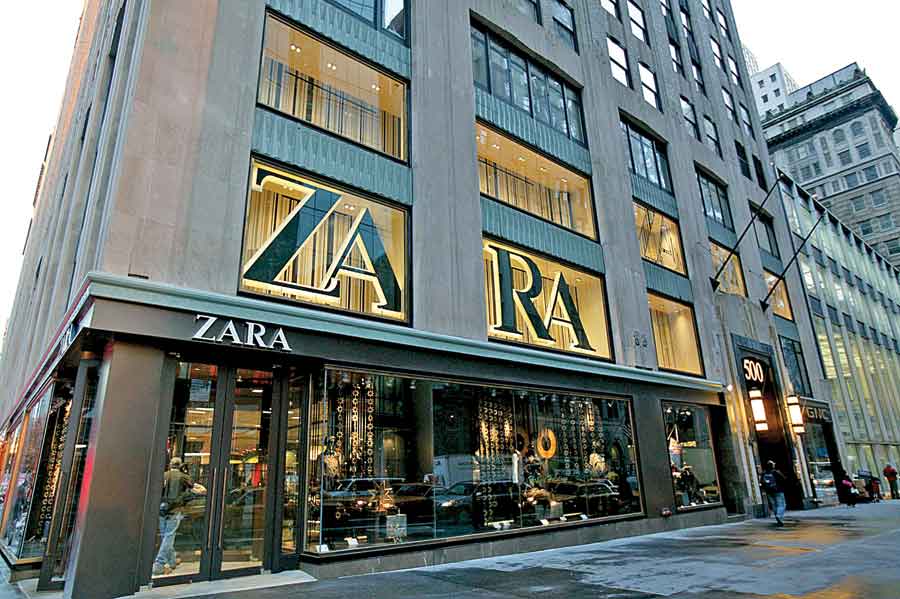 Despite the global economic downturn, ZARA’s extensively appreciated business model has kept its customers happy and fashion forward. Though many believe that fast fashion is contrary to the concept of sustainability, ZARA is today among the 50 most sustainable brands in the world according to the latest Best Global Green Brands report by Interbrand, a brand consultancy firm, witnessing a sharp 18 per cent increase in its brand value.
Fast fashion, which promises consumers rock-bottom prices on runway-look-alike fashion, is demonized as it pushes low quality disposable garments, dubious labour practices, and environmentally irresponsible fabrics. Regardless of this, fast fashion is here to stay as consumers demand lower prices and more fashionably trendier clothes, within a much shorter span of time. During 2010, when many apparel brands suffered due to recession, ZARA, a subsidiary of Spanish parent company Inditex, reported a 13 per cent increase in sales and a 32 per cent increase in net profits. Though sustainability is questionable when being associated with fast-fashion, the brand has taken major steps towards remaining ‘ethical’ and environment-friendly.
The brand continues to leverage its enviable logistics system, which enables store managers to communicate directly with designers – providing them with valuable information on what is and isn’t selling. This allows ZARA to be remarkably receptive to quickly changing consumer demands as the designers can easily respond to trend shifts which secures their competitive advantage in today’s hoard of fashion-conscious consumers. Most ZARA styles are produced in smaller quantities first, and tested in close-to-home markets before being mass produced and shipped internationally based on their domestic sales result. This is why the garments usually sell completely, or the company has less unsold stock, therefore it wastes less raw materials and energy leading to higher profits.
Owing to many sustainable initiatives, one primarily being building an eco-friendly store in New York using various green features, has brought ZARA on the helm of being amongst the top global brands working towards a sustainable future. The in-store facility imbibes a host of green elements such as installation of high-performance heating and air conditioning units, and automatic-adjustable thermostats. It has also been equipped with motion detector-controlled lighting fixtures in the store rooms and less-transited spaces, which allows the detectors to dim lights by 80% when not occupied. The property features electronically regulated air curtains at its entrance, which restricts influx of hot or cold air from outside. It also consists of energy-intensive systems that are turned on in a sequential pattern to avoid demand spikes and also, the wood incorporated in the building’s store fittings and furnishings, as well as the shopping bags used is PEFC-certified which uses plastic bags that are biodegradable. Installation of speed-controlled mechanical escalators and automatically opening double entrance doors add to the sustainability. The use of various green features reaps energy savings of 30 per cent and water savings of 70 per cent per year over a traditional shop while reducing its carbon emission rate by over 150 tonnes annually.
In addition, the clothing label has promised to eradicate discharge of hazardous chemicals from its supply chain and product by 2020 following public pressure, in response to the Greenpeace’s Detox campaign. As part of this radical change in production, ZARA plans to enforce its suppliers to disclose all releases of toxic chemicals from their facilities to surrounding communities. With the target of zero hazardous discharge by 2020, ZARA has already asked 20 suppliers to achieve it by the end of 2013. Meanwhile, in order to improve worker safety, ZARA has also signed the Accord on Fire and Building Safety in Bangladesh, in the wake of the deadly building collapse at Rana Plaza that claimed around 1100 lives. Under the agreement, parties will be committed to the goal of a safe and sustainable Bangladeshi Readymade Garment (RMG) industry that protects workers from fires, building collapses and other accidents that can be prevented with reasonable health and safety measures.
Through implementation of an eco-friendly management model in all the ZARA stores, the clothing label aims to reduce energy consumption by 20 per cent, including the design itself, the lighting, heating, cooling systems and the possibility of recycling furniture and decoration. Recycling hangers and alarms, which are picked up from any of the stores, are processed into other plastic elements, which is an example of the label’s waste management policy. Millions of hangers and alarms are processed each year and both the cardboard and plastic used for packaging are also recycled. Various awareness campaigns and specific multimedia-based training programmes are also organized to educate the staff in sustainable practices, such as limiting energy consumption, using sustainable transport and modifying behaviour patterns. ZARA uses ecological fabrics and supports organic farming by making some of its garments out of organic cotton (100% cotton, completely free of pesticides, chemicals and bleach). Also, ZARA’s fleet of lorries, which transport more than 200 million items of clothing a year, use 5% biodiesel fuel which allows reduction of CO2 emissions by 500 tonnes.
Although, ZARA has expanded its presence globally, the Spanish apparel company has built its strategy around consumer trends, embracing the fast-changing tastes of its customers. To do this successfully, ZARA has developed a highly responsive supply chain that enables delivery of new fashions as soon as a trend emerges. Rather than subcontracting manufacturing to Asia, ZARA has built 14 highly automated Spanish factories, where robots work round-the-clock cutting and dyeing fabrics and creating unfinished “greige goods”.
M&S Inching Closer Towards a Sustainable Future ‘Plan A’ shows strong progress against 2015 targets

The M&S 2013 ‘Plan A’ report demonstrates strong progress against the programme’s 180 sustainability commitments, with 139 of them having already been achieved, and a further 31 are on schedule against the ambitious targets for 2015. According to the report, the ‘Plan A’ sustainability strategy has raked up £ 135 million worth of savings over the past year for the company, a 29 per cent increase from the previous 12 months. The retailer plans to maintain and retain whatever sustainability measure it accomplishes, as it does not adhere to these targets as just checklists. For instance, M&S’s goal to become carbon neutral by 2012 has been accomplished; making it the first retailer to do so and since then it has continued its carbon neutral practices. Also, the company has been sending ‘no waste’ to the landfills coupled with further reductions in carbon emissions by 23 per cent and waste by 28 per cent.
Since consumer waste is an important factor in waste management, it is imperative for the company’s sustainability mantra to incorporate customers, who are directly involved in accomplishing their expected goals in 2015. Therefore, M&S targets to help a million customers to develop personal sustainability goals, and last year only it reached 4,70,000 customers online. “We can be very proud of what M&S has achieved through ‘Plan A’ over the past six years. It has made our business more sustainable and more engaging for our customers and employees. But we must continue to adapt and step up to the challenge of the world’s climatic and demographic changes. Growing global consumption will continue to put pressure on finite resources, extreme weather is becoming a reality and social pressures, such as youth unemployment, are becoming more acute,” informs Marc Bolland, Chief Executive Officer of the company.
Concentrating on a transparent Supply Chain Management
The company stresses on the importance of supply chain management and the importance of a transparent supply chain free of problems. Through the Supplier Training and Education Programme (STEP), on the company’s supplier exchange website, training materials is provided to suppliers on topics such as health and well-being, financial literacy for those unfamiliar with opening bank accounts and an effective worker-management certification programme for HR teams. So far 2,44,000 workers mainly in India, Sri Lanka, Cambodia, Bangladesh and China have been provided training in these areas, putting the retailer on its course to meet its targets for 2015. Moreover, the company aspires to make a difference to the social environment as many suppliers in Bangladesh, Sri Lanka and India provide work experience and employment opportunities to over 300 people with disabilities.
Living Wages, which has become a serious issue impregnating major international retailers, due to various incidents across the cheap producing Asian region, is being taken seriously by the company who plan on ensuring that the clothing suppliers are able to pay workers a fair living wage in the countries they source from, starting with Bangladesh, India and Sri Lanka by 2015. The retailer plans to achieve this by paying adequate cost prices to the suppliers who can therefore, provide better wages to workers in their factories.
The stores hosts a range of sustainable construction and design features to reduce energy usage and waste as part of Marks & Spencer’s aim to become the world’s most sustainable major retailer by 2015. “We have moved closer to our vision of M&S as a sustainable international multi-channel retailer, but we know that we still have a long way to go to make this a reality. Through ‘Plan A’ we will continue to push the business case for social and environmental responsibility, develop new alliances and learn from others,” believes Marc.
Though proclaiming to be the ‘world’s most sustainable company’ is debatable, but this 100-year-old retail giant is certainly in the running, as the company is providing leadership on many sustainable issues with both deeds and its latest disclosures.