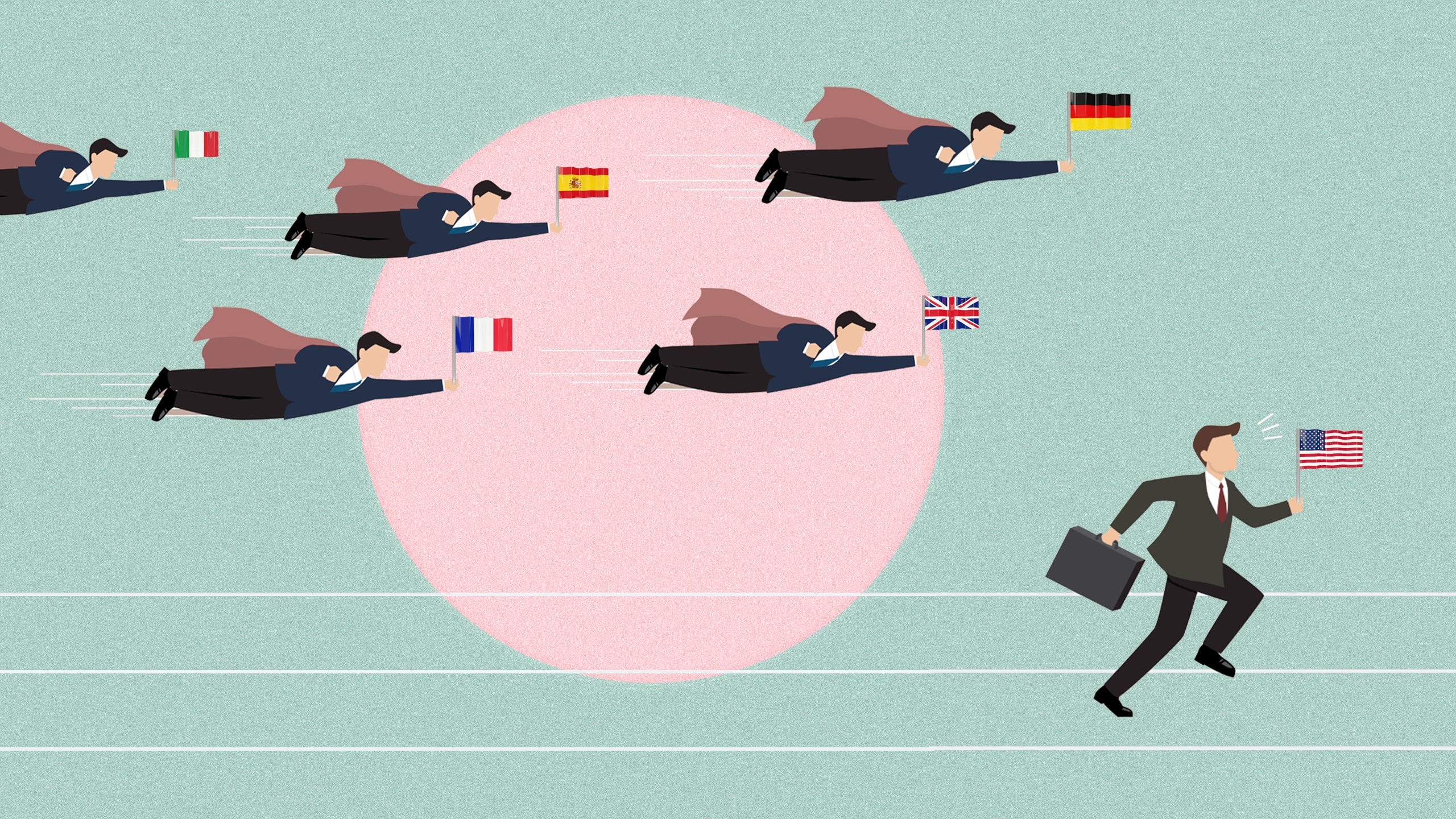
Once cynosure of all eyes USA seems to be losing its appeal amongst the Bangladeshi garment exporters!
Beating USA to wrest the tag of biggest export destination today is Germany. As per data from the BGMEA, in the July-March period of FY18, export earnings from Germany stood at US $ 4.20 billion, which is almost US $ 275 million higher than earnings from the US in the same period.
But then what is it which is taking the sheen off USA as an export destination? As per industry experts it all started with the infamous Rana Plaza incident of 2013. Coming down heavily on workplace safety and labour rights, the US administration lost no time in taking back the Generalised System of Preferences (GSP) facility that Bangladesh once enjoyed, within a couple of months of the tragedy.
Ever since Bangladesh is playing a catching up game sans any consequence. First it was the Obama administration which laid down 16 conditions, fulfilling which the trade benefit would be reinstated. Bangladesh reportedly implemented those conditions and twice submitted reports to United States Trade Representative (USTR) but to no avail. The stand-off continues still with the Trump administration adhering to the stance of the previous leadership.
Any chance of early reinstatement of Generalised System of Preferences hardly in the horizon exporters today are a harried lot.
“The GSP denial by USA has created an image crisis for Bangladesh in the global market more than the financial loss. The BGMEA and our Government have fulfilled the US requirements in terms of safety and labour issues but unfortunately still they’re undone. The EU has been providing us all kinds of support including the GSP but US, the global leader, is not paying any heed to the urge of a poor country like Bangladesh. I hope the US authority will take the matter into consideration soon and reinstate GSP,” maintained Atiqul Islam, Managing Director of Islam Garments Ltd.
For Jamal Uddin, Director of Mirpur Apparels Ltd., the impact has been rather hard. “It has a significant impact on small manufacturers like us as we’re forced to stop exports to the US market due to absence of GSP privilege. We’ve a set-up of buyers in the US market and are waiting for the reinstatement of the GSP. As soon as the GSP is reinstated we’ll start export of some basic items in bulk including t-shirts, polo shirts and denims. I’ve heard that the Government had tried hard but the Trump administration once again denied us. It’s really a matter of concern,” underlines a worried Jamal Uddin.
Shifting from US to other markets owing to technical issues, Abdur Rahman, Managing Director of Sayma Knitwear Limited believes GSP facility is not of much consequence when it comes to apparel exports.
“As far as the trade facility is concerned, GSP plays a minimal role for apparel exports to the US market. Our Government and BGMEA have tried to fulfil the requirements to win back GSP but failed. Personally I think instead of hanging around for the GSP in US market Bangladeshi apparel exporters should explore new markets. A good number of non-traditional markets including China, Russia and Hong Kong are coming up. We should focus on those markets to sustain in this very competitive apparel business,” suggests Rahman.
Considering the existing scenario, Rahman’s suggestion seems fitting more so when new markets are emerging from the shadow of US and with great potentials. Germany is just a case in point.
Within Europe itself there are at least four countries – UK, Spain, France and Italy – which seem to hold a lot of future promise. Going by data from BGMEA, UK is leading the other three in terms of apparel imports.
Bangladesh’s garment export to UK in July-March (FY 2017) period stood at US $ 2426 million, which made a substantial jump of 17.36 per cent to touch US $ 2847 million in the same period of the current year. Trailing UK closely is Spain, which registered an increase of 23.08 per cent to clock US $ 1714.16 million in July-March period of FY 2018, from what was US $ 1392.77 million in the corresponding period of last year. France and Italy too are going strong! If France registered an increase of 4.32 per cent to accommodate apparel import of US $ 1327.82 million in the same period of FY 2018 compared to what it was in the previous fiscal, Italy was not far behind in its made in Bangladesh garment import and stood at US $ 1086 million, marking an impressive growth of 12.79 per cent on an yearly note.
Bangladesh’s relentless efforts in making a safe and sustainable apparel sector are truly commendable, and recognized by all. Denying the country of trade privilege merely on the grounds of further improvements does not seem logical to many.
To ensure that the labour of hard work is not undone, the country ought to now divert its attention to these highly-potential markets. The results achieved so far certainly points at a brighter future and greater possibilities.