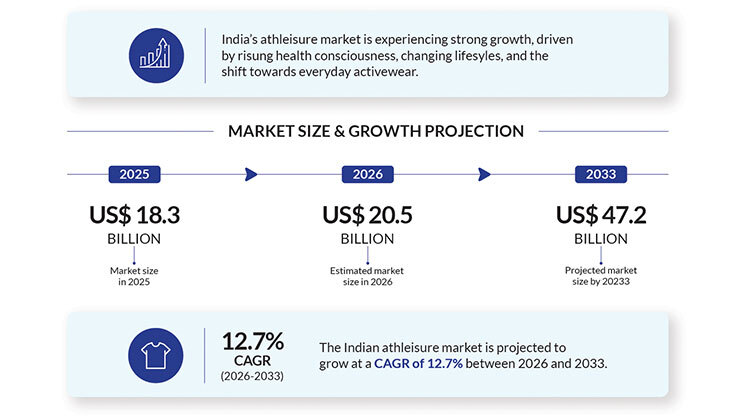
India’s athleisure market is entering a more consequential phase. What began as a category anchored in gyms, running tracks and yoga studios is becoming an increasingly important part of the wider apparel economy, driven by growing consumer demand for comfort, functionality, versatility and performance. Industry estimates vary depending on market definition, but they point to a sizeable and expanding opportunity, with one recent estimate projecting India’s athleisure market to grow from around US $18.3 billion in 2025 to US $47.2 billion by 2033, at a 12.7% CAGR.
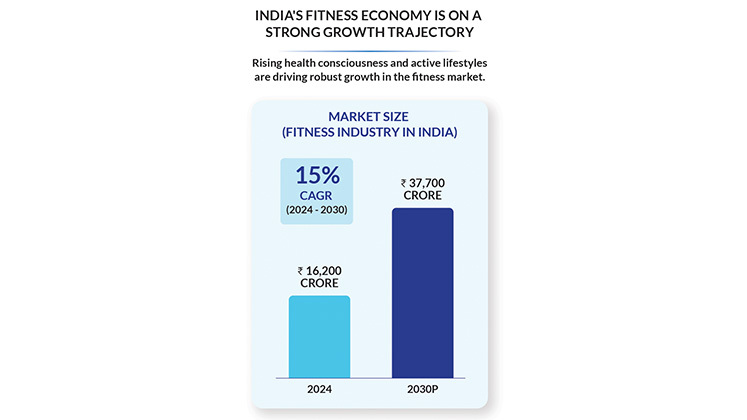
The opportunity is being supported by several structural shifts. India’s fitness and wellness economy is expanding, with approximately 46,500 fitness facilities, including gyms and health clubs, a number projected to grow to 65,500 by 2030. At the same time, consumers are increasingly incorporating activewear into everyday life, while rising purchasing power and greater brand awareness are creating new opportunities beyond the major metros. Research from Cotton Incorporated, for instance, shows that Indian consumers use activewear at home, for errands and across other non-workout settings, while comfort, quality, fit, stretch and breathability remain important purchase considerations. The category is also gaining relevance beyond the major metros, as rising purchasing power and greater brand awareness create new opportunities across Tier II and III markets.
Consumers are becoming more willing to invest in products that combine performance with everyday versatility, particularly when quality and functionality justify the price. This is broadening the addressable market and creating space for brands across multiple segments, from premium lifestyle-led labels and accessible performance brands to more specialised categories such as children’s activewear.
We spoke to five Indian brands across different market segments to understand who the current consumer is, what they are seeking and what is driving the market.

While the consumer profile varies considerably by brand, the strongest common thread across the trajectory is a relatively young, active and lifestyleconscious customer who seeks quality even if it comes at an added cost. At the premium end, CAVA Athleisure, which focuses on premium, lifestyleled activewear for the modern urban consumer, identifies women aged 22 and 38 as its core customer, while also seeing a growing men’s segment. Bird Eye, a premium homegrown activewear and athleisure brand that merges performance, comfort and style, sees women aged 16 to 32 as its primary consumers, while Feier, a Mumbai-based activewear and innerwear brand with its focus on stylish, functional essentials for everyday movement, primarily caters to women aged 24 to 40.

At the performance-led end, TechnoSport, positioned around making performance activewear more accessible, has a predominantly male consumer between 22 to 40, with a strong base among young adults in emerging and non-metro markets and working professionals in metros. ZONE, which focuses on activewear for children, has a different consumer altogether comprising parentsparticularly mothers, who are purchasing for children aged between 4 to 14.
THE OVERALL SIZE OF THE INDIAN ATHLEISURE MARKET
From Gymwear to Everydaywear
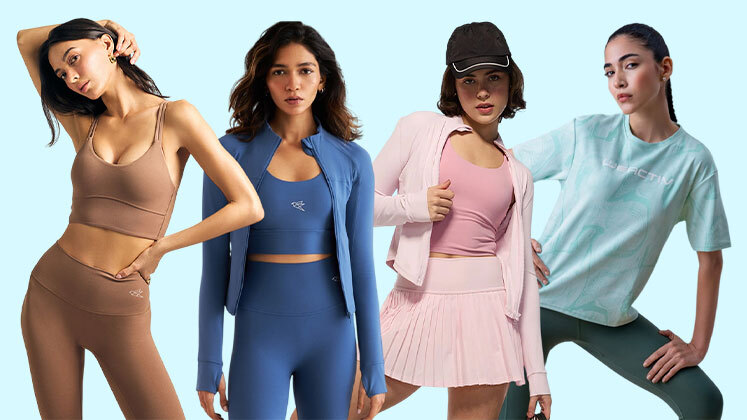
One thing that stands out after researching the market across the responses is that activewear has moved beyond its original fitness purpose to embrace varied purposes. For CAVA, the shift has seen customers wearing activewear to work, brunches, flights, college and dates, while Bird Eye is seeing repeat purchases driven by everyday activities including running errands, working from cafés and travelling. For Feier, fitness may be the entry point, but the category has become an everyday wardrobe essential.

Shreya & Ria Mittal, Co-founders of CAVA Athleisure, describe this as a fundamental change in how consumers use and think about the category. “Five years ago, activewear was purchased almost exclusively for the gym or a yoga class. Today, the boundary has completely dissolved. The fastest-growing use case for our products is what we call ‘studio to street’ transitioning seamlessly from a workout to the rest of the day without changing.”
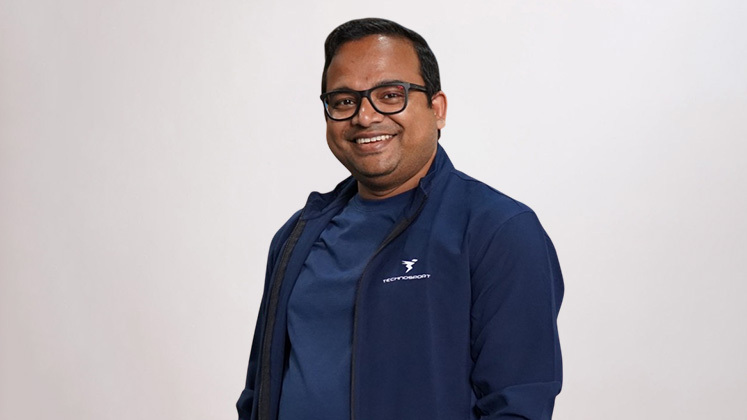
Puspen Maity, CEO, TechnoSport, sees the same change across a wider consumer base. “While fitness remains an important use case, activewear has increasingly become part of everyday wardrobes. Consumers now expect products that can transition seamlessly across workouts, commuting, travel and everyday routines. We see this reflected in our own business through sustained demand for categories such as performance T-shirts, joggers and trackpants. As a result, our product development continues to focus on features such as breathability, moisture management, lightweight comfort and durability that support movement throughout the day.”

The shift extends to children too, with Archana Khosla Burman, Co-Founder, ZONE, adding, “Activewear is no longer limited to sports or fitness. Today, children wear it to school activities, playdates, travel, holidays, and everyday outings. Parents increasingly prefer versatile clothing that offers comfort, functionality, and style throughout the day, making activewear an everyday wardrobe essential.”
WHAT ARE CONSUMERS WILLING TO SPEND?
Today’s consumer is not necessarily looking for a product at the lowest price. Across segments, brands are seeing customers weigh price against quality, functionality, durability, fit and design before making their final purchasing decision.
CAVA describes its consumer as premium-oriented but highly conscious of whether a product justifies its price. Bird Eye’s customers are willing to invest in premium products when they deliver on quality, fit, functionality and design, while Feier sees consumers willing to pay for products that offer genuine value. The brand’s Mumbai manufacturing further enables it to deliver international-quality products without a premium markup.
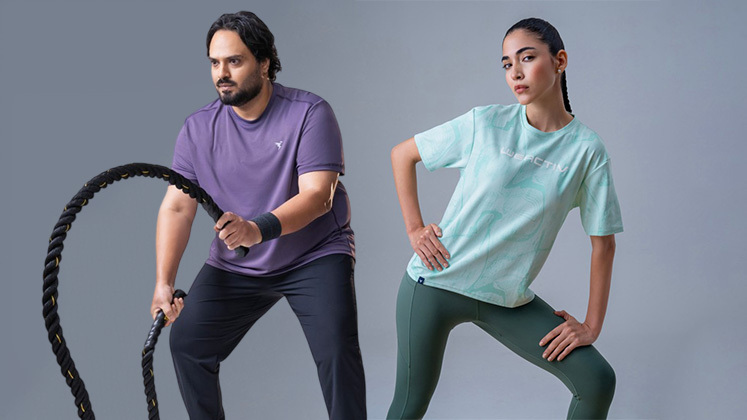
At TechnoSport, the proposition is built around making performance more accessible, with Puspen Maity explaining that, “Our focus has always been on democratising performanceled activewear by combining product innovation with accessible pricing. Our vertically integrated manufacturing model enables us to maintain greater control over quality, consistency and cost while making advanced product functionality more accessible. This is reflected in our retail performance, where the average transaction value is approximately 2,000, with an average of 4.5 units purchased per transaction, indicating that consumers are increasingly purchasing across multiple categories rather than for a single use case.”
The same quality-versus-price consideration appears in children’s activewear, with Archana Khosla Burman, saying that their “customers are value-conscious but also qualityconscious. They are willing to invest in premium products when they see clear value through superior fabrics, thoughtful design, durability, and comfort. They look for products that deliver long-term performance rather than simply the lowest price.”
INDIAN ATHLEISURE MARKET
BREAKDOWN BY GENDER & AGE GROUP

THE TIER II & III OPPORTUNITY
Looking at the data and insights from across the industry, it is pretty evident that the next phase of activewear consumption is not confined to India’s major metros but extends to tier II and tier III cities. CAVA identifies Tier II cities as a major growth frontier, with demand coming from Indore, Jaipur, Chandigarh, Lucknow, Kochi and Surat with Bird Eye also seeing encouraging early traction from Tier II cities as it expands. Feier identifies Tier II and III markets to have become important and fast-growing, while TechnoSport already has a broad retail presence across emerging markets.
TIER II & III CITIES ARE FUELING
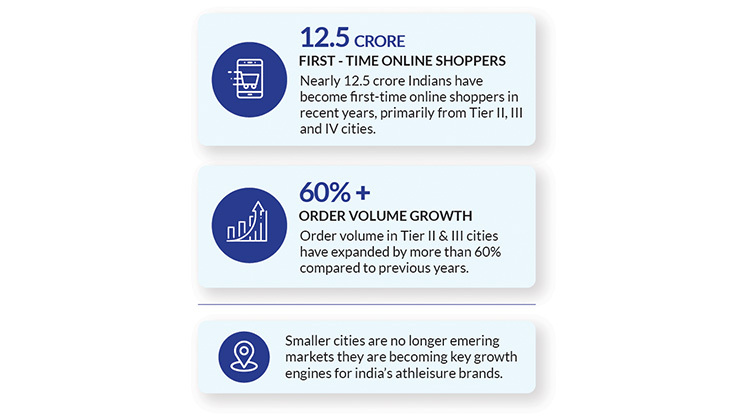
CAVA reveals that the Tier II customer may take longer to make a purchase decision but can show strong loyalty once converted, while TechnoSport sees a stronger emphasis on comfort, durability, functionality and value in these markets, with metros placing greater emphasis on design, versatility and occasionbased usage. For ZONE, consumers in smaller cities are becoming more aware of premium brands through e-commerce and social media.
THE RISE OF THE REPEAT CONSUMER
The transition to everyday wear is also changing how often consumers buy. Bird Eye is seeing growing repeat purchases, with order volumes increasing more through purchase frequency than larger baskets. Feier on the other hand is seeing consumers build wardrobes across categories, while TechnoSport’s customers are typically refreshing their activewear collections every three to six months depending on lifestyle and usage.
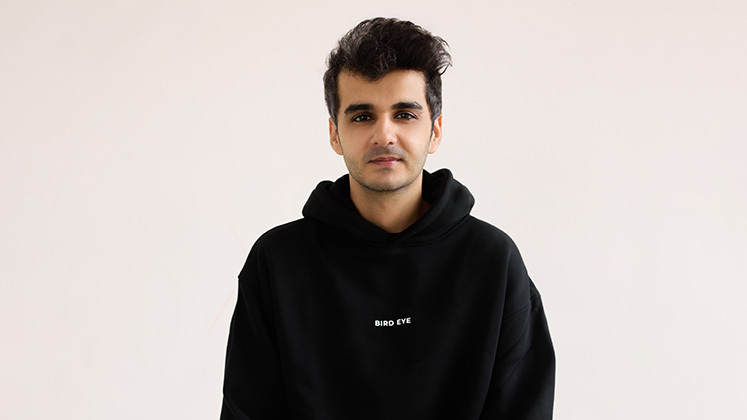
“We’re seeing strong repeat purchase behaviour, with a growing number of customers returning to shop with us quarter after quarter. Order volumes have steadily increased over the past six months, driven more by higher purchase frequency than by larger basket sizes,” said Akshay Khubchandani, Founder, Bird Eye.
CAVA, meanwhile, is seeing both frequency and basket size rise, with customers increasingly moving from individual products into broader wardrobes across categories and Feier seeing a similar cross-category journey, with customers moving from one trusted product into leggings, bodysuits, loungewear and innerwear.

Commenting on this, Shreya from CAVA said, “We are seeing a meaningful and consistent improvement in both purchase frequency and basket size. Our returning revenue share has nearly doubled from 23% in 2023 to approximately 40% in the first half of 2026, which tells us that customers are not just coming back, they are building a relationship with the brand.”
The brand’s 90-day cohort retention has more than doubled in two years, which is a structural improvement and not a one-time effect. “On basket size, our average order value has grown steadily, with customers increasingly buying multiple pieces per transaction, our multiples rate at our physical store has consistently been above 70%. The customer who starts with one pair of leggings typically returns for the sports bra, then the jacket, then a co-ord set.” Shreya added.
WHO COMES NEXT?
In today’s day and age, there is no single next athleisure consumer. Instead, growth is occurring across multiple age groups, genders, geographies and lifestyles.
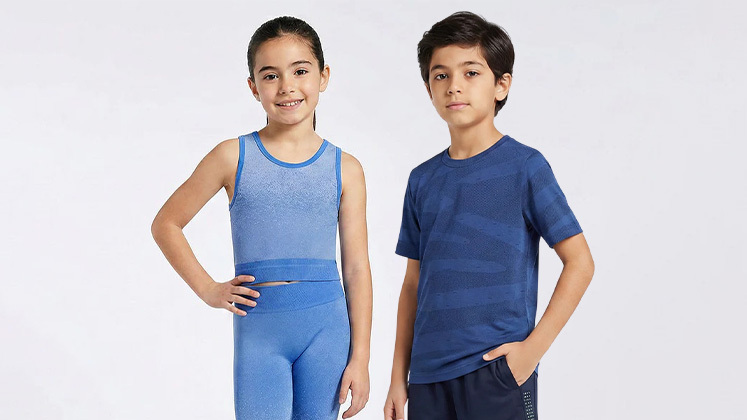
For TechnoSport, women, younger consumers, families and Tier II and III markets represent important opportunities while CAVA sees potential in men, pre-teen girls and the Tier II premium consumer. Feier identifies Tier II and III markets and the “everyday mover” as major opportunities, while ZONE sees continued demand for premium children’s activewear.
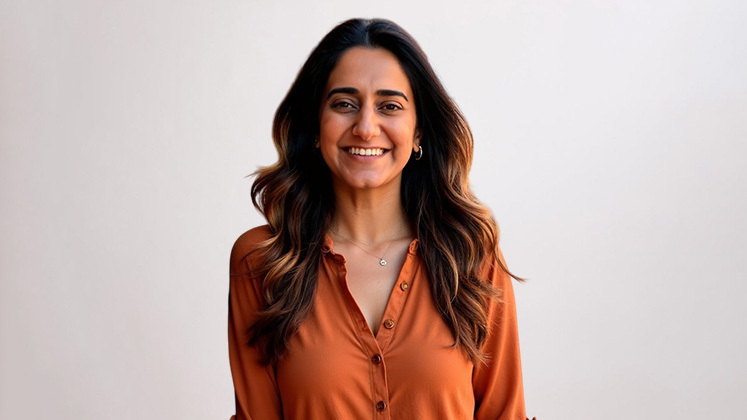
For Feier, the opportunity is closely tied to the consumer who has already moved beyond the gym. Commenting on this, Natasha Vora, Founder, Feier, said, “We see two major growth opportunities. The first is the continued rise of Tier II and III markets, where demand for premium activewear is growing rapidly. The second is the everyday mover- the woman who wants versatile, elevated clothing for her entire day, not just the gym.” The next phase of India’s athleisure market is not so much about getting more people into activewear for the gym, but is about recognising that for an expanding group of consumers, activewear is simply becoming what they wear and feel comfortable in.
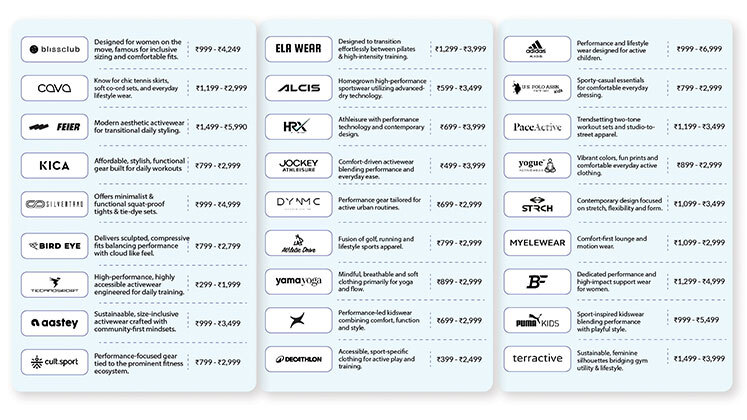
TOP ATHLEISURE BRANDS