The Coronavirus pandemic is showing little signs of abetting! It’s been more than a year since the pandemic hit countries across the globe bringing economies to standstill and crippling normal life even as over 2.8 million people have reportedly already succumbed to the dreaded novel Coronavirus or SARS-CoV-2 while more than 130 million positive cases have already been reported.
At times even as COVID-19 cases show signs of coming down reviving hopes of things might limp back normalcy again, within a short period of time, positive cases start shooting up again, as the pandemic continues to spread its tentacles in cycles.
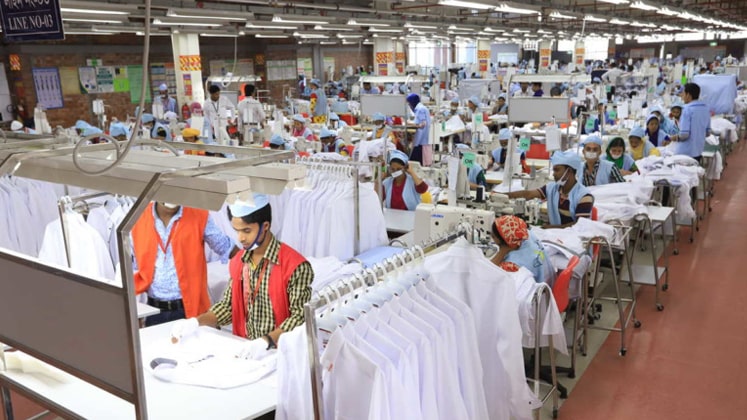
Given the circumstances in hand, it’s not easy for businesses to make strategies and adapt with the ever changing scenario. However, if one has to sustain, there’s no option but to go back to the drawing board time and again and chalk out new strategies. And as far as garment manufacturers in Bangladesh are concerned, they are not an exception. Having withstood the initial crippling blow of the pandemic, garment makers are not ready to give up just yet, rather try and make new plans to see how the challenges, that seem to be coming in waves, can be handled effectively.
To start with, garment makers in Bangladesh have been innovating and adapting new strategies,be it in terms of cost-cutting, reorganising capacity and utilisation plan and efficiency enhancement, to cope with the fallouts of the pandemic even as industry insiders said that cost-cutting measures include trimming the workforce, suspension of overtime and cutting investments down in research and development while other approaches include opting for new products and markets such as online marketplace and upgrading technologies.
The situation has been so drastic for the apparel makers — since the initial days of the pandemic garment makers have had to deal with many challenges like supply chain disruptions, lockdown, payment defaults and delays, order cancellations, etc. — that practices like taking orders below production costs were also reportedly noticed among the enterprises even as a recent study underlined that around 10 per cent out of the 620 surveyed factories said they had taken 50-100 per cent of their orders which did not cover their production costs.
The study also reportedly found that such tendencies were rather high among the factories, mainly the woven units, located in capital city Dhaka and Gazipur even as the Managing Director of Classic Fashions, Shahidullah Azim, while interacting with the media underlined that manufacturers had no option but to accept such work orders to keep their units running while also pay wages to their workers.
Meanwhile, Managing Director of Denim Expert Limited, Mostafiz Uddin, reportedly stated that he had to minimise the costs by taking steps including suspension of workers’ overtime as well as innovation and research while adding that there was no overtime in his factory in recent months due to lack of work orders even as he added that he had to pay Taka 2.0 million monthly in overtime payment.
While Managing Director of Snowtex, SM Khaled, on his part said that they have had to face difficulties in running the factory for eight hours daily as their orders were cancelled or delayed due to the pandemic until mid-February even as he expressed hopes then of going for 10 hours’ work a day from March while also hire additional 1,000 workers.
The capacity expansion by setting up a new factory had been halted due to the pandemic, stated Khaled while adding the new unit having 80 lines would be completed by 2021.
Meanwhile, speaking to the media, the current President of the Bangladesh Garment Manufacturers and Exporters Association (BGMEA), Dr. Rubana Huq, from whom Faruque Hassan, who is set to become the next President of the apex garment makers’ , is to take over take responsibilities (Faruque Hassan led Sammilito Parishad, on 4th April, won the trade body’s biennial election, securing 24 posts of Directors out of 35), maintained the Coronavirus pandemic had unprecedentedly disrupted the global sourcing pattern while going on to add that the first wave of the pandemic startled the industry with cancellation of orders and left the manufacturers under pressure but significant portion of the cancelled orders were reinstated but the faltering recovery from the pandemic led the buyers to follow a conservative sourcing policy-smaller orders and shorter lead time.
The buyers were also equally under stress, Rubana underlined further while adding that an unprecedented collapse in retail sales caused by the second wave of the pandemic and the emergence of new variants had curtailed the demand significantly. As a result, export was plummeting consecutively every month (retail sales in the EU and USA markets declined by 28 per cent and 16 per cent respectively in December).
With December’s data rolling in, we have the clearest picture yet of the damage inflicted on Bangladesh’s exports in 2020: the receipts were the lowest in five years even as keeping in mind that last year was somewhat an abnormal year for the global economy, we should not consider or count the figure as it is, stated Abdul Mottaleb of GSCS International Limited to Apparel Resources.
He then went on to add, “To put things in perspective, the Christmas sales in the Western world were the lowest in recent memory for the second round of lockdowns in much of the EU and the US. While people were falling severely ill because of the virus, it was normal that there would not be buyers who would be interested in shopping. In addition, amid the economic slowdown, people focused on basic needs and were more cautious in spending fearing the pandemic would take a turn for the worse; this affected on how people would order from foreign countries. This brought down the demand for fashion goods as well as other non-essentials down. The crisis deepened further as the second wave of COVID-19 compelled several countries in Europe and the US to go into fresh lockdowns. Now, seeing the relatively poor administration and unavailability of the COVID-19 vaccine, it is fair to assume that it will not be until the second half of 2021 that things start looking up on the export front again.”
Rubana on her part added, “…factories are running with great uncertainties as well as underutilisation of the capacity, price decline and deferred payments. The resulting supply chain and resource inefficiency are causing financial losses.”
To cope with the situation, Rubana said, factories were compelled to adopt time-befitting approaches like reorganising capacity and utilisation plan, efficiency enhancement, opting for new products and markets including online marketplace and upgrading technologies.
Meanwhile, Centre for Policy Dialogue (CPD) Research Director Dr. Khondaker Golam Moazzem — the CPD and Mapped in Bangladesh (MiB) jointly conducted the study which had underlined that around 10 per cent out of the 620 surveyed factories had taken 50-100 per cent of their orders which did not cover their production costs —said during the research, they had found 40 per cent of the surveyed factories taking initiatives to recycle wastage/excess inputs generated during 2017-2019 as part of their risk-coping strategies, while adding that about 50 per cent factories mentioned that they had installed cost-saving technologies even as small-scale enterprises, especially those located in Narayanganj and Chittagong, were left behind compared to other categories of enterprises, and going on to add that factories, mainly large and medium ones, were planning to expand their online market exposure while interestingly small factories were also interested in exploring that area.
However, only 13 per cent factories had concrete plans to set up online-based IT infrastructure in their factories within next three years, according to the study while explaining the manufacturers’ plans in this regard further, Moazzem said online buyers were not the same traditional buyers who sourced from Bangladesh.
So even as the manufacturers try to work out new strategies keeping in mind the implications of the pandemic, many of the country’s export destinations have imposed various restrictions to prevent the spread of the virus. As per reports, over a year after the Coronavirus first hit Europe, much of the continent spent Easter — usually a major holiday in the region — in lockdown as it grappled with a third wave of virus infections as France and Italy imposed nationwide lockdowns ahead of the Easter weekend as a surge of cases linked to the more contagious variant first identified in the UK.
What’s more, now Bangladesh has also imposed a seven-day countrywide lockdown — this is the second time lockdown has been imposed in Bangladesh. The country earlier imposed a 66-day lockdown from 26 March to 30 May 30 last year, when a nationwide holiday was also enforced —suspending public transport and shutting markets to combat the surge in coronavirus cases in the country as the decision was taken in light of the current situation where the rate of infections and deaths have increased significantly in the recent weeks.
However, the Government has reportedly allowed factories and industries to operate but after maintaining the protocol and guidelines issued in order to ensure workers’ safety.
Given, how situations are changing from good to worse and so fast world-over on account of the Coronavirus pandemic even as inoculation drives have rolled out in many countries across the globe including in Bangladesh, the challenges for the apparel exporters in Bangladesh, seem far from over yet.




 Bharat Tex Special Report 2026