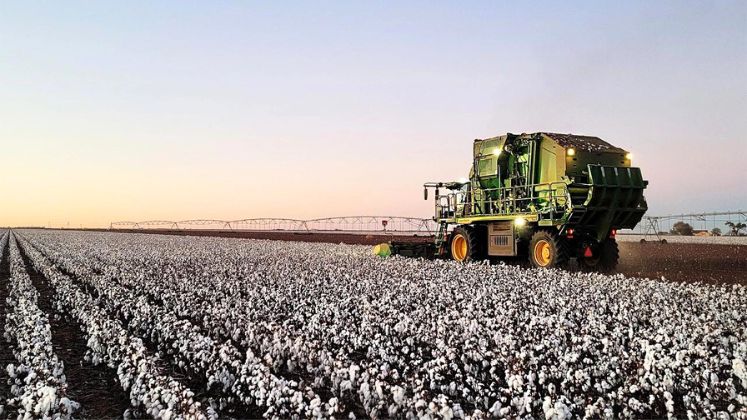
The United States Cotton Trust Protocol announced that the programme will expand for the fifth year in a straight, both in terms of enrolled growers and planted acres. Cotton planted acres increased to 2.1 million acres, up 31 per cent from 2023. This rise is being driven by a 35 per cent increase in enrolled growers for the 2024 crop year (CY), exhibiting a strong commitment to sustainability in the cotton industry.
Enrolment for 2024 has increased by 35 per cent, reaching 1,327 producers participating in the Trust Protocol. Enrolled acres for the 2023 crop year yielded 1.9 million bales of cotton. The increased acreage for 2024 will increase the supply of sustainable cotton in the market.
The Climate Smart Cotton Program also made strides toward its goal of enrolling at least 1,650 farming entities, including 330 from historically underserved communities. In 2024, 1,340 Trust Protocol farming entities applied for Level 1 of the Climate Smart Cotton Program with 282 from historically underserved communities. These farming entities represent 444,000 acres.
Growers who are currently engaging in Level 1 of the Climate Smart Cotton Program can now apply to participate in Level 2. This offers the potential to obtain additional financial risk-sharing for incorporating Climate Smart Practices Changes into their operations, resulting in greater soil health, increased drought and flood resistance, and lower greenhouse gas emissions.
The Trust Protocol’s key principles include a commitment to the authenticity, creativity, and excellence of American cotton, environmental stewardship, people-centered care, and personal and business honesty. The programme presently has over 2,000 supplier members, as well as over 40 firms and brands such as Ralph Lauren, Gap Inc., Levi Strauss & Co., Carhartt, and J. Crew.
The US Cotton Trust Protocol is a voluntary sustainability initiative for cotton growers in the United States that also serves as a traceability platform for all cotton produced in the country. It is the only method that gives quantitative, verifiable targets and measurements while encouraging continual progress in six essential sustainability metrics: land usage, soil carbon, water monitoring, soil loss, greenhouse gas emissions, and energy efficiency. It is also the world’s first sustainable cotton fibre initiative that provides all participants with article-level supply chain transparency.





 Bharat Tex Special Report 2026