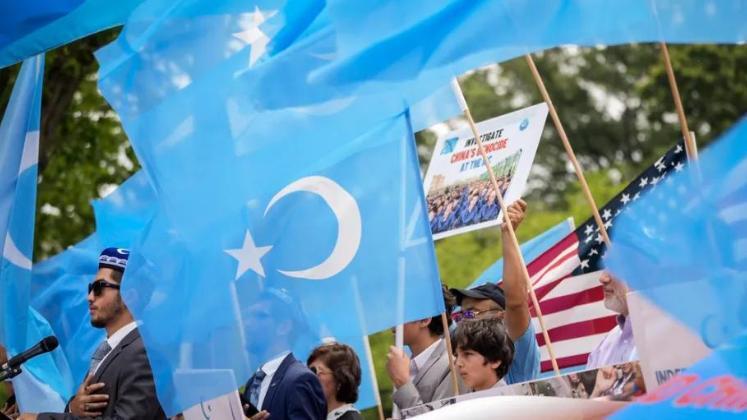
Julia Hughes, President of the United States Fashion Industry Association (USFIA), hailed the recent US hearing on the enforcement of the Uyghur Forced Labor Prevention Act (UFLPA) as a positive stride in enhancing comprehension of UFLPA enforcement strategies. She emphasised the private sector’s role as a collaborator in these efforts, expressing gratitude to the Subcommittee and the US Congress for their commitment to targeted and effective UFLPA enforcement. Hughes underlined the fashion industry’s dedication to eradicating forced labor from the supply chain.
She asserted, “We will persist in collaborating with Congress, the Department of Homeland Security, the Department of Labor, US Customs and Border Protection, and the Forced Labor Enforcement Task Force. Our aim is to enhance transparency, refine targeting, and develop a collaborative approach with the fashion industry, concentrating on high-risk trade without impeding legitimate trade.”
The October hearing featured policy experts and industry representatives addressing ongoing challenges related to preventing the importation of goods produced with Uyghur forced labor into the United States.
China’s use of forced labor in global supply chains, notably in the textiles sector, continues to present a substantial enforcement challenge. In response to the October hearing, the National Council of Textile Organizations (NCTO) proposed a four-step approach to combat forced labor in the supply chain:
Vigorous oversight of UFLPA customs enforcement, requiring regular testimonies from customs officials, outlining a proactive enforcement plan to Congress and the public, escalating penalties, and establishing measurable benchmarks for curbing illegal trade. Legislative measures to close loopholes for e-commerce, addressing issues such as fentanyl, forced labor, and counterfeits, with a mandate for the administration to employ executive authorities for enforcement. Expansion of the UFLPA Entity List beyond China, as only 27 entities currently feature on the list. Intensification of enforcement, inspections, and penalties through increased testing, verification visits in free trade agreement partners, and enhanced coordination.
As the discussion continues, it becomes evident that addressing forced labor challenges requires a multi-faceted approach involving legislative actions, enhanced cooperation between industry and government bodies, and a focus on transparency to ensure ethical and responsible practices in the global supply chain.