The Ministry of Textiles has issued a strong rebuttal to a recent report by CNN International on textile recycling practices in India, describing the report’s portrayal of the sector as selective, misleading, and unrepresentative of the country’s broader regulatory and sustainability framework.
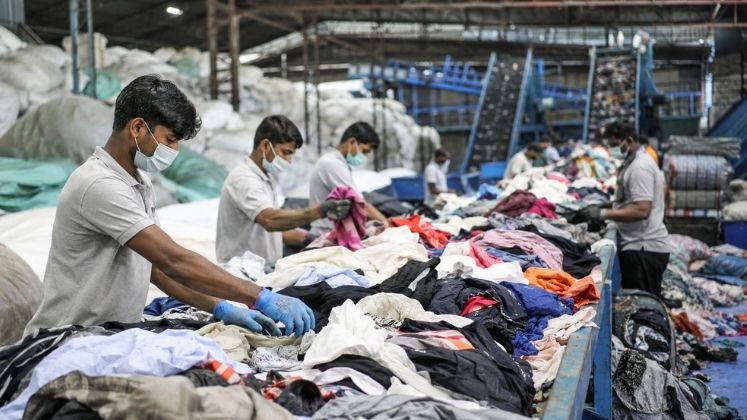
The CNN report, titled The world sends its fast fashion to this Indian city. Its residents pay a price, published on 9th May 2026, focused on the textile recycling hub of Panipat in Haryana. It alleged that the city had become a major destination for discarded fast-fashion garments from countries including the US, UK, and Japan, while highlighting concerns related to untreated wastewater, dust pollution, occupational health risks, and the environmental costs of processing imported textile waste.
In a detailed response released on 14th May, the Ministry stated that India possesses one of the world’s largest textile recovery and recycling ecosystems, supported by long-established value chains centred on reuse, repair, recycling, and repurposing. The Ministry argued that, unlike many developed economies where textile waste is largely sent to landfill, a substantial share of India’s textile waste is recovered and channelled into secondary applications.
Citing the Ministry’s 2026 study, Mapping of Textile Waste Value Chain in India, officials stated that the country generates around 7,073 kilo tonnes of textile waste annually. The study indicated that nearly 97% of pre-consumer textile waste is recycled, reflecting strong material circularity within domestic manufacturing systems.
The Ministry further stated that of the approximately 7.8 million tonnes of textile waste managed annually in India, more than 90% originates from domestic sources, while imported post-consumer waste contributes only around 7%. It added that imports of second-hand clothing and mutilated rags are regulated under the Hazardous and Other Wastes (Management and Transboundary Movement) Rules, 2016.
Highlighting the economic significance of the sector, the Ministry referred to a report by FICCI titled Unlocking Value from India’s Textile Waste, which estimated that the textile waste ecosystem generates an annual economic value of approximately Rs. 22,000 crore (US $2.29 billion).
Responding to environmental concerns raised in the CNN report, the Ministry cited a Life Cycle Assessment study conducted by IIT Delhi and published in the Journal of Cleaner Production. Based on field data from the Panipat cluster, the study reportedly found that textile recycling reduces 30%–40% of major environmental impacts, including greenhouse gas emissions, acid rain potential, and fossil fuel depletion, compared with virgin fibre production.
The Ministry acknowledged that challenges remain within the sector, particularly in relation to post-consumer waste collection, management of blended synthetic materials, compliance among smaller informal units, and worker safety standards. However, it maintained that the industry is undergoing a transition towards greater formalisation and regulatory compliance.
Officials noted that textile units are governed by laws including the Water (Prevention and Control of Pollution) Act, 1974, the Air (Prevention and Control of Pollution) Act, 1981, and the Occupational Safety, Health and Working Conditions Code, 2020. The Ministry added that regulatory oversight by bodies such as the National Green Tribunal and State Pollution Control Boards demonstrates ongoing enforcement activity.
The rebuttal also highlighted several sustainability initiatives being adopted across the sector, including zero-liquid discharge systems, chemical recycling technologies for textile-to-textile circularity, dust extraction mechanisms, and renewable energy integration. It specifically referenced the Atal Centre of Textile Recycling and Sustainability in Panipat, which has developed capabilities for recycling high-performance aramid fibres used in bulletproof vests and protective equipment under the National Technical Textiles Mission.




 Bharat Tex Special Report 2026