Gujarat Alkalies and Chemicals Ltd. (GACL) has entered into a partnership with Clean Max Enviro Energy Solutions (CleanMax) to source hybrid renewable energy for its manufacturing facilities in Gujarat as part of its sustainability and decarbonisation efforts.
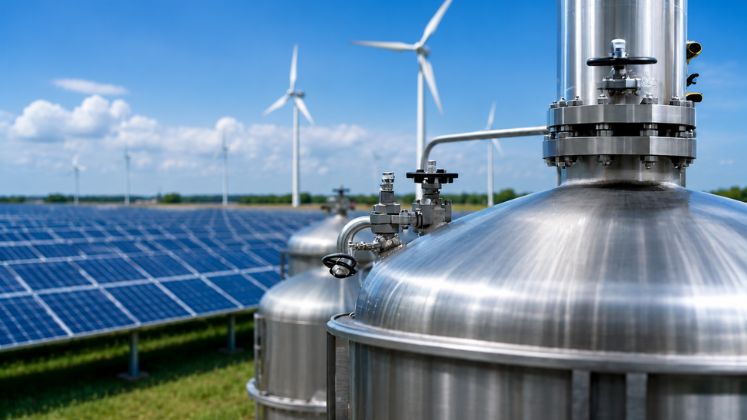
Under the agreement, CleanMax will supply hybrid renewable power generated from 75.90 MW of wind capacity and 84.34 MWp of solar capacity to GACL’s manufacturing units at Dahej and Vadodara through a group captive structure.
GACL is among India’s largest producers of caustic soda and manufactures a portfolio of more than 36 products and services various industries including textiles. Caustic soda is a critical chemical used in the textile industry for processes such as scouring raw fibres, mercerisation, dyeing and denim finishing.
CleanMax is a commercial and industrial renewable energy provider that offers decarbonisation solutions, including renewable power supply, energy services and carbon credit solutions, to businesses seeking to reduce their carbon footprint.
The project will be executed in two phases across multiple renewable energy sites in Gujarat. Phase 1 will comprise 16.50 MW of wind capacity and 21.701 MWp of solar capacity, while Phase 2 will add 59.40 MW of wind capacity and 62.64 MWp of solar capacity. Both phases are scheduled to be commissioned in accordance with the timelines agreed between the two companies.
Once operational, the project will supply hybrid renewable power to GACL’s manufacturing facilities from four CleanMax renewable energy sites located at Kalikanagar, Aji Dahisarda, Rajula and Ghuntu in Gujarat. The project is expected to generate approximately 36.9 crore units of clean electricity annually.
Avantika Singh, IAS, stated that the partnership would enable GACL to integrate hybrid renewable energy into its power mix, enhancing energy reliability while supporting the company’s efforts to reduce the environmental impact of its manufacturing operations.
Kuldeep Jain, Founder and Managing Director of Clean Max Enviro Energy Solutions, said the collaboration demonstrated how large-scale manufacturing companies could transition to renewable energy while maintaining operational reliability.






 Bharat Tex Special Report 2026