Courtesy: https://www.labmanager.com
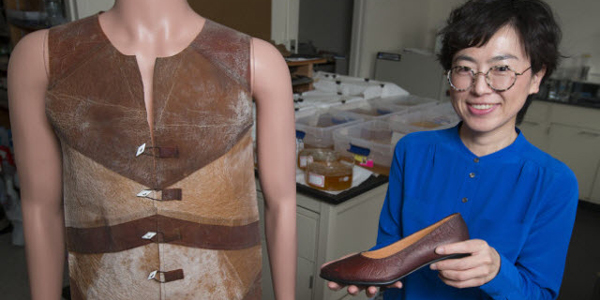
An associate professor of apparel, merchandising and design at the Iowa State University has developed a gel-like cellulose-based substance that when harvested and dried looks and behaves quite similar to leather and can be used for making clothing, bags and shoes.
According to Young-A Lee, a gel-like film, consisting of cellulose fibres (byproduct of kombucha tea) that feeds off a mixture of vinegar and sugar, is grown by using a symbiotic colony of bacteria and yeast (SCOBY). This SCOBY film is then harvested and dried to create a material quite similar to leather, which can be used almost everywhere leather is used. Lee works at one of the textile and clothing labs in Iowa State University’s LeBaron Hall.
In her book Sustainable Fibers for Fashion Industry, she describes and explains the outcome of her case study of cellulosic fibres. According to her, this material had earlier been experimented for other uses, including cosmetics, foods and bio-medical tissue for wound dressing. It is for the first time that this has been put to test in the apparel industry.
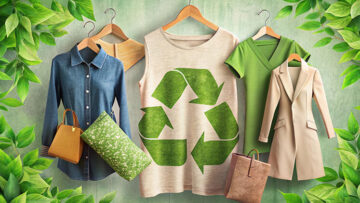
With sustainability being a major issue in the fashion industry these days, the fact that this material is completely bio-degradable comes as a key advantage point. This fibre will in fact reduce a lot of waste, which the fashion industry has lots of, since it is both bio-degradable and reusable.
“Fashion, to most people, is an ephemeral expression of culture, art, and technology manifesting itself in form. Fashion companies keep producing new materials and clothing, from season to season, year to year, to fulfil consumers’ desire and needs,” Lee said. “Think about where these items eventually go. They will take tremendous underground spaces of the Earth like other trash.”
In spite of its benefits, however, the research team did encounter some very unique challenges, while testing its viability as an alternative to leather for the fashion industry. Their biggest problem with this kind of material, whether used in shoes or clothes, is that it absorbs moisture from the air, which directly affects the user and also makes the material less durable. Besides, lower temperatures make the material brittle.
Apart from these very basic issue, there is the problem of mass production. Accoridng to Lee, it takes around three to four weeks (differs with changing temperatures and room conditions) to grow the material in the lab. Hence, a possible mass production may seem like a far cry.
“It does not take that long to make certain synthetic materials, but for this new material we are proposing, it requires a certain amount of time to grow, dry, and treat the material within specific conditions,” Lee said. “If our experimental effort from this EPA project is successful, this cellulose-based renewable fabric can be an alternate future where we move to a cradle-to-cradle system, instead of relying on materials derived from unsustainable sources.”
However, Lee still feels very strongly about this project. She says that a lot more than simply the rising waste is at stake here, like water contamination from chemicals, etc.