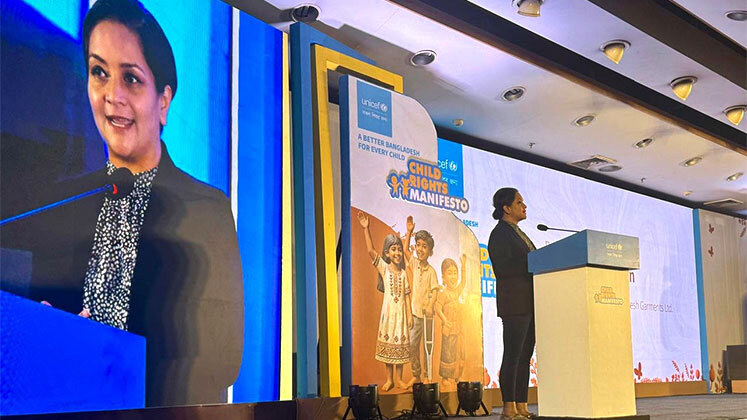
The Bangladesh Garment Manufacturers and Exporters Association (BGMEA) has reiterated its uncompromising position on eradicating child labour from the country’s export-oriented garment industry, during the public launch of UNICEF’s Child Rights Manifesto 2025. The event, held on 1st December at the Bangladesh–China Friendship Conference Centre, brought together political leaders, civil society groups, industry representatives, youth delegates and development partners.
UNICEF Bangladesh said the manifesto reflects the priorities and expectations of more than 180 children and young people consulted nationwide, outlining key actions needed to ensure a safer and more inclusive future for the next generation.
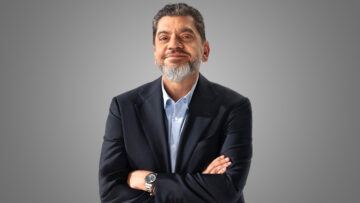
BGMEA Vice President Vidya Amrita Khan stressed that child labour “has no existence” within BGMEA member factories, noting that the sector operates under some of the region’s most rigorous compliance standards. She said the industry maintains a strict zero-tolerance approach to any breach of child labour rules, with swift corrective measures mandated under its compliance protocols. Khan added that the sector’s responsibilities extend beyond legal requirements, saying the garment industry remains committed to supporting education, healthcare, psychosocial protection and safe environments for all children.
UNICEF Bangladesh Representative Rana Flowers also emphasised the need for coordinated national action to safeguard children’s rights. BGMEA Director Asef Kamal Pasha was among those present.
Bangladesh’s struggle with child labour has deep roots in poverty and limited access to education. Prior to the 1990s, children were widely employed across agriculture and manufacturing. A major shift came in 1995 when BGMEA, UNICEF and the ILO introduced alternative education pathways and rehabilitation programmes, leading to a sharp reduction in child labour within the formal ready-made garment sector. Improved surveillance, factory clean-ups and strengthened legislation have since enabled the industry to nearly eliminate child labour from organised production units, though challenges remain in informal sectors.
BGMEA maintains that child protection, worker welfare and community-level development remain central to its long-term commitment to responsible manufacturing—an approach it says is essential to safeguarding children’s rights and strengthening Bangladesh’s social and economic resilience.



 Bharat Tex Special Report 2026