Nest, a non-profit organization of New York, has completed a decade of commitment to the social and economic advancement of the fashion and home industry’s artisans and homeworkers. Working extensively in many countries, the NGO recently organized the 2016 class of Artisan Leadership Summit, the second in a series, giving opportunity to some handpicked companies to make the long journey to New York City for training, mentorship and industry immersion. The event saw participation from 15 artisan leaders from across the world, 3 of whom were Indians. Nest engages retail brands to employ Nest’s assessment and programming offerings through a fee-for-service model that allows for diversified revenue and greater sustainability to it.
As consumers demand greater authenticity and transparency from the brands and products they purchase, it is pushing stakeholders more towards the concern, so importance of initiatives targeted on clean supply chain is increasing. In this area the Nest Artisan Business Development programme is very unique. The tailored business development programming focuses on training and small scale infrastructure improvements to artisan businesses. These inputs yield high impact ROI, and in 2015 alone, artisan businesses working with Nest saw an average 45 per cent production increase and 76 per cent growth in revenue. Nest also helps introduce retail brands to artisan producers and vendors around the world. Brands are encouraged to go beyond sourcing to engage Nest in providing artisan business development to the artisans and homeworkers within their supply chains.
At the recently held 3-day-long summit, artisan leaders were from countries like Philippines, Afghanistan, Bali, Kenya, Japan, Morocco, Peru, Rwanda, and Guatemala, besides India. The industry immersion and education programme included panel discussions, lectures and one-on-one sessions with executives, designers and merchandisers from Warby Parker, West Elm, Bergdorf Goodman, Brand Assembly, the CK Home Collection and the Fashion Law Institute etc. According to the organizers the event was focused on supporting global artisan businesses to thrive in the competitive international marketplace, ensuring that they have access to professionals who know the contemporary fashion, home and design industries inside and outside. Participants learned insights about compliance, treatments of employees and pricing strategies.
“Our buyer ELIEEN FISHER requested us to participate in the event. EILEEN FISHER is working with Indian NGOs for the upliftment of women workers. It was a learning experience for us as we are already working with some of these workers in Jaipur, Fulia and Bhagalpur and doing whatever is required to improve their working environment. The initiative will only help us to better what we are already doing, currently.” – Rajiv Jhunjhunwala, Director – Onset
“This exercises helped us to broaden our vision as well as to work more with home-based women workers and artisans as they are not only part of our society and able to do niche work, but they are also our business partners. All of the participants at the event agreed that more and more work should be given to these workers. This is not just to increase orders, but it is also about improving their quality, life and overall upliftment which is not easy for SMEs like us so it needs collective efforts of buyers, exporters and contractors, too. Direct export by homeworkers can be a good option to support, but it will take a lot of efforts,” said Siddharth Palawat of Textorium who participated in this event with his son Pranav Palawat. On the issues of exploitation by contractors, he added that direct work with homeworkers should increase but it was also accepted that without contractors, getting work is very difficult in the supply chain, so there is a need to ensure that contractors too work ethically.
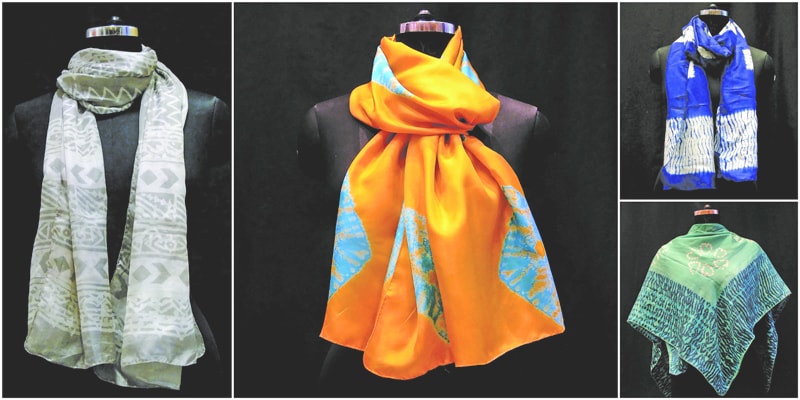
Textorium is into export and domestic manufacturing of high-end scarves, stoles and running fabrics. The company is working with many home-based workers of Rajasthan and those that have migrated from West Bengal to Rajasthan. Siddharth also added that the event was a good platform for him to observe how other countries’ workers are improving as well as how exporters of these countries are working in challenging conditions.
Pranav Palawat is helping his father continue to build and evolve Textorium. He plans to pursue a post-graduate degree in Fashion Management and is focused on expanding Textorium by gaining knowledge around fashion and technology innovations and improvements, and applying them to Textorium’s supply chain. By attending such Summits, Pranav hopes to explore and learn more about the upcoming trends, concepts, and technologies developing in the global design market.
Rajiv Jhunjhunwala, Director of Onset, another participant from India, and having experience of almost 35 years, shared that he learned a lot about what products are being made by artisans in other parts of the world, and also gained deeper insight into contemporary trends and design ideas.
Apart from such events Nest also has a lot of other initiatives and one of them is the ‘Nest Ethical Compliance Curriculum’. Even the most socially dedicated artisan businesses are rarely without obstacles to ensuring and providing proof of sound practices that support Nest’s Code of Consciousness (industry standards for artisans and homeworkers.) This curriculum helps artisans move towards greater compliance with these standards by providing hands-on training in six core areas – transparent record-keeping, fair compensation & benefits, artisan rights & well-being, children’s advocacy and protection, health & safety, and environmental care. All training is made possible with the help of expert consultants and volunteer professionals.
As far as India is concerned, in partnership with artisan group ‘Loom to Luxury’, Nest is committed to reviving Varanasi silk jacquard by generating unprecedented awareness and demand for the technique, reinvigorating the industry, celebrating its artisans and reversing the tradition’s dangerous trend toward extinction. Nest raised an additional US $ 498,000 in 2014 designated for Varanasi. It claims that the Nest Varanasi Project has become a worldwide phenomenon, attracting international media acclaim and partnership from some of the most respected brands in luxury, shining a bright light on the future of the endangered handloom craft. The appreciation by high-end fashion brands is a ray of hope to the future of handloom.





 Bharat Tex Special Report 2026