The State Government of West Bengal aims to increase silk production this year. It is now targeting an amplification of 50 metric tonnes of silk from 2,577 metric tonnes in FY 2017-18 to 2,627 metric tonnes in FY 2018-19; this has been stated by State Agriculture Minister Ashish Banerjee.
Around 1,620 acres of cultivable land under sericulture production may also be added this year, added the Minister. A total of 1,733 acres of land was used for the production of four varieties of raw silk till last year.
The Government has been taking several initiatives to help Seri farmers by collaborating with Panchayat and Rural Development, Paschimanchal Unnanyan Affairs, Uttar Banga Unnanyan Affairs, to utilise their resources for the plantation projects.
Formation of groups, clusters and relevant mechanisation and credit supports are also among the major initiatives under consideration for better silk production in the state.
Markedly, more than 1 lakh families are associated with sericulture, an agro-based cottage industry for their livelihood in rural and urban areas the state. Women constitute majority (60 per cent) of the workforce associated with the sericulture industry in West Bengal.
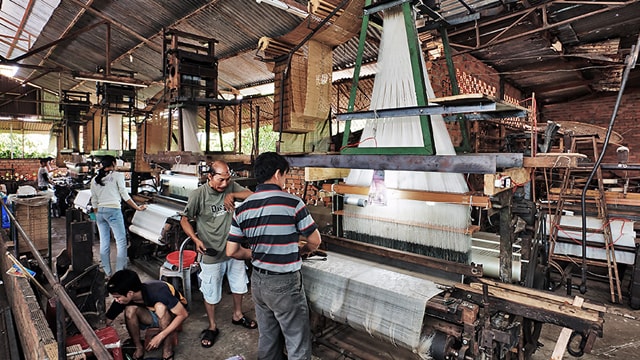
Silk weaving industry in the state of West Bengal is virtually confined to the district of Murshidabad and adjacent areas of Birbhum district.
The State has immense potentiality of Sericulture. However, the majority of silk production in India comes from North-East states.
In fact, Tamil Nadu is also readying plans to double its silk manufacturing capacity. A recent news indicated that the textile hub is planning to deploy automatic and multi-end reeling units (as many as 25 more) and larger area under mulberry cultivation. Reportedly, TN currently has three reeling units and 30+ multi-end silk reeling units.
The yearly silk production of TN is 1,975 tonnes.
The recent steps by the two key textile states of India will certainly help bolster the country’s overall silk production capacity.





 Bharat Tex Special Report 2026