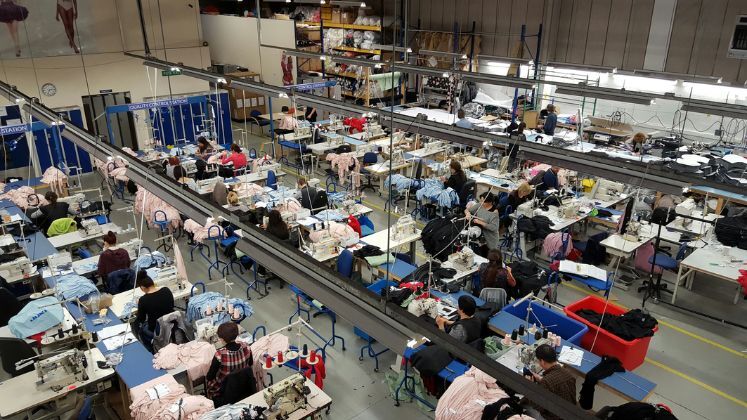
UK fashion manufacturers are responding to shipping delays and rising demand by tactically building up stock levels as they approach the final quarter of the year.
New figures from inventory management specialist Unleashed show that small and mid-sized firms generated sales of US $ 648,000 in Q2 2025 — a 109.28% increase from the same period last year, though an 18.89% drop from the previous quarter.
During the same period, lead times extended from 19 to 32 days quarter-on-quarter, and the number of purchase orders (POs) rose by 37.85% year-on-year, climbing from 313 to 488 quarter-on-quarter.
The Unleashed report, which draws on data from more than 600 UK firms across sectors including clothing and fashion, notes that clothing, footwear and accessories manufacturers are increasing stock levels to preserve product availability and service levels despite longer supply chains. Lead times increased by 13 days from Q1 to Q2.
Correspondingly, the value of excess stock more than tripled quarter-on-quarter — from US $ 33,600 to US $ 119,300.
Profitability, measured as gross margin percentage (excluding wages), declined slightly by 4.37 percentage points QoQ and by 2 percentage points year-on-year.
Joe Llewellyn, GM of ERP Small Business at The Access Group (parent of Unleashed), said the shift toward what he described as “cautious buffering” should help firms manage future supply disruptions.
He added that the increase in purchase orders and stock levels marked a tactical pivot for fashion manufacturers, intended to mitigate risks of delays and stockouts ahead of peak periods like Black Friday and Christmas.
He observed that many firms were taking a measured approach rather than reacting hastily to market swings. As manufacturers adopt more data-driven strategies, they are improving forecasting capabilities and reducing risks in stock purchase decisions.
Looking ahead, Llewellyn said there were promising signs that manufacturers might end 2025 in a strong position. He pointed to healthy sales and rising business confidence each quarter. With the Bank of England cutting interest rates from 4.25% to 4% and inflation forecast to fall below 2%, he suggested margin recovery and selective growth could follow.





 Bharat Tex Special Report 2026