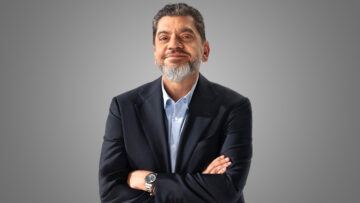
From moving out of Indian boundaries to establishing a firm footing in Bangladesh, Tex Zippers BD Ltd. has come a long way. Today, the company is nominated by 65 international brands and retailers sourcing from Bangladesh. On a high from its exuberant success in zippers, the Indian multi- national started metallic buttons manufacturing last year and its long list of existing buyers have already started sourcing metal buttons. “I don’t see ourselves as manufacturers, rather we see ourselves as a service-oriented company. We rarely lose customers. I tell my sales team that they are empowered to make commitments to customers and we will ensure that they are fulfilled. Tex has sizeable capacity, skilled technicians, and the customer-centric culture has already developed,” confidently states the young and dynamic CEO & Director Kapil Kumra. He invited Team Apparel Online to see his button manufacturing facility at Adamjee EPZ, and in a very candid conversation highlighted his unique ‘sales pitch’ to compete with almost 33 zipper companies in Bangladesh, right from the biggest to the smallest.
AOB: What inspired you to get into metallic buttons manufacturing?
Kapil: Metal buttons was something we were always interested in because a lot of metal button companies which started production in bangladesh closed down as they couldn’t meet the quality standards, price points and timely delivery being offered by china, because of which the country has a market share of almost 90% of the total button consumption of bangladesh. the reason for failure of most companies were the two critical processes of making the logo which is a highly automated process, and electroplating which gives the final finishing and look to the button.
To attain finesse in both operations, experienced technicians are required for which we visited metal button factories in china, italy and turkey. in turkey, we found a very good factory, which was going out of business. so we took over the management – got the plant Manager, plating heads and all the technicians in bangladesh, and simply replicated that factory here. We brought the same machinery, chemicals and even started sourcing brass from their suppliers.
AOB: Would the existing facility continue to produce both zippers and buttons?
Kapil: not for long; we have taken two more plots just next to this factory and construction has already started. by July the factory will be ready and the plan is to shift the entire zipper production in the new premises. the existing factory would be 100% for metal buttons and we shall be tripling our capacity. the machines will come in by mid-July. We shall, however, continue to have our corporate office here.
AOB: How much growth do you foresee once the new factory is set up?
Kapil: over the last three years, we have expanded 20,000 sq. ft. of factory space and tripled our capacities since then. at present, our capacity is half a million metal zippers/day, and we are running about 70% of our capacity; once we shift to the new premises (in July), we anticipate that by august we will be using full capacity, which then should give us 30% growth. for buttons, we are looking at 400% growth, as we are at the development stage and growth opportunities are higher. the combined growth would be about 45%. Down the line we shall look into diversifying within buttons as huge growth potential is there.
AOB: Who are your buyers for brass buttons? How did you convince your buyers that the quality of the zippers would not be compromised as when a company diversifies in other product categories, does the focus get diluted?
Kapil: We have about 65 buyers and 96 factories with whom we work, and all have shown interest in buying buttons from us. for six months we just did trial productions after which we picked four of our key reliable customers whom we knew and were confident that they would support us. since then, we have done almost 20 orders successfully and no issues have surfaced till now. in fact, the payback was very quick and in the month of april only we achieved break-even point for the year-old metal project. Right now we are refusing a lot of orders because we do not want to take too much and get stuck. the button factory which started as a pilot project is already overwhelmed with orders.
Coming to the second part of your question, all our buyers were very excited that we are doing buttons. as a matter of fact we were more concerned as we were splitting resources and thereby creating more complexity. We have planned things in such a way that there is no interest clash and no compromise in the service response times and deliveries. My customers like the fact that if my sales team goes to them, they talk about both the products. Even the order placement and sampling is done together. they are happy that now we are offering them a complete metal trims package.
“Our successful venture in Bangladesh has inspired us to enter into Vietnam. In the next 5 years, as a Group’s strategy we will have a fairly well spread out international footprint. We are pitching in for being a multinational company. With five factories in three countries by the end of this year, including Vietnam, we would be the only metal trim manufacturer, besides YKK, to have presence in three nations and we are not going to stop there.” – Kapil Kumra
AOB: Your quality is well established, how do you keep the products cost-effective?
Kapil: Except the cost of relocating the turkish technicians, there was not much capital investment involved. in metallic buttons, the major cost is of the raw material which is brass and because of our already established relationship with the suppliers due to the zippers business, we are able to get an advantage in purchasing brass strips for buttons. Regarding overheads for buttons, we are following a very different model and have started working on the concept of one-man-to-one-machine. Every worker who operates a machine is equally responsible for its maintenance, quality of the product and monitoring the hourly output. he is given complete responsibility of that machine. if you go to turkey, they do not have a separate Qc or a separate maintenance guy, one person does everything.
Also right now it’s a shared facility, so most of the cost is shared including the manpower. the sales team, commercial and finance team is exactly the same and it would remain so even after the zipper facility is shifted to the new factory. nobody in bangladesh has such a low cost structure for buttons as we have, because of zippers we can leverage our infrastructure for buttons as well.
AOB: It must have been really difficult to train the operators in these areas because in Bangladesh the local people are not that well acquainted with multi-tasking, so how was your experience?
Kapil: there are two types of multi-tasking. in the first case you want a person to look after more than one machine, which is a problem area for them. but if you give them one machine and assign them multiple tasks related to the same, they will absorb that more easily. this concept is working well for us. but the biggest issue for us initially was blending people from different cultures because we got turkish people here and also a few chinese technicians, so now we have bangladeshis, indians, turkish and chinese, all working together. as of now for buttons we’ve a very small team so the cultural difference, the language barriers, egos, different ways of working all became issues. but everyone was comfortable after six months of working together.
AOB: What initiatives are you taking to further increase efficiencies at the shop floor?
We are spending a lot on training; we are getting experts from the us and india to train our workers and supervisors on how to increase efficiencies. We are creating a new iE group within this factory for improvement to just look at even the smallest of the issues, like for example where the air leakage is? Even if we are able to arrest air leakage by 20%, our compressor will work more efficiently. Earlier of course the margins were good and we were on hyper expansion mode, so we overlooked these things, as the goal was to keep increasing production and ensuring that client deliveries are not affected. but now we have come to a point where margin pressure forces us to look at these small benefits.
We are now also becoming more sustainable as a manufacturer. We are replacing all our lights with lEDs. We are putting up heat exchanger to harness the heat which comes from the discharge of the dyeing machines because that water has higher temperature than the incoming water, so we use that for steam generation. in the new upcoming factory we are going for rain water harvesting.
AOB: You have been successful in competing with giants like YKK, what did you do to strengthen your place in the market?
Kapil: We strategically decided to only compete on service.
We committed to the buyers’ amazing turnaround times, assuring them that they would not send even a single shipment by air because of us, nor would they miss a date of submitting a sample. We gave lab dips in 12 hours, samples within 18 hours and bulk production in 5-6 days. What our customers liked the most about us was the flexibility; if they wanted partial shipment, we said, no problem; if they said they wanted 200 samples instead of 60 on foc basis, we said no problem; the strategy was and is to give them such a service after which they would not like to go anywhere else.
Before joining tex, i spent 11 years in the service industry, so i understand the importance of giving impeccable service. i told my team right at the beginning that they are free to make promises and we would back them up, and because of this we have rarely lost a customer. it becomes difficult to manage this promise when you are making 350,000 of zippers per day but at least that mindset has not changed. as an example, the sales team can walk up to the production team and say i know you are busy but i need 692 pieces in 4 colours by tomorrow, and since the production team is already conditioned not to say no or to get frustrated; they say fine, let’s figure out how to do it.
AOB: Is Tex Group looking to expand its reach to more countries?
Kapil: our successful venture in bangladesh has inspired us to enter into vietnam. in the next 5 years, as a group’s strategy we will have a fairly well spread out international footprint. the group has already taken land in vietnam and the factory is under construction. i think by august, we shall start production there. in the meanwhile, we have opened offices in pakistan and in south korea. now we are looking at opening our sales office in Ethiopia. We are already shipping trims worth us $ 1 million per annum, to just one customer, which has factories in africa. so we already have got a base in the region, and this only for zippers. very soon we are going to start selling to them buttons also; so combined business would be around us $ 1.5 million with them soon. that gives us enough scale to set up a factory and break- even on day one, because we would just move the current capacity there. so from day 1, it would be a profitable factory. as for buttons, we don’t have manufacturing in india, so as of now bangladesh can easily feed vietnam, india, pakistan, and africa as a central location.